

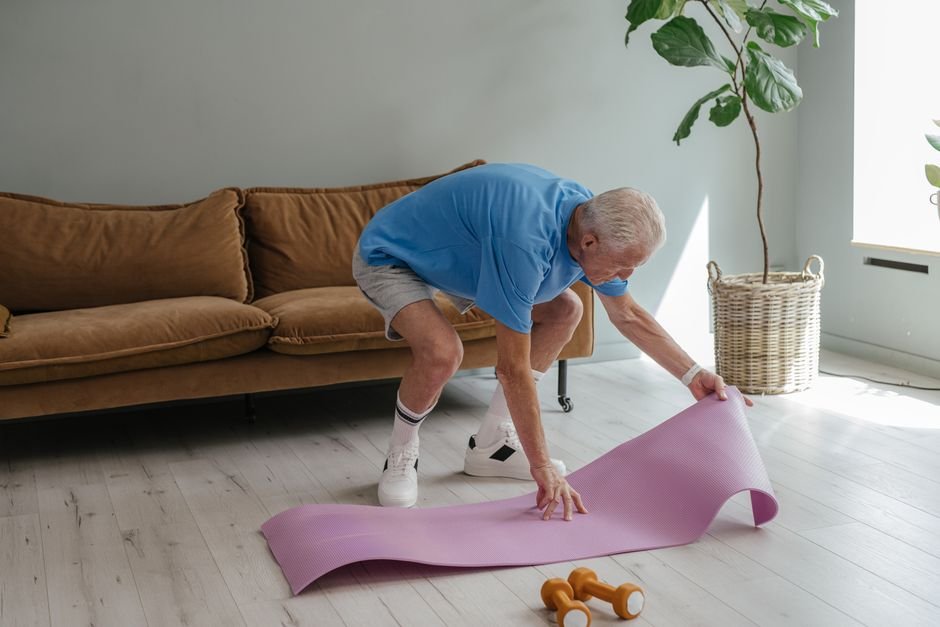
Three months of balance training significantly improved subjective sleep quality in adults aged 64 to 81, driven by enhanced GABAergic inhibition in the sensorimotor cortex, according to a study published July 5 in The Journal of Physiology.
The finding offers a potential non-pharmacological alternative for the nearly half of all adults over 60 who experience sleep disturbances. Current pharmacological options that enhance GABAergic activity, such as benzodiazepines and Z-drugs, improve sleep but carry risks of dependence, cognitive side effects, and falls in older populations.
What they found
Researchers led by Selin Scherrer and Bjorn Rasch at the University of Zurich enrolled 36 older adults (ages 64-81) in a three-month balance training program or a control condition. Before and after the intervention, participants underwent comprehensive assessments:
- Subjective sleep quality measured by the Pittsburgh Sleep Quality Index (PSQI) improved significantly in the balance group (significant group x time interaction, repeated-measures ANOVA).
- Objective sleep parameters measured by overnight polysomnography showed no significant changes, sleep architecture, efficiency, and continuity remained comparable between groups.
- Neuroimaging revealed increased GABA levels in the sensorimotor cortex measured by magnetic resonance spectroscopy, alongside enhanced sensorimotor functional connectivity on fMRI.
- Intracortical inhibition measured by transcranial magnetic stimulation did not show significant group-level differences, but individuals with larger increases in inhibition during sleep reported greater improvements in subjective sleep quality.
Regression analyses added nuance: greater increases in functional connectivity were associated with larger subjective sleep improvements, while larger increases in GABA levels were paradoxically associated with smaller improvements, suggesting the relationship between GABAergic enhancement and perceived sleep quality is not straightforward.
Why it matters
Sleep medications that enhance GABA, from benzodiazepines to the newer dual orexin receptor antagonists, remain widely prescribed despite side effect concerns. This study shows that a simple, accessible physical intervention can achieve similar neurochemical effects on the GABA system without the pharmacological risks.
Balance training has an advantage over other exercise interventions: it specifically engages the sensorimotor cortex and its inhibitory circuits, which the authors demonstrate directly via MRS and fMRI. The intervention is also practical, it requires no equipment and can be performed at home or in group settings.
The dissociation between subjective improvement (PSQI) and objective stability (PSG) raises an important question for sleep research: which metric matters more for an older adult’s quality of life? If a patient feels they sleep better and reports less daytime dysfunction, that may be the clinically relevant endpoint even when EEG-based measures remain unchanged.
Limits
The sample was relatively small (36 participants), and the study lacked an active control group for comparison against other forms of exercise or cognitive training. The three-month intervention period, while substantial, provides no data on long-term durability of the benefits. The GABA and connectivity measures are correlational and cannot establish that sensorimotor GABAergic enhancement is the causal mechanism.
Bottom line
Balance training improves how older adults perceive their sleep quality, with measurable changes in brain GABA levels and sensorimotor connectivity. For an aging population that struggles with sleep but wants to avoid medication side effects, it offers a safe, accessible option worth trying.
Source: Scherrer S, Egger S, Liu X, Wick AZ, Rasch B. Improved subjective sleep quality in older adults by enhancing the GABAergic system in the sensorimotor cortex. The Journal of Physiology. 2026 Jul 5. DOI: 10.1113/JP290164. PMID: 42402889.