

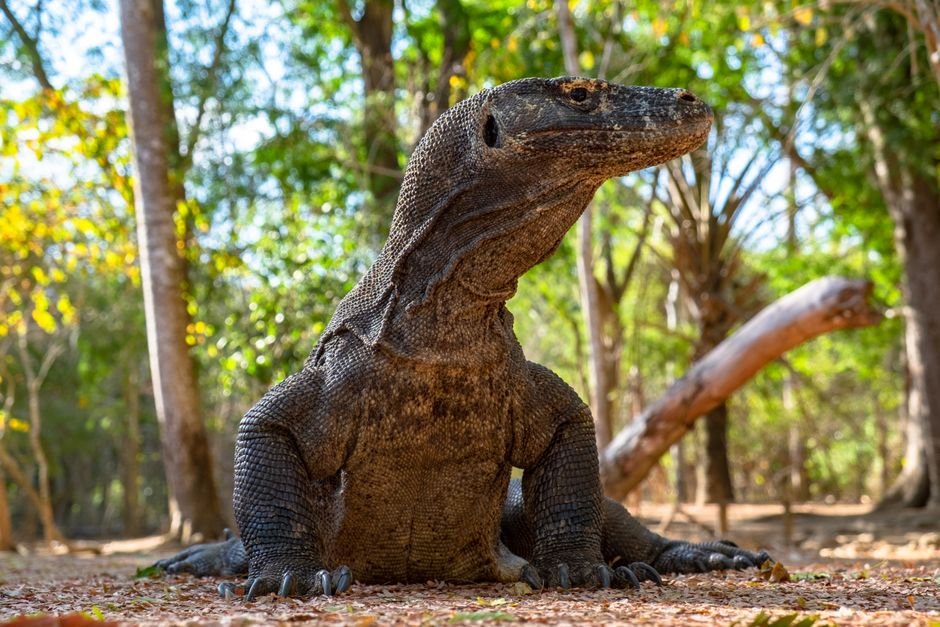
A landmark analysis of more than 3,000 animal bones from Liang Bua cave on the Indonesian island of Flores has upended two decades of assumptions about the behavior of Homo floresiensis, the tiny hominin nicknamed “the hobbit.” The study, published July 3 in Science Advances, finds that H. floresiensis was a scavenger that fed on leftovers from Komodo dragon kills, and that it did not use fire.
The findings directly challenge the long-held picture of the hobbit as a sophisticated hunter of dwarf elephants and a user of controlled fire, portrayals that have appeared in textbooks, museum exhibits, and popular science since the species’ discovery in 2003.
The evidence
The research team, led by Elizabeth Grace Veatch of the Smithsonian Institution and the University of Tubingen, analyzed 3,155 bone fragments from Stegodon florensis insularis, a dwarf elephant species that lived alongside H. floresiensis. The bones came from two stratigraphic units dated to approximately 190,000 to 50,000 years ago, both associated exclusively with H. floresiensis, Homo sapiens does not appear in the Flores archaeological record until roughly 11,000 years ago.
The analysis found 54 cut marks from stone tools on 20 bones, and 100 tooth marks from Komodo dragons on 31 bones. Crucially, no single bone bore both types of marks, and the two sets of marks were concentrated on different parts of the skeleton.
Komodo dragon tooth marks were found primarily on high-utility elements, femurs, sternums, metapodials, and other meatiest parts, indicating that the dragons had primary access to the carcasses. Human cut marks were concentrated on low-utility elements: the hyoid, ribs, a phalanx, and other less desirable cuts. This pattern matches secondary scavenging: the dragons ate first, and H. floresiensis moved in afterward.
To confirm the identification, the team conducted a controlled feeding experiment at Zoo Atlanta, offering a dead goat carcass to a captive Komodo dragon named Rinci. After the dragon fed, 26 of the 72 remaining bones bore a total of 192 tooth marks. Three-dimensional profilometry and quadratic discriminant analysis confirmed that Komodo dragon tooth marks are distinctively shallower and shorter, with wider profile angles than stone-tool cut marks.
No fire
The study also lays to rest the long-standing claim that H. floresiensis used fire. Among 3,155 Stegodon bones, exactly one, 0.0003 percent, showed signs of burning, and that bone was found near a stratigraphic boundary where it may have been displaced from later Homo sapiens layers.
The rat bones tell an even clearer story. In the H. floresiensis layers, zero out of 4,240 murine bones were burned. In the overlying H. sapiens layers, roughly 20 percent of 2,430 rat bones showed burning, consistent with routine cooking. Previous reports of charring in the lower layers were actually manganese staining, the team found.
“Our study suggests that H. floresiensis evolved from a hominin population that did not require these dietary strategies of hunting and cooking, such as a form of early Homo,” Veatch said.
Rewriting the hobbit
The image of Homo floresiensis that emerges is not the advanced toolmaker and big-game hunter that was originally described, but something more primitive, a small-brained hominin that behaved more like an Australopithecine, relying on scavenging rather than hunting and living without fire.
Standing roughly 106 centimeters (3 feet 6 inches) tall, with a brain about one-third the size of a modern human’s, H. floresiensis was already known to be anatomically primitive. The new study shows its behavior was primitive as well.
“I would argue that our field at large still holds on to this idea that Homo floresiensis had to have some form of advanced cognition to have reached the island and survived in a depauperate faunal community, regardless of brain size,” Veatch said.
Briana Pobiner, a co-author from the Smithsonian Institution’s National Museum of Natural History, noted that the findings challenge the assumption that human evolution was a linear story of steady progress. “There are long-standing misunderstandings about human evolution as being all progressive and that behavioral evolution was linear. This is a good example that our family tree was not a straight line.”
Martin Porr of the University of Western Australia, who was not involved in the study, said the findings bring H. floresiensis “more in line with what we know about other small-bodied hominins, such as Australopithecines, and this would make some sense given their brain capacity and body weight.”
Adam Brumm of Griffith University, also not involved, described Flores as “clearly a wild card in the story of early human evolution”, one that may have involved the loss of deeply rooted hominin behaviors such as hunting and fire use.
What it means
The study is a reminder that human evolution was not a single upward trajectory but a branching tree, with some branches taking paths that look nothing like the one that led to Homo sapiens. On Flores, a small-brained hominin survived for more than 100,000 years by scavenging what Komodo dragons left behind, and that may have been enough.
Sources
- Veatch EG, Alamsyah N, Pante M, et al. “Taphonomic analysis at Liang Bua reveals the behavioral and technological capabilities of Homo floresiensis.” Science Advances (2026). DOI: 10.1126/sciadv.aeb7219
- “Hobbit hominins scavenged meat left over by Komodo dragons.” New Scientist, July 3, 2026. https://www.newscientist.com/article/2532777-hobbit-hominins-scavenged-meat-left-over-by-komodo-dragons/