

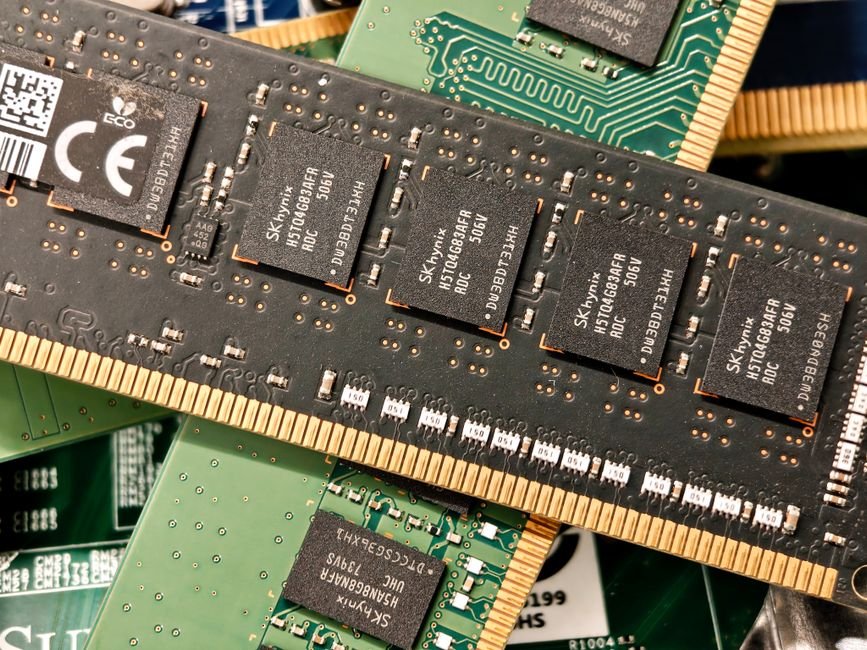
The three companies that control almost the entire global market for DRAM memory chips, Samsung Electronics, SK hynix, and Micron, have been hit with a third class-action lawsuit alleging they colluded to fix prices, this time by weaponizing the transition to AI-focused high-bandwidth memory (HBM).
Filed in the US District Court for the Northern District of California, the lawsuit seeks to represent millions of consumers and businesses that purchased conventional DRAM or devices containing it from October 26, 2022 to the present. It is the third major price-fixing case brought against the trio in the US since the 2000s.
The allegation: HBM pivot as a cover for supply cuts
The complaint’s central claim is that the three manufacturers coordinated a shift of production capacity away from conventional DDR3 and DDR4 memory and toward HBM, the premium memory used in AI servers, not solely because of genuine demand growth, but as a deliberate strategy to restrict supply of mainstream DRAM and drive up prices.
According to the filing, DRAM prices rose by approximately 697 percent between the third quarter of 2024 and the first quarter of 2026. In a competitive commodity market, such price increases would normally attract new supply. Instead, the complaint argues, all three producers simultaneously cut conventional output.
“The DRAM oligopolists have simultaneously cut production, coordinated a pivot to HBM and exit from DDR3 and DDR4, and otherwise decreased and locked up conventional DRAM supply while prices charged up with mind-blowing scale and rapidity,” the complaint states.
The lawsuit cites Apple’s recent across-the-board price increases on Mac and iPad models as direct evidence of downstream harm. Other PC makers including Dell and Lenovo have also warned investors about memory cost pressure; Lenovo described a “new normal” of elevated component prices.
A pattern of repeat offending
This is not the first time these companies have been accused of the same tactics. In the 2000s, the US Department of Justice brought criminal price-fixing charges against Samsung and SK hynix, leading to guilty pleas, a combined US$731 million (approximately £575 million) in fines, and prison sentences for multiple executives. Micron avoided prosecution by cooperating with investigators.
A second wave of litigation between 2016 and 2018, triggered by a 130 percent DRAM price surge, resulted in a class-action lawsuit and an investigation by Chinese regulators, though the US case was eventually dismissed.
“The conduct alleged here is the third such cycle in the same market, among the same firms,” the plaintiffs note.
The structural moat
Building a modern DRAM fab costs US$15-20 billion (approximately £12-16 billion) and takes years to bring online, with customer qualification periods lasting 12-18 months. US export restrictions on advanced chipmaking equipment further block would-be competitors. The complaint argues this structural barrier means no outsider can expand output to undercut the three incumbents when they coordinate to restrict supply.
What comes next
The companies have not been found liable. Samsung and SK hynix had not publicly responded at press time; Micron declined to comment. But the legal trajectory matters less for consumers than the market reality. Investment bank Jefferies has forecast memory prices will rise another 40-50 percent quarter-on-quarter in Q3 2026 and a further 30-40 percent in Q4, with full-year price growth expected at 40-45 percent in 2027.
Whether or not the collusion allegations hold up in court, the structural dynamics the case identifies, three firms controlling almost 100 percent of a critical component market, with the AI boom providing a plausible cover for coordinated supply reduction, are unlikely to resolve themselves.
Sources: Tom’s Hardware (Jul 3, 2026); tech-ish.com (Hillary Keverenge, Jun 30, 2026); Macrostream