

Published: June 08, 2026, 01:15 UTC
Tehran launched its first direct missile attack on Israel since the April ceasefire on Sunday, after Israel struck Beirut in retaliation for a Hezbollah attack. President Donald Trump responded by publicly urging both sides to stand down.
The day’s events unfolded in a cascade across three countries, pulling the Middle East back toward the kind of open warfare the U.S.-brokered truce was supposed to have ended.
Morning: Israel strikes Beirut
The trigger came early Sunday when Israel’s air force struck the southern suburb of Dahieh, a Shia district that functions as Hezbollah’s stronghold in Beirut. Israeli officials said the target was a Hezbollah command center. Lebanon’s state news agency reported at least two people killed and a dozen wounded. The strike hit a residential building.
Israel said the attack was retaliation for Hezbollah firing fighter drones at military targets in northern Israel earlier in the day. It was the latest in a pattern of exchanges that have steadily eroded the ceasefire agreement between Lebanon and Israel that took effect on April 17.
That agreement was part of a broader U.S.-led push to stabilize the region while Washington pursued nuclear talks with Tehran. But Hezbollah rejected the deal from the start, and Israeli operations in southern Lebanon and Beirut have continued despite the truce.
Afternoon: Iran retaliates
Within hours, the Iranian Revolutionary Guard Corps made good on its repeated warnings. Iran launched at least 35 ballistic missiles toward Israel in two separate barrages, according to reports from multiple news agencies. Sirens sounded across central and southern Israel. The Israeli military said it intercepted all missiles in the first barrage and announced around 11 p.m. local time that citizens could leave shelters. A second wave followed, with the IDF issuing fresh warnings.
The attack marked the first time Iran had directly struck Israel since the fragile U.S.-brokered ceasefire went into effect on April 8, ending the Twelve-Day War. That war began in late February when the United States and Israel launched coordinated strikes against Iranian military and nuclear facilities, triggering a cycle of retaliation that killed 28 people in Israel and wounded more than 4,200, according to Israeli figures.
Tehran promptly suspended all incoming flights at Imam Khomeini International Airport “until further notice,” according to state media. Iran’s military issued a statement saying its acceptance of the April 8 ceasefire had been “conditional on a ceasefire on ALL fronts.” It accused the U.S. and Israel of violating that condition by continuing operations in Lebanon and attacking Iranian vessels.
Mohsen Rezaei, an adviser to Supreme Leader Ali Khamenei, promised that Israel would face “a more crushing response and heavier costs” if it retaliated. Iran’s top nuclear negotiator separately threatened U.S. bases and assets in the region.
Evening: Trump tells Netanyahu to hold fire
As the missiles were in the air, Trump gave a series of interviews making clear his priority was containing the escalation, not backing Israel’s retaliation.
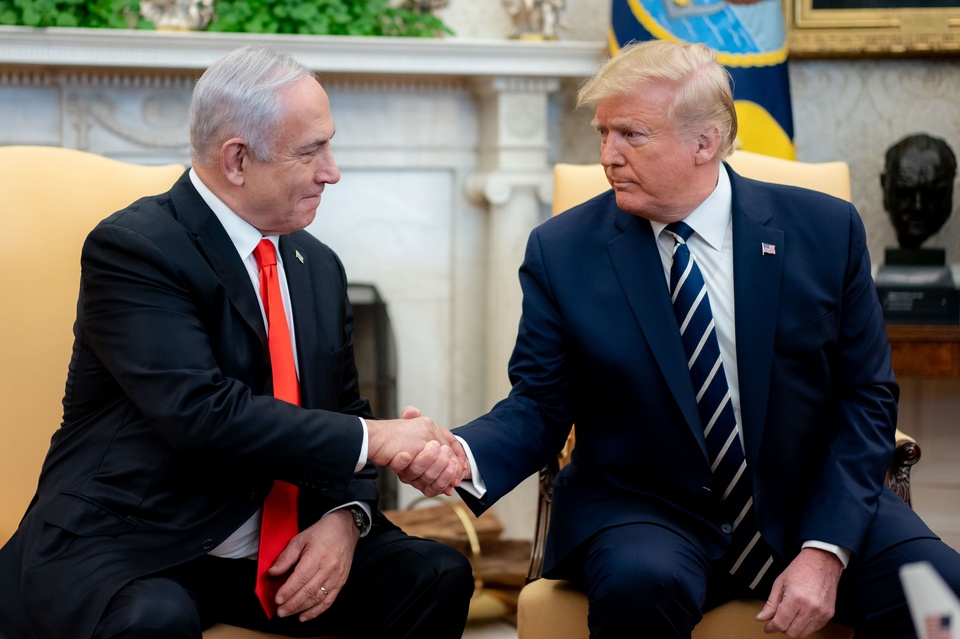
Trump told Axios he was “calling Netanyahu right now and telling him not to attack Iran in response.” He downplayed the Iranian attack, saying “the Iranian strikes didn’t hurt anybody.”
“If Bibi strikes them back, it’s just gonna keep going like the last 47 years, or the last 3,000 years,” Trump said.
Speaking to Fox News, he struck a similar note: “What I would suggest to Iran: You’ve shot your missiles, that’s enough. Get back to the table and make a deal.”
In a brief phone interview with the New York Post, Trump said “things are going very well.”
The president’s public push for restraint follows a tense phone call just days earlier, when Axios reported that Trump called Netanyahu “fucking crazy” and told him “you’d be in prison if it weren’t for me” after the Israeli prime minister ordered the initial strike on Beirut. Trump confirmed the substance of that call.
Night: No one standing down
Despite Trump’s appeals, neither side showed signs of de-escalating. Israel’s military spokesman, Brig. Gen. Effie Defrin, said in televised remarks that the IDF was approving plans for further action in Lebanon. He called Iran’s missile attack “a grave mistake.”
The IRGC warned that if Israel escalates in Lebanon or responds to Iran’s missile fire, it will face “more crushing and regretful blows.”
The United States also remained active in the theater. The Pentagon said it destroyed two drones over the Strait of Hormuz as part of the ongoing naval blockade that has choked Iran’s oil exports. This is the economic pressure campaign that Trump has described as leverage to force Tehran back to negotiations.
What it means
This is the most serious breach of the April ceasefire since it was signed. Iran’s decision to launch missiles directly at Israel, not through proxies in Yemen, Syria, or Lebanon, signals that Tehran sees the Beirut strike as a red line that justifies breaking the truce.
Trump now faces the situation he has spent months trying to avoid: a direct Israel-Iran exchange that threatens to pull the U.S. back into a wider war, just as he was preparing to claim a diplomatic victory with a nuclear deal. His public plea to Netanyahu not to retaliate is a remarkable sight: an American president telling its closest Middle Eastern ally to absorb a missile attack from its main regional adversary without hitting back.
But it also exposes the limits of U.S. influence. Netanyahu has already defied Trump’s direct request once. Hezbollah is still firing. And Iran, having fired its first missiles since the ceasefire, has signaled it is prepared to escalate further.
The question now is whether Netanyahu will listen this time, or whether the region is about to slide back into the war the ceasefire was supposed to prevent.