

Published: June 04, 2026, 03:56 UTC
The intensive care unit is a place of measurement. Every beep, every waveform, every lab result feeds into a continuous calculus of life and death. But for one of the hardest questions a family can ask — *will they wake up?* — the toolkit has been surprisingly blunt.
A study published this week in *Nature Communications* offers a new answer. An international team led by researchers at Zhejiang University has shown that a simple, portable EEG test — measuring how the brain responds when it hears familiar names — can predict recovery outcomes in comatose ICU patients with remarkable accuracy.
The approach is not fMRI. It is not a blood test. It is a technique called frequency tagging, and it may be one of the most practical advances in coma prognostication in years.
What They Did
The team enrolled 89 patients who were comatose following acute brain injury across five ICUs in China. While the patients lay in their beds, the researchers played them a rapid stream of sounds: familiar names — the names of family members, of close friends — interleaved with acoustically matched but unintelligible control sounds.
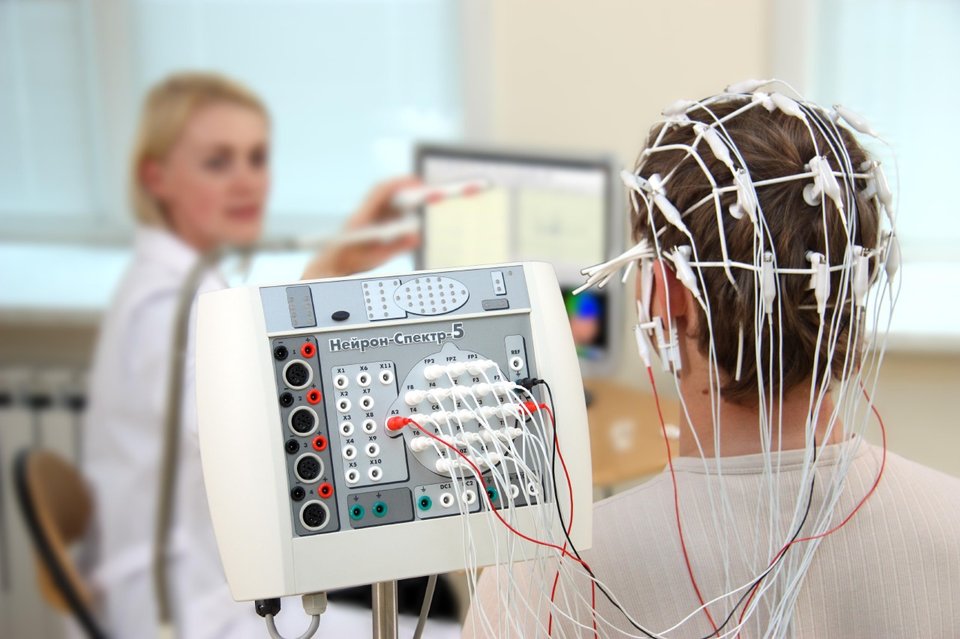
Meanwhile, a scalp EEG cap recorded the brain’s electrical activity. The key innovation is frequency tagging: by presenting different categories of sounds at specific repetition rates, the researchers could isolate which neural responses tracked the familiar names versus the control sounds, all in the frequency domain. It is an objective, passive measure — no need for the patient to perform a task or follow a command.
The EEG responses were then fed into a machine learning model that also incorporated clinical characteristics (age, injury type, Glasgow Coma Scale scores, and others). The model’s output was compared against the patients’ actual outcomes at 1, 3, and 6 months post-injury, measured on the Glasgow Outcome Scale-Extended (GOSE), an 8-point scale ranging from death to full recovery.
The Results
The model performed consistently across timepoints:
| Timepoint | AUC (Test Set) | AUC (External Validation Set) |
|---|---|---|
| ———– | ————— | ——————————- |
| 1 month | 0.86 | 0.91 |
| 3 months | 0.88 | 0.90 |
| 6 months | 0.86 | 0.85 |
An AUC (area under the receiver operating characteristic curve) of 0.90 or above is considered excellent — approaching the performance of established clinical tools like somatosensory evoked potentials (SSEPs), but with a critical advantage: it can be performed at the bedside with widely available EEG equipment, requires no electrical stimulation, and taps into something fundamentally human.
The name-tracking EEG responses positively correlated with GOSE scores across all timepoints. Patients whose brains showed stronger neural tracking of familiar names were more likely to recover.
Why This Matters: The Prognosis Gap
Current guidelines for coma prognostication rely on a patchwork of tools: pupillary light reflexes, corneal reflexes, somatosensory evoked potentials (SSEP N20), serum biomarkers (neuron-specific enolase), and EEG reactivity patterns. Each has strengths, but most were validated primarily in post-cardiac-arrest coma, and many require specialized equipment or expert interpretation.
The frequency-tagging approach has several practical advantages: – Portable: A basic EEG cap and a laptop – Passive: No patient cooperation needed – Objective: Frequency-domain analysis is automated and quantitative – Specific: Familiar names tap into the brain’s social and autobiographical processing networks — circuits that may be selectively preserved even in severe brain injury
Families of comatose patients already speak to their loved ones, often encouraged by ICU staff despite limited evidence. This study suggests those voices may not just be comfort for the living — they may be reaching the unconscious brain in a measurable way.
Caveats
Several limitations deserve emphasis:
– Moderate sample size: 89 patients is a solid cohort for a pilot study, but larger, more diverse populations are needed – Single-country design: All five ICUs are in China. Healthcare systems, sedation practices, and end-of-life decision-making vary across countries, affecting generalizability – EEG timing: The study does not specify how soon after injury the EEG was recorded — crucial information for clinical implementation – Blinding: It is unclear whether outcome assessors were blinded to the EEG results – Comparison with existing tools: While the model clearly outperforms clinical variables alone, head-to-head comparisons with SSEP, pupillary reflexes, or standard EEG reactivity grading are needed – Coma etiology: The mix of traumatic, anoxic, and hemorrhagic brain injury likely affects EEG response patterns; subgroup analyses will be important
What Comes Next
The technique has a clear path to clinical translation. EEG caps are standard in most ICUs. Frequency-tagging analysis can be automated into a bedside software tool — reading out a probability of favorable recovery within minutes.
The same group has previously used name-evoked brain responses to assess conscious awareness in minimally conscious patients, establishing the methodological foundation (Wu et al., *Brain Research Bulletin*, 2024). This new study extends that work from *detecting awareness* to *predicting recovery*.
“We’ve been looking for a way to hear what the brain is telling us, even when the patient can’t speak,” said Nai Ding, co-corresponding author and professor at Zhejiang University’s College of Biomedical Engineering. “This is a step toward making that possible at the bedside.”
References
– Wu, M., Di, Y., Kuang, S. et al. “Neural Response to Familiar Names Predicts Outcome of Comatose ICU Patients: A Prospective Observational Cohort Study.” *Nature Communications* (2026). DOI: [10.1038/s41467-026-73878-4](https://doi.org/10.1038/s41467-026-73878-4) – Wu, M. et al. “Name-evoked brain responses in disorders of consciousness.” *Brain Research Bulletin* 218, 111091 (2024)