

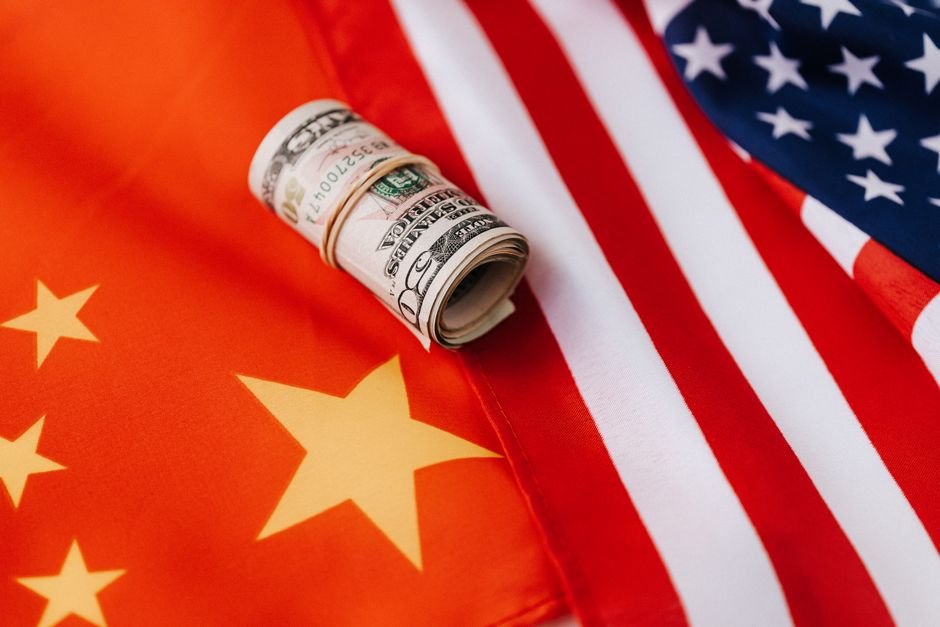
A new report by The Guardian concludes that China has emerged as the sole strategic winner from the Iran war, a conflict that has devastated the Middle East, strained American military resources, and sent shockwaves through the global energy system. While the United States, Europe, and regional powers have absorbed severe economic damage, Beijing’s strategic positioning has left it not merely unscathed but demonstrably stronger.
The assessment, published June 30, marks a shift in the conventional narrative that initially cast China as a potential loser given its reliance on imported oil. Early predictions held that Beijing would be the war’s biggest casualty, squeezed between the loss of discounted Iranian crude and the broader disruption of Middle Eastern energy markets. Those forecasts now look badly mistaken.
China’s resilience stems from a multi-layered energy strategy that the report traces back more than a decade. President Xi Jinping first merged energy security with national security in the early 2010s, setting in motion a systematic diversification of supply chains and a massive build-out of strategic petroleum reserves. By the time the Strait of Hormuz crisis erupted in late February 2026, China had accumulated stockpiles large enough to insulate its economy from even a prolonged disruption. While oil-dependent economies in Asia and Europe scrambled for supply, China’s reserves provided a cushion that kept its refineries running and its transportation sector largely unaffected.
The crisis at the Strait of Hormuz, which saw approximately 20 percent of the world’s daily oil supply jeopardized by Iranian mining operations, naval clashes, and missile attacks on Gulf energy infrastructure, was supposed to be Beijing’s Achilles’ heel. A third of all oil transiting the strait was bound for China. But Beijing had already been reducing its structural dependence on Middle Eastern crude for years, expanding imports from Russia, West Africa, and the Americas alongside its domestic renewables ramp-up.
The war’s deeper impact has been to accelerate exactly the global energy transition in which China already holds an unassailable lead. The conflict has functioned as a forcing mechanism for clean energy adoption on a global scale. Higher oil and gas prices have made solar, wind, and battery storage dramatically more cost-competitive. Countries from Europe to Southeast Asia are fast-tracking renewable deployment and electric vehicle mandates. And across every link in the clean energy supply chain, Chinese manufacturers dominate.
China now accounts for more than 80 percent of global solar panel manufacturing, a similar share of battery cell production, and the vast majority of wind turbine fabrication. It processes the critical minerals essential to all of these technologies. The IEA reports that China makes up over 70 percent of global electric vehicle production. For every country seeking to reduce its vulnerability to fossil fuel disruptions, deepening trade ties with Chinese clean-tech suppliers is effectively unavoidable.
This is already translating into hard economic gains. In March, Indonesian President Prabowo Subianto announced a major push into EVs, including local production and charging infrastructure. Chinese firms have inked deals worth over $54 billion with Indonesia’s state utility since 2023 alone. In Southeast Asia, Vietnamese EV maker VinFast has launched aggressive discounting campaigns. Across the developing world, nations that once viewed solar and EVs as climate luxuries now see them as energy security imperatives, and China is the only supplier that can meet the scale of demand.
The war has also served as a live demonstration of the fragility that comes with fossil fuel dependence. European gas prices surged to their highest levels since the 2022 Ukraine shock. The White House was forced to tap the Strategic Petroleum Reserve. Japan, South Korea, and India faced supply chain stress and soaring import bills. China, by contrast, saw its strategic bet on electrification and domestic energy generation validated. Nearly all of China’s electricity demand growth in 2024 was met by clean sources, led by solar and wind. Chinese oil demand is now projected to peak as early as 2027, two years earlier than previously expected.
As Sam Reynolds of the Institute for Energy Economics and Financial Analysis put it: “China’s approach to energy sector development and geopolitics has been completely validated by the Iran conflict.”
The diplomatic dimension reinforces the economic picture. While the United States has been bogged down in a costly military campaign with no clear exit, forced to demand allied contributions to secure the Strait of Hormuz, China has projected an image of restraint and negotiation. As one earlier Guardian analysis from March 2026 noted: “Trump’s show of force in the Middle East creates a weakness China can exploit.” The war has diminished American soft power while elevating China’s stature as a stabilizing alternative. In the Middle East, Beijing has deepened ties with Saudi Arabia and the Gulf states, positioning itself as a diplomatic partner independent of the US-led security framework.
The contrast could hardly be starker. The United States entered 2026 expecting a swift punitive campaign against Iran and instead found itself managing a multi-theater crisis, a naval mine-clearing operation, and a home front roiled by soaring gasoline prices. Europe, still recovering from the energy shock of Russia’s war on Ukraine, has been hit again. The Middle East has suffered billions in infrastructure damage and supply chain disruption.
China, meanwhile, has not fired a shot. It has not deployed a single warship. It has not signed a single combat check. And it has emerged as the war’s clearest strategic beneficiary. The Iran conflict was supposed to be a test of China’s vulnerabilities. It has turned out to be a demonstration of its strengths.