

Startup Orbital Files FCC Plans for 100,000 Data Center Satellites
A five-month-old startup named Orbital has filed an application with the Federal Communications Commission for permission to deploy up to 100,000 data center satellites in low Earth orbit, a proposal that would create the largest constellation ever filed by a single company. The application, submitted June 29, describes a network capable of delivering 10 gigawatts of computing power from space.
Orbital was founded by Euwyn Poon, previously CEO of the e-scooter startup Spin, which was acquired by Ford in 2018. The Los Angeles-based company has raised $5 million in pre-seed funding from a16z Speedrun and maintains a small team of approximately six to twelve employees drawn from SpaceX, Amazon’s Project Kuiper, and Northrop Grumman.
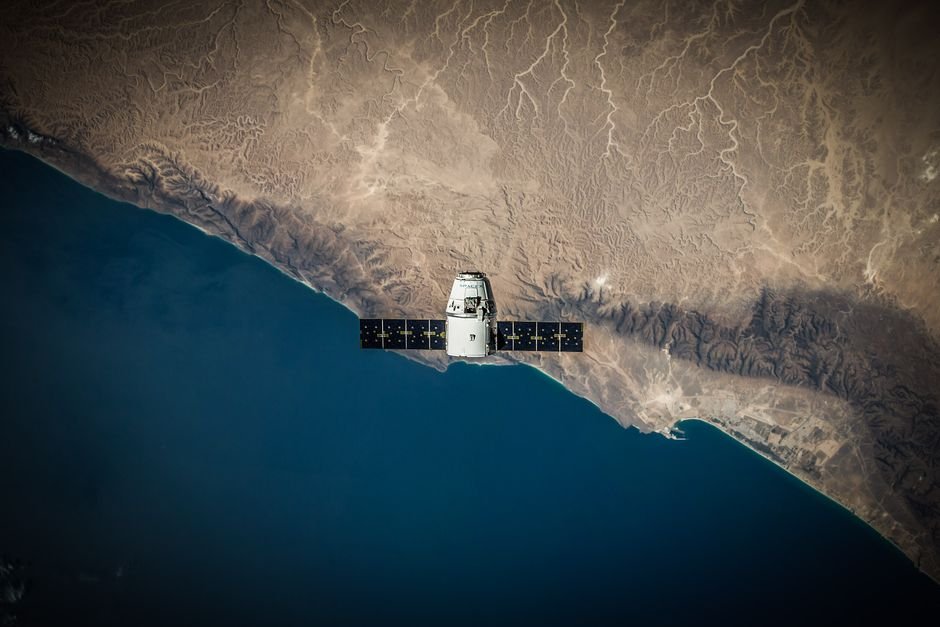
The scale of the ambition is difficult to overstate. A constellation of 100,000 satellites would surpass even SpaceX’s Starlink network in sheer numbers. Each Orbital satellite is designed as a 100-kilowatt-class platform with solar arrays and radiator panels spanning roughly 100 meters, a dry mass of 1.5 to 2.5 tons, and an orbital altitude between 500 and 850 kilometers.
A long road ahead
Orbital’s timeline is aggressive but realistic about the challenges. A pathfinder mission carrying a single GPU is planned for 2027 aboard a Falcon 9 rideshare. The first production satellite, Orbital-1, would follow in 2028. Full constellation deployment would take place through the 2030s and is entirely dependent on SpaceX’s Starship for economical launch.
“The complexity is all launch, really,” Poon told SpaceNews. “The satellite design is straightforward compared to getting 100,000 units into orbit at a cost that makes the business work.”
The economics are daunting. A16z estimates the full buildout could exceed $5 billion over a decade. Each satellite must be manufactured at costs far below current spacecraft prices, launched on a vehicle that has not yet demonstrated its promised cost per kilogram, and operated in an environment that is fundamentally hostile to computing hardware.
The cooling problem
The most significant technical challenge is thermal management. In the vacuum of space, heat can only be removed through radiative cooling, which is approximately 1,000 times less efficient than convective cooling on Earth. A 1-megawatt data center in orbit would require roughly 1,600 square meters of radiator surface area to maintain operating temperatures.
This drives the satellite’s distinctive design: the 100-meter radiator and solar array spans are not optional. They are a direct consequence of the physics of orbital heat rejection. For comparison, a terrestrial data center of equivalent computing capacity would fit in a shipping container.
Competitive landscape
Orbital enters a rapidly crowded field. Starcloud, the early leader in orbital computing, has filed for 88,000 satellites, raised over $200 million, and successfully demonstrated an Nvidia H100 GPU in orbit in November 2025. SpaceX has proposed a constellation of 1 million data center satellites with 150-kilowatt platforms, leveraging its vertical integration and launch cost advantages. Cowboy Space has filed for 20,000 satellites and is building its own launch vehicles.
Blue Origin has discussed orbital data center concepts but has not filed with the FCC.
Regulatory and environmental concerns
The FCC filing triggers a review process that will examine orbital debris mitigation, spectrum interference, and collision risk. A constellation of 100,000 satellites in LEO would dramatically increase the orbital debris hazard, particularly given the large surface area of each spacecraft’s radiator panels.
Astronomers have voiced strong concerns. The satellites would be visible at midnight, with large reflective surfaces potentially interfering with wide-field surveys conducted by the Vera Rubin Observatory and other next-generation telescopes. “The shutter would be closed more than open,” said John Barentine of Dark Sky Consulting, referring to the likely impact on astronomical observations.
The FCC is still developing its regulatory framework for orbital data centers, which differ from communications satellites in their power requirements, physical dimensions, and operational profiles. The application is expected to face a multi-year review.