

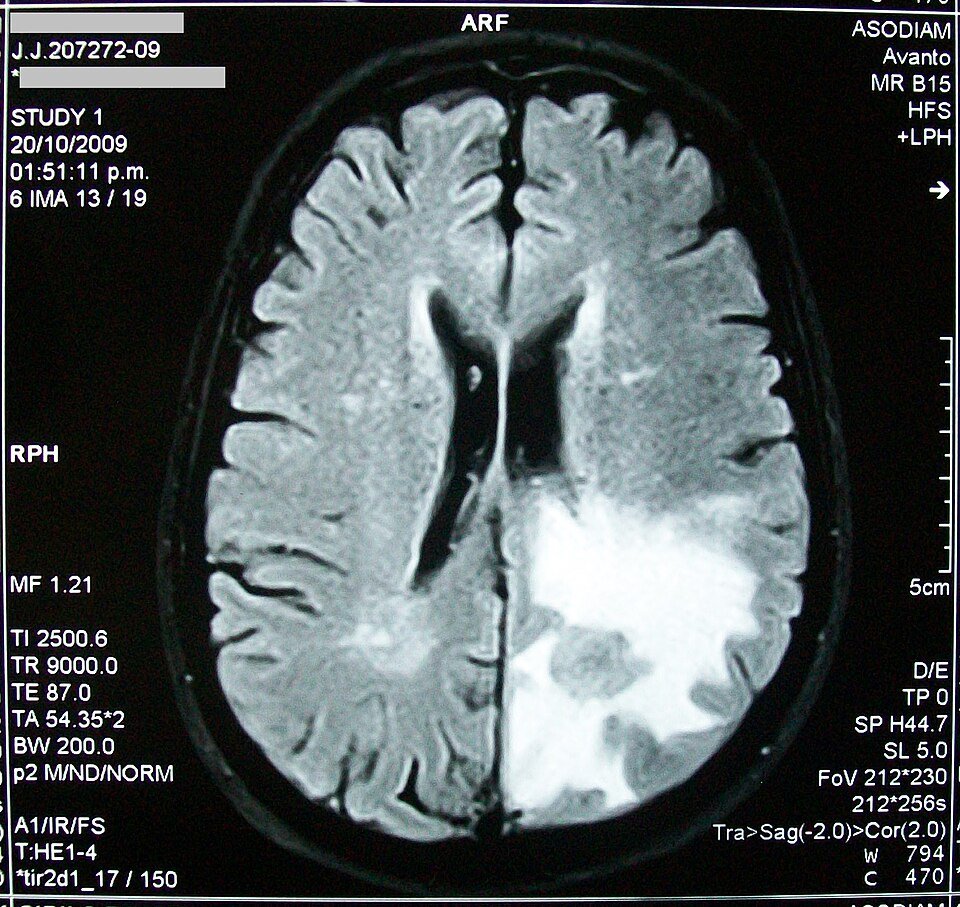
Brain metastases are among the most devastating complications in oncology. When cancer spreads to the brain, the prognosis is grim: roughly 90% of patients die within 12 months. Current treatments, surgery, radiation, and stereotactic radiosurgery, are palliative, not curative. No drug is approved to prevent brain metastases from forming in the first place.
A new study published in PNAS by Agata Kieliszek, Sheila Singh, and colleagues at McMaster University and King’s College London identifies a metabolic vulnerability that could change that. The target is IMPDH2, an enzyme in the guanine nucleotide synthesis pathway that brain metastasis-initiating cells (BMICs) depend on for survival. The team developed selective inhibitors of IMPDH2 that stop brain metastasis formation in preclinical models while leaving the immune system, and specifically T and B lymphocytes, undisturbed.
That last point is the key. Previous attempts to target this pathway used non-selective drugs that crippled the immune system, making them unsuitable for cancer patients whose defenses are already compromised.
A metabolic dependency mapped
IMPDH2 is one of two isoenzymes of inosine monophosphate dehydrogenase, the rate-limiting enzyme in de novo GTP biosynthesis, the pathway cells use to build guanine nucleotides from scratch. While many normal cells can fall back on salvage pathways to obtain guanine nucleotides, brain metastasis-initiating cells cannot. They are addicted to de novo synthesis.
Kieliszek and colleagues found that IMPDH2 is specifically upregulated in BMICs and essentially absent in normal brain tissue. Genetic knockout of IMPDH2 using CRISPR stopped BMIC proliferation in culture and prevented brain metastasis formation in murine xenograft models. The enzyme is not merely correlated with brain metastasis, it is causally necessary.
This builds on the team’s prior work published in Cell Reports Medicine in 2024, which first identified de novo GTP synthesis as a druggable vulnerability in brain metastases. The new study advances that finding to a selective pharmacological strategy.
Why selectivity matters
The older generation of IMPDH inhibitors, most notably mycophenolic acid (MPA), the active metabolite of the immunosuppressant mycophenolate mofetil (CellCept), inhibit both IMPDH1 and IMPDH2. MPA is actually 4 to 5 times more potent against IMPDH2 than IMPDH1, but at therapeutic doses it still potently blocks IMPDH1. That is a problem because IMPDH1 is the constitutively expressed isoenzyme in normal human lymphocytes. T cells and B cells, which depend almost entirely on de novo purine synthesis for proliferation, are crippled by pan-IMPDH inhibition.
This is precisely why MPA is FDA-approved as an immunosuppressant for organ transplant rejection, and why previous attempts to repurpose it as an anticancer drug failed at Phase II. The dose-limiting toxicity was immunosuppression.
Kieliszek and colleagues designed novel compounds that selectively inhibit IMPDH2 while sparing IMPDH1. In immune function assays, their IMPDH2-selective inhibitors maintained potent anti-proliferative effects on BMICs but left lymphocyte proliferation intact, a direct contrast to MPA, which suppressed immune cell function at comparable anti-cancer doses.
The structural basis for this selectivity draws on earlier work by Liao et al. (PNAS, 2017), which identified Cys140 as a druggable binding site unique to IMPDH2, a pocket not present in IMPDH1. The new compounds appear to exploit this difference, though the exact chemical structures remain undisclosed due to intellectual property considerations. The compounds are being developed through Block Biosciences, a McMaster University spinout of which the authors are co-founders.
Interceptional therapy
The Singh group envisions these IMPDH2-selective inhibitors as interceptional therapy, given to high-risk patients before brain metastases develop, co-administered with the standard of care for the primary tumor. For example, a patient with EGFR-mutant non-small cell lung cancer would receive the IMPDH2 inhibitor alongside osimertinib (the current standard), blocking the establishment of micrometastases in the brain before they become clinically detectable.
“By identifying patients who are at high risk of developing this type of brain cancer and trying to intercept the metastasizing cells before they can even form a brain tumor,” Singh told Medical Xpress, “we can transform this fatal disease into one that is entirely preventable.”
The team demonstrated synergy between their IMPDH2-selective compounds and osimertinib in vitro, suggesting the combination approach is feasible.
The size of the problem
Approximately 200,000 patients are diagnosed with brain metastases in the United States each year, more than the annual incidence of primary brain tumors (roughly 25,000) by a factor of eight. The most common primary tumors that metastasize to the brain are lung cancer (40 to 50% of cases), breast cancer (15 to 25%), and melanoma (5 to 20%). Median survival after diagnosis ranges from 2 to 16 months depending on the primary tumor type, molecular subtype, and available targeted therapies.
The 90% one-year mortality figure cited in the PNAS study is consistent with SEER registry data showing five-year relative survival of approximately 6.1% for all brain metastases combined. While recent advances in targeted therapies and immunotherapy have improved outcomes for some molecularly defined subsets, the overall prognosis remains grim, particularly because brain metastases are typically detected only after they have already formed, at which point the blood-brain barrier and neurological constraints limit treatment options.
The limitations
The current study demonstrates efficacy in murine xenograft models, human tumor cells implanted into immunocompromised mice. While these models are standard in brain metastasis research, they do not fully recapitulate the tumor microenvironment, the immune landscape of the brain, or the interaction between BMICs and the blood-brain barrier in an immunocompetent host. The synergy data with osimertinib is cell-culture based; in vivo combination studies have not been reported.
The chemical structures of the selective inhibitors have not been disclosed, and no pharmacokinetic or toxicity data in large animals or humans are available. The transition from a promising preclinical candidate to a clinical-stage drug typically takes 5 to 8 years and succeeds only about 10% of the time for oncology indications.
And while the “interceptional” strategy, treating patients before metastases form, is conceptually attractive, it requires identifying high-risk patients reliably enough to justify administering a systemic medication for months or years to prevent an event that may occur in only a fraction of cases.
What’s next
The team is advancing the compounds toward IND-enabling studies, the preclinical work required to file an Investigational New Drug application with the FDA. Parallel work focuses on identifying biomarkers that could stratify patients by risk of brain metastasis, enabling the interceptional approach. The concept of preventing brain metastases rather than treating them after they form is gaining traction in the neuro-oncology community, and IMPDH2-selective inhibition is among the first targeted metabolic strategies that could make it a clinical reality.
Source:
Kieliszek AM, Apel E, Zheng S, et al. “Selectively targeting inosine monophosphate dehydrogenase-2 impairs brain metastatic potential while preserving immune cell function.” Proceedings of the National Academy of Sciences, Vol. 123, No. 25, e2603440123 (2026). DOI: 10.1073/pnas.2603440123