

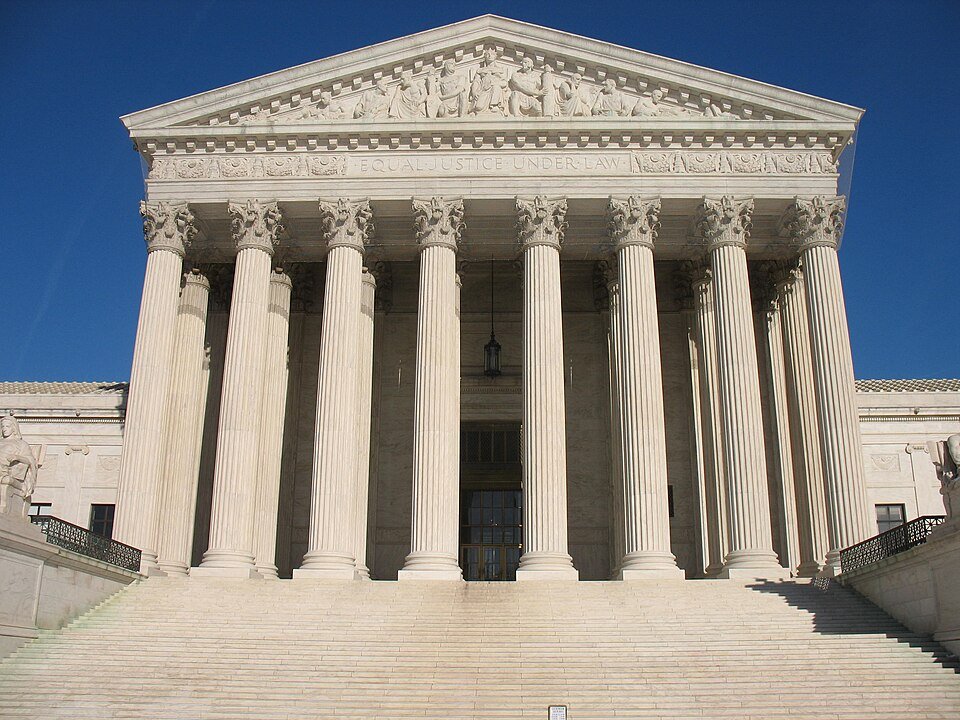
The US Supreme Court ruled 6-3 on Monday that geofence search warrants are subject to the Fourth Amendment, requiring law enforcement to establish probable cause before demanding location data from technology companies.
The decision in Chatrie v. United States marks the first time the Supreme Court has addressed the constitutionality of geofence warrants, a law enforcement tool that lets investigators request location records for every device inside a defined geographic area during a specific time window. Privacy advocates had compared the practice to a “digital dragnet” that allowed police to identify suspects by sweeping up data on innocent bystanders.
“An individual has a reasonable expectation of privacy in his cellphone location information,” the majority wrote, rejecting the government’s argument that users voluntarily surrender their location data when they carry phones that connect to cellular networks.
The ruling explicitly rejects the “third-party doctrine” for geofence location data. Under that doctrine, the Supreme Court had previously held that information voluntarily shared with a third party (such as a phone company) is not protected by the Fourth Amendment. The majority found that carrying a phone does not constitute “willingly sharing” location data with the purpose of revealing it to the government.
The case originated with Okello Chatrie, who was convicted of bank robbery using evidence obtained through a geofence warrant. Chatrie’s attorneys argued the warrant was unconstitutional, a “search first and develop suspicions later” approach that inverted traditional Fourth Amendment protections. Lower courts had been split on the issue, setting the stage for Supreme Court review.
The ruling does not ban geofence warrants outright. Police can still obtain them if they narrow the request to specific individuals and demonstrate probable cause linking a person to a crime. The court also declined to overturn Chatrie’s conviction, ruling the evidence was collected in good faith before the law was clarified, but sent the case back to the appeals court to determine whether the original warrant met the probable cause standard.
Technology companies have been preparing for months. Google has begun storing location data on users’ devices rather than on its servers, making it more difficult to comply with sweeping geofence requests. Microsoft, Uber, and Yahoo also regularly receive geofence demands and are expected to adjust their compliance policies following the ruling.
Privacy advocates praised the decision while noting they had sought stronger protections. “The court has drawn an important line,” said the American Civil Liberties Union in a statement. “But this is a floor, not a ceiling. Congress should act to ban geofence warrants entirely.”
Sources: In major privacy win, Supreme Court rules geofence warrants are protected by privacy rights (TechCrunch, June 29, 2026)