

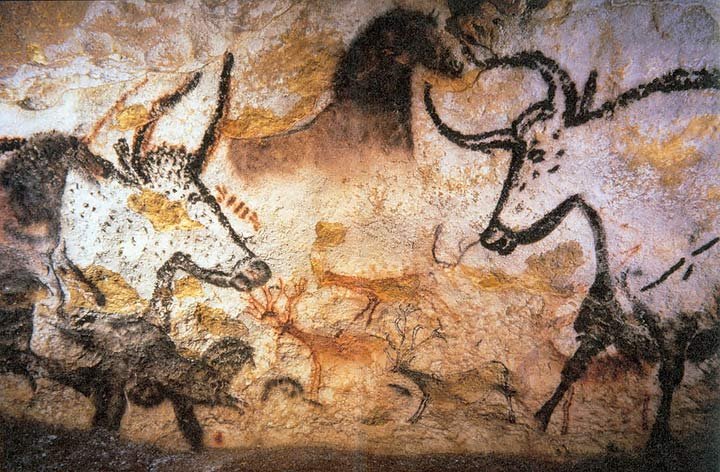
For decades, the question of who painted the great prehistoric caves of Europe has been a matter of inference. Archaeologists studied the style, the carbon dates, the animal bones left behind, and the occasional footprint preserved in clay. But they could never ask the pigment itself. Now, a team led by the Max Planck Institute for Evolutionary Anthropology has changed that, by extracting ancient human DNA directly from the red ochre paint on cave walls.
The study, published June 23 in *Nature Communications* by first author Alba Bossoms Mesa and senior author Matthias Meyer, sampled 120 specimens from 24 painted panels across 11 caves in Spain and Portugal. Using a silica-based DNA extraction method originally developed for ancient bones and sediments, the researchers recovered human genetic material from the mineral crusts that form on top of the pigment.
One cave, three people
Of the 24 panels sampled, only one yielded ancient human DNA from actual paint, the Escoural cave in Portugal, where a sample from a red ochre panel carried human genetic material. Two further samples from the Covaron cave in Asturias, Spain, taken from unpainted limestone wall surfaces near the art, also contained ancient human DNA.
The three samples that passed the strict authenticity criteria, requiring C-to-T deamination exceeding 10 percent at fragment ends, a hallmark of genuinely ancient DNA, belonged to western hunter-gatherers, a genetic population that lived in Europe between about 5,200 and 17,000 years ago. Mitochondrial DNA analysis placed them in haplogroup U5a’b, the most common lineage among European hunter-gatherers.
Remarkably, three of the five samples that could be sexed were predominantly female, one was male, and one was indeterminate.
“We cannot say these people were the artists,” cautioned the researchers. The DNA could have come from someone who touched the wall after the painting was made, perhaps during later visits or rituals. But the location of the DNA, embedded in the mineral crusts that form on top of and within the pigment layer, suggests it accumulated during or close to the time of painting.
The Neanderthal question
One of the most charged questions in archaeology is whether Neanderthals made cave art. The study directly addresses this, noting that “ancient DNA analysis currently cannot contribute to the debate over authorship, including whether Neanderthals, in addition to early modern humans, made rock art.” The Escoural pigment samples that did yield human DNA were all genetically consistent with *Homo sapiens*, not Neanderthals.
But the method’s potential to answer this question is precisely what makes the study significant. The research team, in collaboration with the First Art project, has already expanded sampling to the Nerja and Ardales caves in Spain, whose art has sometimes been attributed to Neanderthals based on uranium-thorium dating of associated calcite deposits.
In an intriguing side finding, the Cudon cave in Cantabria, whose Mousterian layers are associated with Neanderthals, yielded Neanderthal mitochondrial DNA from sediments. Not from the art itself, but from the surrounding deposits, confirming that Neanderthals were present in these cave systems.
A low-yield but high-impact method
The success rate was low: only one pigment sample out of 24 panels produced ancient human DNA. The Escoural cave’s sample (SP.B.2674, from Panel 11) was the sole success. The Altamira bone blowstick, a hollow bird bone used to spray red ochre onto the ceiling, yielded no ancient DNA due to modern contamination.
“Even with a single successful sample, this method opens a new window into Paleolithic art,” said Bossoms Mesa. The ability to extract genetic material from the very medium of the art, the red ochre itself, means that future improvements in extraction techniques could dramatically increase the yield.
The study also identified a wide range of animal DNA from the cave surfaces, including an unexpectedly high proportion of carnivore DNA in the painted areas, suggesting that predators may have used the caves when humans were not present.
For now, the work establishes a proof of concept: the artists, or the people who touched their work, left genetic traces in the paint. With better methods and more samples, those traces may one day have names.
—
Source: Bossoms Mesa, A., Essel, E., Jáuregui, L., et al. (2026). Exploring ancient human DNA preservation in cave walls and rock art. *Nature Communications*, 17, 5561. https://doi.org/10.1038/s41467-026-74234-2