

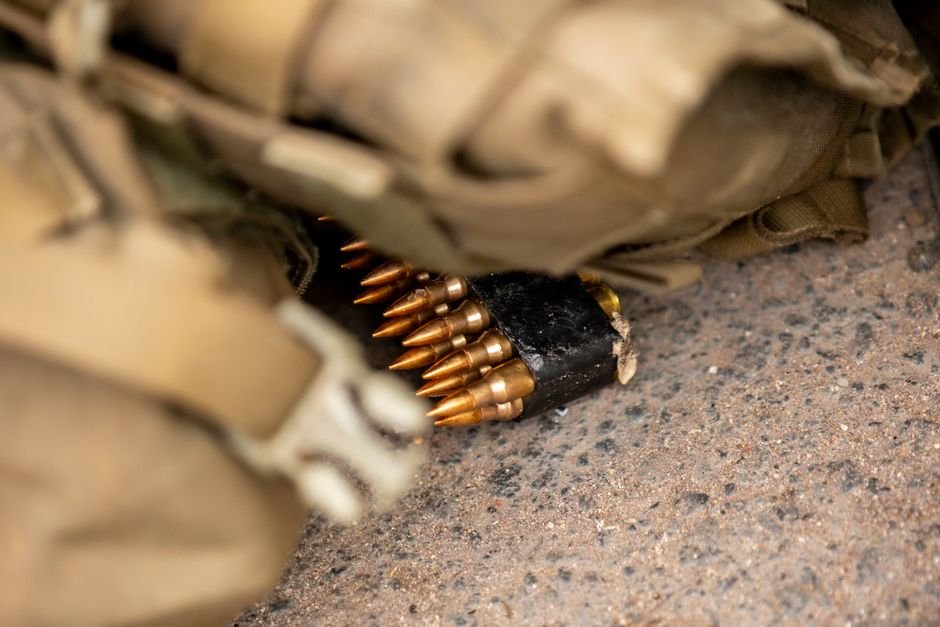
The Washington Post reported this week that shortages of missiles and air defenses had stopped President Trump from launching fresh strikes on Iran. Within hours, Trump was online denying that any shortage exists and threatening the people who talk about it with prison.
On Truth Social he wrote that the country has massive amounts of munitions and that defense companies are building the largest number of plants and factories in the country’s history. As for the officials leaking what he called treasonous statements about the state of the arsenal, he wrote that long-term jail sentences would be sought. Last week he told the Wall Street Journal that the United States has far more munitions than anyone in the world.
The Post’s report describes the moment differently. During a cabinet meeting at Camp David last Friday, Trump let his frustration out on Defense Secretary Pete Hegseth, saying he had thought the munitions problem had been fixed. Two people familiar with the exchange said Hegseth pointed at his deputy, Stephen Feinberg. The Post cited shortfalls in long-range guided missiles and in the interceptors used for air defense as reasons Trump had held back from further major strikes on Iran in recent days. The United States is also running low on THAAD, the system that guards American troops in the Gulf.
The denials came in the usual forms. Press secretary Karoline Leavitt called the story 100 percent fake news and said it had literally never happened. Pentagon spokesman Sean Parnell said Hegseth misled no one and blamed no one, calling the claims about depleted stockpiles and internal disagreements equally fictional.
And then there is the paperwork. The Pentagon’s emergency funding request to Congress this fiscal year totals $67 billion, and $18.2 billion of it is earmarked to replenish the top Patriot interceptors, Navy Tomahawks and the THAAD anti-missile system. The Center for Strategic and International Studies estimates the Patriot interceptor stock has fallen by about 65 percent since the war with Iran began, with its updated late-July figures worse than its earlier estimate of around 55 percent.
Read those three things together and the picture is hard to miss. The president says the shortage does not exist. The Pentagon asks Congress for $18.2 billion to replace the exact weapons in question. And anyone in government who confirms the gap in public is threatened with jail. The leak investigation goes after the messenger; the money goes after the problem. Both are admissions, in different languages, that the magazines are not as full as the president says.
The stakes are concrete. This is a war in which American bases across the Middle East have been struck by Iranian drones and missiles for months, a war that has already consumed stockpiles faster than industry can replace them. The commander in chief’s belief that the problem had been fixed collided with his own budget request. When the man who orders the strikes does not know what the arsenal contains, and punishes the people who tell him, the shortage stops being a logistics problem and becomes a command problem.
The rhythm is familiar. Hegseth dismissed talk of a munitions shortage as a manufactured story in June, two months after conceding that rebuilding the stockpiles would take months and years. Each time the shortage resurfaces, the official line moves from denial to blame to threats, and each time the budget request tells a different story. Adversaries and allies both read the discrepancy, and both plan accordingly. A rival weighing a move in the Pacific, or Tehran deciding whether to press its advantage, does not need the Pentagon’s charts; the president’s own denials and the navy’s own requests are evidence enough.
The Iran war was supposed to be short. It is not. The missiles are finite, the factories are slow, and the president has decided that the most dangerous thing about the shortage is the news coverage. Jail sentences do not manufacture interceptors. They do, however, guarantee that the next warning about the stockpile arrives later, and that the people who might have raised it think twice. That is not a way to run a war. It is a way to hide one.