

Polyvinyl chloride is the plastic the recycling industry would rather not talk about. Roughly 60 million tonnes are produced worldwide every year, and it is everywhere, from pipes and window frames to cables and flooring, prized for its durability, low cost, and fire resistance. That durability is exactly the problem: PVC does not break down easily, and when it does, it leaches chlorohydrocarbons and additives into soil and groundwater. Recycling it has always been chemically awkward, so most of it ends up in landfills.
A team led by Virginia Tech, with partners at Texas A&M and Caltech, reports in Nature converting waste PVC into polyalphaolefin lubricants, the high-grade synthetic oils used in engines and machinery, using inexpensive aluminum chloride as a catalyst at a mild 70 degrees Celsius, with no exotic reagents required. The route turns a problematic waste stream into a commodity worth more than the original material.
The chemistry
The process exploits PVC’s structure. The polymer’s carbon-chlorine bonds are its weakness in the environment but its handle in the lab. Under aluminum chloride catalysis at 70 degrees Celsius, PVC undergoes three reactions at once: dechlorination, which strips the chlorine; alkylation, which grafts on alpha-olefins of various chain lengths; and chain scission, which breaks the polymer into lubricant-sized molecules. The result is a vinyl-derived polyalphaolefin, or vPAO, with limited short branches in its backbone.
The significance is partly what the process does not need. Current polyalphaolefin technology relies on metallocene catalysts, which are expensive and sensitive. The PVC route uses aluminum chloride, cheap, abundant, and tolerant, and produces lubricants with tunable properties: kinematic viscosity at 100 degrees Celsius ranging from 14.9 to 26.3 centistokes, viscosity index up to 130, and a coefficient of friction between 0.08 and 0.15, competitive with commercial synthetic lubricants.
Validated beyond the beaker
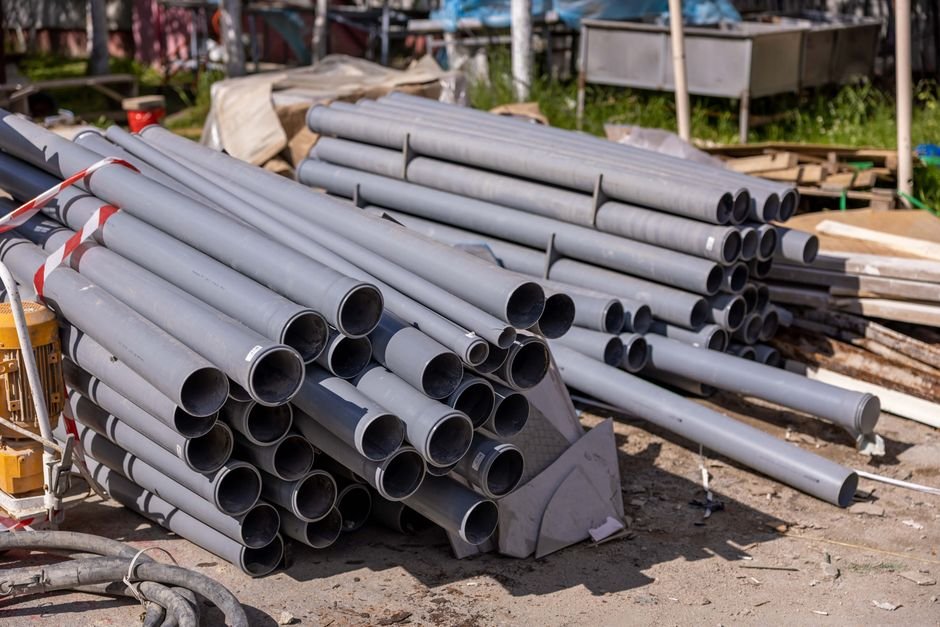
The team did not stop at virgin polymer. They extended the method to actual PVC waste products, the pipes and fittings that plague recycling streams, and demonstrated the same conversion. Molecular dynamics simulations predicted the reaction mechanisms and free energies, matching the experimental picture. A techno-economic analysis assessed financial viability, and a provisional patent has been filed.
The scale of the opportunity is the context. PVC is the third most-produced plastic globally, and its chlorine content makes conventional recycling approaches such as pyrolysis prone to corrosion and toxic byproducts. Valorizing it into a high-value product changes the economics of collection and reuse, providing a financial incentive for keeping PVC out of landfills and supporting carbon circularity: the carbon in the waste plastic ends up in a useful product rather than in the atmosphere.
The caveats
The work is a demonstration of chemistry, not yet an industrial process. The quantities produced in the study are lab-scale, and questions of throughput, catalyst lifetime, and feedstock purity (real-world PVC waste contains additives and contaminants) remain for engineering-scale validation. The lubricants’ tribological properties are promising but need longer-term testing in actual engines.
Still, the direction is clear. The plastics industry has spent a decade searching for chemical recycling routes that are economically viable without subsidies. A route that converts the most chemically awkward plastic into one of the most valuable polymer products, using a cheap catalyst at a mild temperature, is the kind of answer that changes how the problem is framed. The corresponding authors include Guoliang Liu at Virginia Tech, Ali Erdemir at Texas A&M, and William A. Goddard III at Caltech. The work was supported by NSF awards DMR-2411680 and CBET 2311117.
Sources
- Munyaneza, E., Thompson, C., Civiello, A. et al. “Upcycling of polyvinyl chloride into polyalphaolefin lubricants.” Nature (2026). DOI: 10.1038/s41586-026-10867-z
- Nature Podcast, “Junk plastic turns into high-value commodity with chemistry trick,” August 5, 2026