

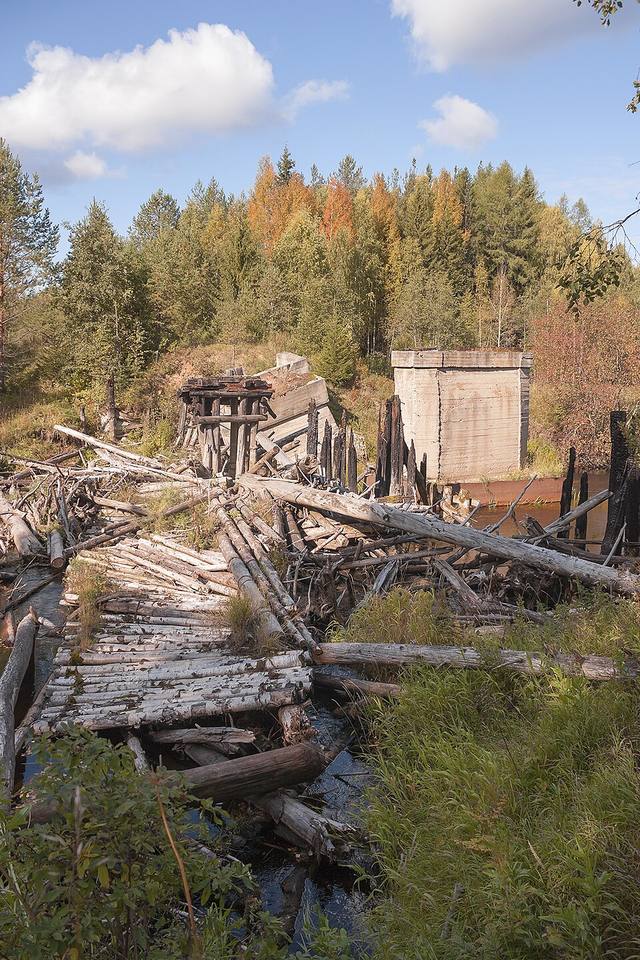
Ukraine’s Special Operations Forces have annihilated a strategic railway bridge over the North Crimean Canal, severing one of the last rail links between occupied Crimea and mainland Russia and signaling a new phase in Kyiv’s campaign to isolate the peninsula.
The operation unfolded in two stages over the night of June 22 and the early hours of June 23. In the first strike, Ukrainian SOF units hit the railway bridge near the settlement of Razdolne, collapsing one span and rendering the line unusable. Then they waited. When Russian railway repair crews and equipment arrived on scene to fix the damage, Ukrainian drones struck again, destroying both the repair equipment and the remaining sections of the bridge. “The railway bridge across the North Crimean Canal in Crimea no longer exists,” the SOF announced in a statement on June 23.
The bridge was a vital logistics artery. It carried rail traffic between Crimea and the Russian-controlled parts of Ukraine’s Kherson and Zaporizhzhia regions, moving heavy cargo including ammunition, fuel, and military hardware. Along with the Kerch Bridge and the Chonhar Bridge, it was one of only three rail bridges connecting the peninsula to the mainland. Ukraine has now rendered all three routes increasingly unreliable through sustained strikes.
Ukrainian Defense Minister Mykhailo Fedorov described the strategic objective in blunt terms. “We are isolating Crimea with drones,” he said. “It looks like in the near time, Crimea will become an island. This could lead to some very unexpected consequences for Russians.”
The railway bridge strike was not an isolated raid. It came as part of a massive overnight Ukrainian offensive that hit more than 60 Russian military targets across occupied Crimea and the southern front. Unmanned Systems Forces Commander Robert Brovdi, known by the call sign Madyar, confirmed that the night’s operations involved multiple drone units including Madyar’s Birds, Nemesis, K-2, Rarog, and Raid formations.
The target list reads like a catalog of Russia’s military infrastructure on the peninsula. Ukrainian drones destroyed three Orion reconnaissance and strike drones in Kerch. They hit a Nebo-U radar station, a Pantsir-S1 air defense system, an S-300 launcher, and a ZU-23 anti-aircraft gun. They struck fuel reservoirs at the Kerch Thermal Power Plant, the Simferopol gas distribution station, and the West Crimea 330/110 kV electrical substation. Fires were reported at the Port Kavkaz oil terminal and the Yuzhna railway station in Kerch.
The attacks on energy infrastructure have produced cascading effects on the civilian population. Half of Crimea was left without electricity after the strikes knocked out multiple substations and damaged the Kerch thermal plant. Russian-installed authorities blamed “technical faults in the electrical grid” and said restoration could take up to 24 hours, but rolling blackouts continued across the peninsula. In parts of Crimea, residents have been receiving power for only a few hours a day since Sunday.
Fuel supplies are in an even worse state. Crimea has completely suspended gas sales to civilians, and gasoline sales at filling stations have been halted entirely since June 21, with only government services permitted to purchase fuel. The Russian-installed administration imposed a system allowing residents to bring up to 200 liters of fuel per passenger vehicle across the Kerch Bridge, up from a previous limit of 100 liters that was imposed out of fear that Ukrainian strikes on fuel convoys could trigger explosions near the bridge. Hotels in Feodosia, Yevpatoria, and Yalta have been instructed to inform arriving guests that they must carry fuel in canisters and make arrangements for safe storage.
The situation on the peninsula is deteriorating faster than Russian authorities can manage. Public transportation operating hours have been cut. Stores and restaurants face reduced schedules. Mass gatherings have been canceled. Ferry service has been suspended. The pro-Ukrainian resistance network Atesh has reported increased activity among Russian occupation officials, including the evacuation of their families and valuable property from Crimea.
Ukraine’s broader campaign against the peninsula has been building for weeks. On June 11, Ukrainian forces struck and destroyed several bridges along the North Crimean Canal, including crossings near Preobrazhenka and Myrne, disabling the Armiansk road bridge and hitting a 50-vehicle Russian supply convoy carrying fuel and ammunition. The Chonhar Bridge was damaged in strikes on June 7 and June 9. The Henichesk-Arabat Spit crossing was hit on June 10. Each successive strike forced Russian logistics into tighter, more predictable corridors that Ukraine then targeted in the next wave.
The railway bridge at Razdolne was the latest and perhaps most consequential link to fall. Unlike road bridges, which can be bypassed with detours and temporary crossings, a destroyed railway bridge cannot be easily replaced. Rail remains the most efficient method for moving bulk military supplies, particularly ammunition and fuel. Its loss will force Russia to rely even more heavily on truck convoys along exposed highways where Ukrainian drones are increasingly active.
The campaign has been enabled by Ukraine’s expanding fleet of medium-range drones, capable of striking targets between 30 and 200 kilometers from the front line. These drones have allowed Ukraine to reach deep into the Russian rear without risking manned aircraft or exhausting its limited supply of Western long-range missiles. The approach is methodical and cumulative. Each night’s strikes degrade the peninsula’s air defense coverage, drain its fuel stocks, and cut its rail and road connections to the mainland.
Russia’s response has been mostly reactive and increasingly desperate. The Russian Black Sea Fleet has been forced to operate from ports further east after repeated Ukrainian strikes on Sevastopol. The Kerch Bridge, once a symbol of Moscow’s annexation, now carries reduced traffic and operates under constant threat. The Russian-installed governor of occupied Kherson, Volodymyr Saldo, has been reduced to publishing alternate detour routes after each bridge strike, a losing game as the detours themselves become the next targets.
There are consequences beyond Crimea for Russia’s broader war effort. The peninsula has served as the primary logistics hub for Russian forces in southern Ukraine, funnelling supplies from the Russian mainland to the front lines in Kherson, Zaporizhzhia, and eastern Donetsk. Each disruption in Crimea means less fuel, fewer shells, and slower resupply for Russian units already struggling with attrition and morale problems along the front.
The railway bridge at Razdolne will not be rebuilt easily. Repairing a major rail span in occupied territory under persistent drone surveillance is a fundamentally different problem from fixing a road bridge with civilian traffic. The construction equipment is itself a target, as the SOF demonstrated by destroying the repair crews before they could begin work. Any attempt to rebuild will face the same two-stage trap: bring in equipment, wait for the second strike. Ukraine has made clear it will keep hitting the repair efforts until the bridge ceases to matter because the campaign to isolate Crimea is already complete.
Fedorov’s prediction that Crimea will become an island is no longer rhetorical. With the Razdolne bridge gone, the Chonhar bridge damaged, and the Kerch Bridge operating under reduced capacity, the peninsula’s connections to the Russian mainland are hanging by threads. The question now is not whether Ukraine can isolate Crimea, but how fast the isolation will translate into a measurable advantage on the battlefield.