

MIT researchers have developed a wearable ultrasound wristband that captures real-time images of muscles, tendons, and ligaments inside the wrist, enabling wireless control of a robotic hand with human-like dexterity.
The human hand is one of the most complex structures in the body, coordinating 34 muscles, 27 joints, and over 100 tendons and ligaments to produce a nearly infinite range of movements. Replicating that control in a robotic hand has been a long-standing challenge in robotics.
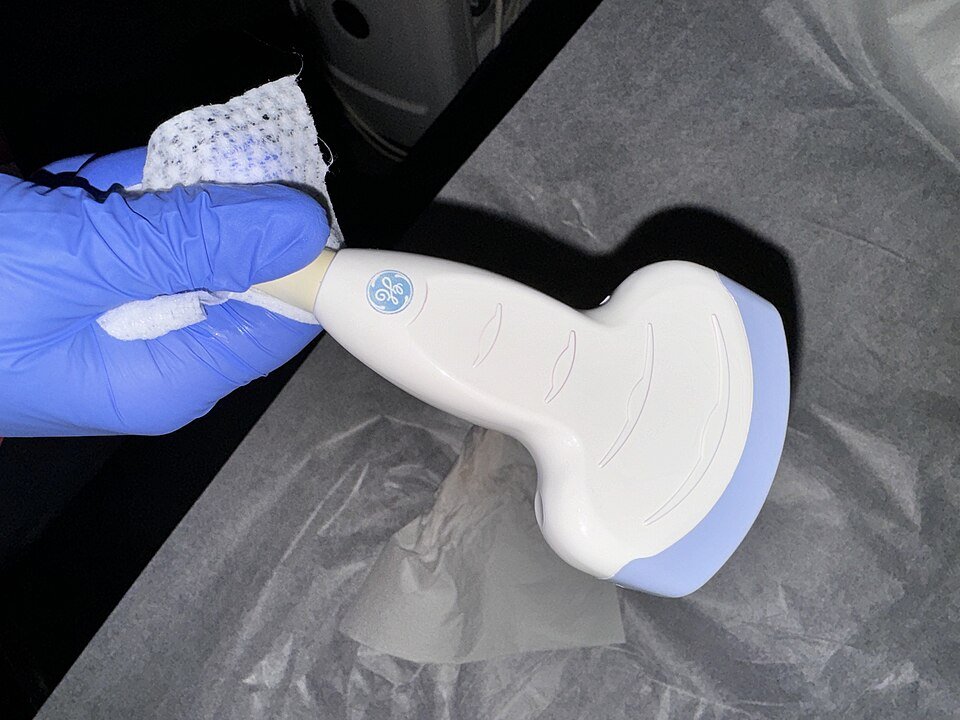
The MIT system uses a miniaturized ultrasound transducer, essentially a medical ultrasound “sticker” paired with a hydrogel for skin adhesion, worn on the wrist. As the hand moves, the device images the internal anatomy of the wrist. An AI algorithm trained on labeled ultrasound data translates those images into precise finger and palm positions, which are transmitted wirelessly to a robotic hand.
“The tendons and muscles in your wrist are like strings pulling on puppets, which are your fingers,” said Gengxi Lu, a former MIT postdoc and lead author of the study. “Each time you take a picture of the state of the strings, you’ll know the state of the hand.”
The team demonstrated the system in a series of tasks: making the robot hand mimic human gestures in what they call a “wireless marionette interaction,” playing simple piano melodies, shooting a mini basketball into a desktop hoop, and manipulating virtual objects such as pinch-to-zoom controls on a screen.
The approach differs from previous hand-tracking technologies by capturing internal anatomy rather than surface-level motion alone, providing more accurate tracking even during complex or occluded movements.
The researchers plan to miniaturise the wristband, currently about the size of a mobile phone, and build a larger dataset encompassing diverse hand sizes, finger shapes, and gestures. Potential applications include training humanoid robots for delicate tasks such as surgical procedures, natural hand interaction in virtual reality environments, and design applications.
“We believe this is the most advanced way to track dexterous hand motion through wearable imaging of the wrist,” said Xuanhe Zhao, professor of mechanical engineering at MIT. “These wearable ultrasound bands can provide intuitive and versatile controls for virtual reality and robotic hands.”
Sources: Ultrasound imaging turns a robot hand into a skillful mimic (MIT Technology Review, June 23, 2026)