

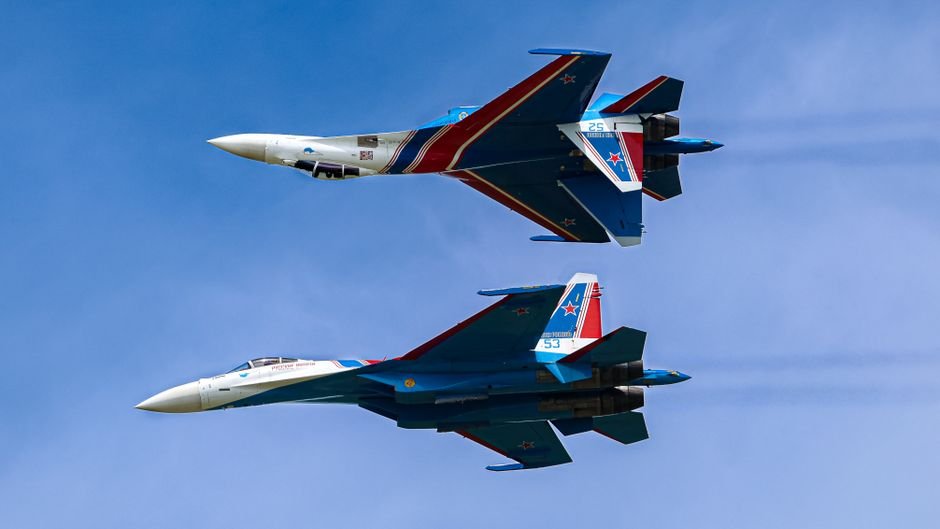
A Russian IL-20 reconnaissance aircraft crossed into Japanese territorial airspace on Friday, flying directly over the Northern Territories that Moscow seized at the end of World War II and has never given back.
Japan scrambled an Air Self-Defense Force fighter in response. The Russian plane’s flight path traced a wide arc: from the Asian continent over the Sea of Okhotsk, south into the Pacific off Miyagi Prefecture, then back to the Sea of Japan through the same corridor. It was a demonstration of reach and a reminder of geography, the Northern Territories sit astride the routes between Russia’s Pacific ports and the open ocean, and Moscow treats that position as a permanent asset.
A Defense Ministry official acknowledged plainly that Japan is currently “virtually unable to exercise jurisdiction” over the islands. The statement was notable for its candor: the government in Tokyo cannot enforce its own territorial claims over the four islands, Etorofu, Kunashiri, Shikotan, and the Habomai group, that the Soviet Union took in the final days of the Pacific war.
The incident was not new in kind. Russian military aircraft probe Japanese airspace periodically, usually testing air defense response times and signaling Moscow’s sovereignty over the disputed chain. But Friday’s intrusion carried an extra edge. Russia is bogged down in its war in Ukraine and has been forced to redeploy troops from its eastern districts to the front lines. Yet it still has the capacity, and the will, to send reconnaissance aircraft on provocative flights over territory Japan considers its own.
The territorial dispute has blocked a formal peace treaty between Tokyo and Moscow for 81 years. Japan’s position has not changed: it wants the islands back as a precondition for ending the state of war that has technically existed since 1945. Russia’s position has not changed either: it holds the territory, and no Japanese government has been able to change that fact through negotiation, pressure, or economic inducement.
The IL-20’s intrusion was also a message about jurisdiction. By flying over the Northern Territories and then leaving Japanese airspace when it chose, Russia demonstrated that it controls access to the islands, and that Japan, for all its protests and scrambled fighters, cannot alter that reality. A Defense Ministry official said the territorial issue “needs to be resolved through diplomatic negotiations.” But diplomacy has had eight decades to work, and the IL-20’s flight path was a reminder that while Japan talks, Russia acts.