

Blue Origin to Fire New Glenn Upper Stage on Historic Apollo-Era Test Stand Under NASA Deal
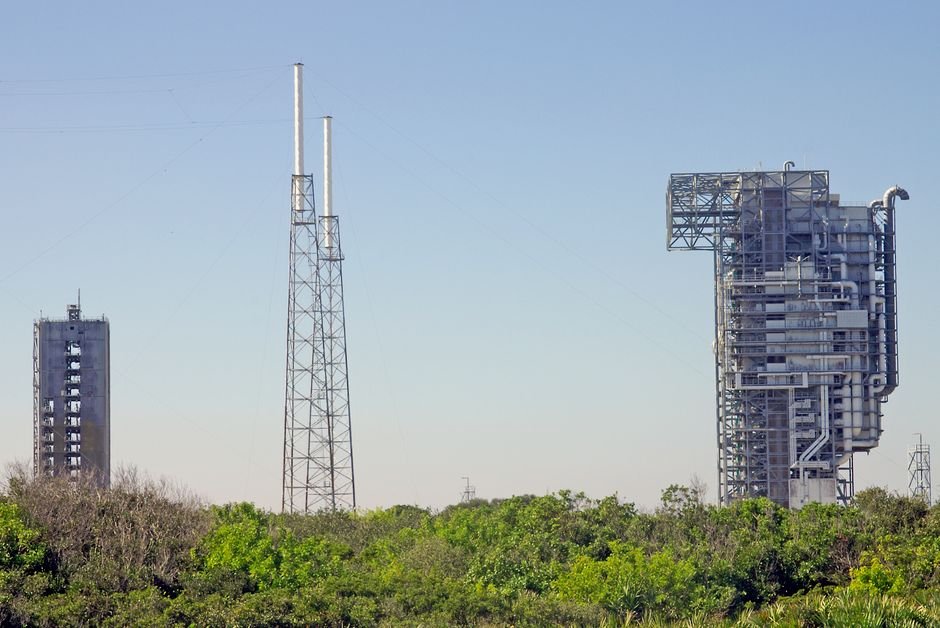
NASA and Blue Origin have formalized an agreement to conduct hot-fire testing of the New Glenn rocket’s second stage on the B-2 test stand at NASA’s Stennis Space Center in Mississippi, the agency confirmed this week.
The arrangement, an annex to a reimbursable Space Act Agreement signed earlier in July, marks a strategic pivot for Blue Origin following a catastrophic static-fire explosion at Cape Canaveral’s Launch Complex 36 on May 28, 2026. That incident destroyed the integrated launch vehicle and heavily damaged pad infrastructure, forcing the company to find alternative test capacity while repairs continue.
The B-2 stand was built in the 1960s to test the Saturn V first stage for the Apollo program. Most recently it hosted the Space Launch System core stage Green Run campaign for Artemis I. Now it will be adapted to accommodate the New Glenn second stage, designated GS2, which is powered by two BE-3U engines burning liquid oxygen and liquid hydrogen. Each engine delivers 200,000 pounds of thrust in vacuum, combining for 400,000 pounds across the pair.
Testing is expected to begin in the northern autumn of 2026. NASA will provide engineers, specialized equipment, facility modifications, and dedicated workspace drawn from decades of propulsion test experience at the site.
The agreement supports NASA’s broader Artemis campaign, which aims to return astronauts to the lunar surface and establish a sustained presence at the Moon’s south pole. Blue Origin holds contracts for both a robotic lunar delivery mission later this year and a human landing system for later Artemis flights.
The company’s Blue Moon Mark 1 Endurance lander is slated to launch this autumn on a New Glenn rocket, carrying NASA payloads to Shackleton Connecting Ridge near the lunar south pole. That mission is designed to retire risk for crewed landings planned under Artemis IV and V in 2028.
New Glenn is named after John Glenn, the first American to orbit Earth. The rocket stands 98 meters (322 feet) tall and is designed to deliver payloads to low Earth orbit, geostationary transfer orbit, and beyond.
Blue Origin has previously used Stennis test infrastructure. Between 2012 and 2015, the company tested BE-3 engine thrust chamber assemblies at the E-1 Test Stand at the center’s E Test Complex across four separate projects.
The B-2 stand will continue serving dual purposes. NASA is already preparing it for future SLS Exploration Upper Stage Green Run tests, and the New Glenn campaign will operate alongside those preparations.
Repair work at LC-36 is ongoing. Blue Origin CEO Dave Limp noted on social media this month that the launch table had been removed and transported to an integration facility for inspection. The company aims to return New Glenn to flight before the end of 2026, with the Stennis testing serving as a parallel qualification path.
Images:
- NASA overview of Stennis B-1/B-2 test stands: https://www.nasa.gov/wp-content/uploads/2026/07/bo.jpg
- Blue Origin New Glenn second stage specification: https://www.blueorigin.com/news/blue-origin-nasa-partner-to-test-new-glenn-at-stennis-space-center
- NASASpaceFlight.com analysis of Stennis B-2 adaptation: https://www.nasaspaceflight.com/2026/07/blue-ng-gs2-hot-fires-stennis-b-2/
Clark – 1ban.news