

Your headlights cut a tunnel through the dark highway. The lane markers drift. You correct. They drift again. Your eyes feel heavy, and the rumble strip startles you back to alertness.
Most drivers know that feeling. What they do not know, according to new research from the University of Zurich, is that a single sleepless night degrades steering control far faster and more severely than four nights of modest sleep restriction, even when the total hours of sleep lost are identical.
The finding, published in the journal Sleep, flips a common assumption on its head. Many people assume that the worst driving happens after long stretches of poor sleep. The study suggests the opposite: one all-nighter may be the real danger.
What they found
Researchers led by Stefan Lakamper recruited 20 healthy men for a tightly controlled experiment. Each participant completed three separate conditions in a randomized crossover design: a normal sleep baseline, four consecutive nights of restricted sleep losing two hours per night for a total of eight hours lost, and one night of total sleep deprivation losing the same eight hours in a single shot.
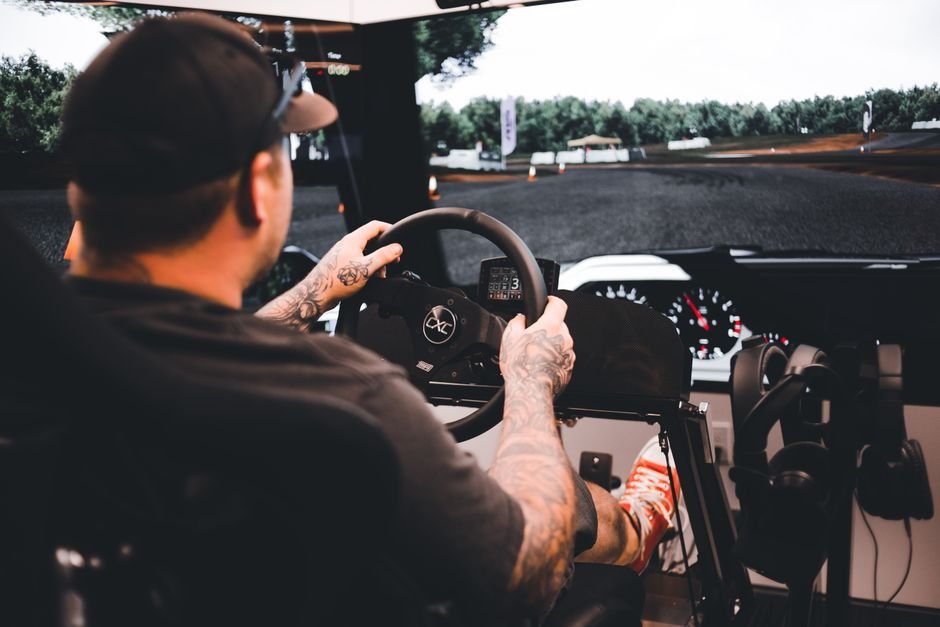
After each condition, participants climbed into an immersive driving simulator for a late-night and early-morning commute on a monotonous two-lane highway. The simulator measured lateral control, how well drivers kept the car centered in the lane, speed variability, and vigilance.
The results were stark. After acute total sleep deprivation, lateral control collapsed within four to six minutes of driving. The impairment was equivalent to a blood alcohol concentration of 1.2 to 1.4 grams per liter, well above the legal driving limit of 0.5 g/L in most European countries and far above the 0.8 g/L limit common in the United States.
By contrast, after the cumulative restriction protocol, the same drivers showed much smaller and less consistent changes in steering control, even though they had lost exactly the same total amount of sleep, eight hours. Their subjective sleepiness ratings were also similar in both sleep-loss conditions, meaning they felt equally tired but performed dramatically differently behind the wheel.
Speed variability and vigilance held up under cumulative restriction but degraded sharply under acute deprivation. Drivers in the all-nighter condition struggled to maintain a steady speed and missed more cues on the road.
Why it matters
The study points to a counterintuitive public safety message. Acute total sleep loss, losing an entire night of sleep, produces a distinct, fast-acting hazard that cumulative partial sleep loss does not, even when the math says total sleep debt is the same.
For shift workers, new parents, medical residents, truck drivers, and anyone who has ever powered through a night to make a deadline, the implication is clear. If you have been awake all night, your driving may be dangerously impaired within minutes, and you may not realize it because your subjective sleepiness does not differ from someone who has been getting four to six hours for several nights.
The drunk-driving equivalency is the most striking part. A blood alcohol concentration of 1.2 grams per liter is roughly 50 percent above the US legal limit of 0.8 g/L and more than double the 0.5 g/L limit common in many European countries. At that level of intoxication, a driver is seven to ten times more likely to be in a fatal crash than a sober driver. The Zurich data suggest that a person who has been awake all night may reach a similar impairment level after less than ten minutes behind the wheel.
Limits
The study included only healthy young men, so the findings may not generalize to women, older adults, or people with existing sleep disorders. The driving simulation, while immersive, cannot capture every variable of real road conditions, including traffic, weather, and the adrenaline that sometimes keeps drowsy drivers alert for short periods. The cumulative restriction protocol used four nights of two-hour losses, which is a specific pattern; different restriction schedules might produce different results.
Bottom line
One night of total sleep loss impairs driving ability far more than four nights of partial sleep restriction, despite equal total sleep debt and equal subjective tiredness. The impairment appears within minutes and reaches a level comparable to severe alcohol intoxication. If you have been awake all night, the safest choice is not to drive at all.
Source
Lakamper S, et al. Driving performance after acute total sleep deprivation versus cumulative partial sleep restriction: A randomized crossover trial. Sleep. 2026. DOI: 10.1093/sleep/zsag206. PMID: 42497088.