

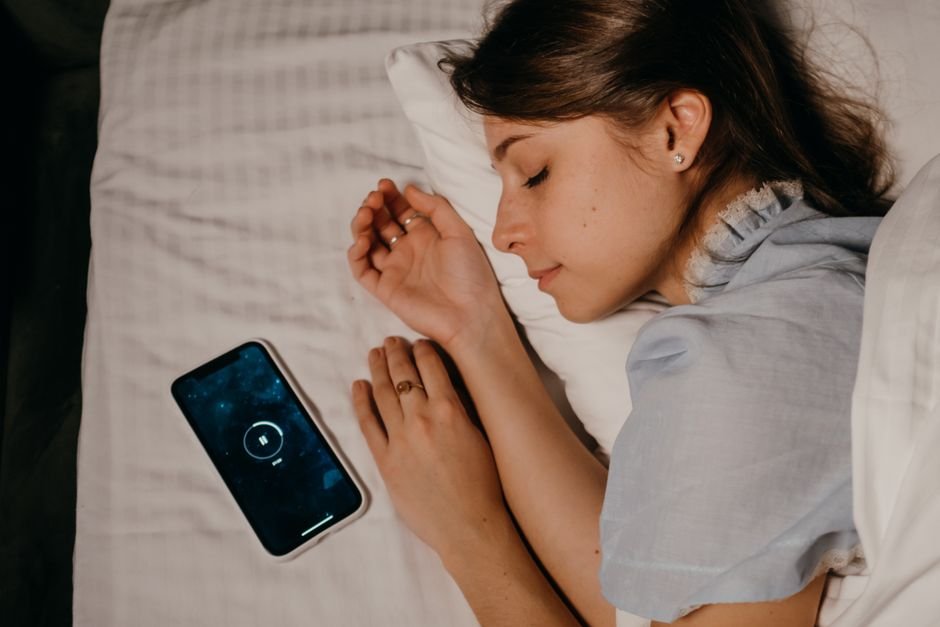
Millions of athletes now sleep with a smartwatch on their wrist, trusting its nightly readout of deep sleep, REM, and recovery scores to guide their training decisions. The devices are cheap, comfortable, and ubiquitous. But do their numbers actually mean anything?
A team of German researchers from the University of the Bundeswehr Munich and the Technical University of Braunschweig set out to answer that question systematically. Their review, published this month in Frontiers in Sports and Active Living, applied a SWOT (strengths, weaknesses, opportunities, threats) framework to 21 eligible studies on consumer wearable sleep trackers used by physically active people. The verdict was neither a clean endorsement nor a dismissal. It was something more useful: a detailed map of where these devices earn their place and where they still fall short.
The Strengths: Practical Wins for Real People
The reviewers identified nine clear strengths. The most straightforward is accessibility. Unlike polysomnography, which requires an overnight stay in a sleep lab with electrodes glued to the scalp, consumer wearables work in an athlete’s own bed, night after night, for months at a time. That longitudinal view captures something a single lab visit cannot: the natural variability of sleep across training cycles, travel schedules, and life stress.
Several of the reviewed studies showed that popular devices reliably detect the difference between sleep and wake states in healthy, physically active adults, especially at the whole-night level. They also tend to agree with each other on total sleep time within acceptable margins for most practical purposes. For athletes who simply want to know whether they got roughly seven hours versus five, the data is actionable enough.
Wearables also create behavior change. Multiple studies noted that simply having sleep data available motivated athletes to prioritize bedtime hygiene and consistency. When a recovery score drops after a poor night, that concrete signal often translates into smarter training load adjustments the next day.
The Weaknesses: Where the Numbers Wobble
The weakness list is longer, with 12 distinct limitations cataloged from the literature. The most significant concerns staging accuracy. Consumer-grade devices still struggle to distinguish between N2, N3, and REM sleep with the precision required for clinical or high-performance decision-making. Several studies reported that wearables overestimated deep sleep and underestimated REM, sometimes by wide margins.
Another recurring problem is individual variability. A tracker that performs well on one athlete may produce systematically different results on another, particularly across skin tones, body composition types, and sleep positions. Most validation studies have been conducted on predominantly young, lean, light-skinned participants, which limits generalizability to the diverse population of athletes who actually wear these devices.
Intermittent recording is also a concern. Some devices drop data when battery runs low during the night or when the wristband shifts out of optical sensor alignment. Athletes who wake up to find no data for a critical pre-competition night are left guessing, which undermines the entire purpose of tracking.
The Opportunities: What the Field Could Become
The eight opportunities the authors identified point to a promising future. Sensor hardware continues to improve rapidly, with new photoplethysmography configurations and multi-wavelength LEDs that may improve accuracy for darker skin tones. Machine learning algorithms, trained on larger and more diverse datasets, could soon handle the individual variability that today’s fixed-threshold models miss.
The integration of additional signals beyond wrist motion and heart rate, such as skin temperature, respiratory rate, and even overnight blood oxygen trends, may enable more nuanced sleep staging without requiring a lab. Some early evidence in the reviewed studies suggested that multi-signal fusion models already outperform single-sensor approaches.
There is also a major opportunity in user education. The review makes clear that most athletes and coaches overinterpret wearable sleep data, treating it as clinical-grade when it is not. Developing standardized literacy programs and device-specific guidance could close the gap between what the technology actually measures and what users think it measures.
The Threats: When Technology Misleads
The eight threats are where the review earns its cautionary tone. Overreliance on wearable data was flagged across multiple studies. Athletes who obsess over nightly sleep scores may develop an unhealthy relationship with their own rest, a phenomenon sometimes called orthosomnia. The anxiety of seeing a poor score can become self-fulfilling, degrading the very sleep the device is trying to optimize.
Data misinterpretation by coaching staff is another serious concern. A coach who sees a low recovery score may unilaterally alter training loads without understanding the device’s margin of error, potentially leading to undertraining or misattributing poor performance to sleep when the real cause is nutritional, psychological, or something else entirely.
Privacy is an underdiscussed threat. Wearable data is increasingly shared with platform apps, team performance staff, and third-party analytics services. The review notes that few users understand who has access to their sleep data or how it might be used beyond the immediate training context.
What This Means for Athletes and Coaches
The practical takeaway from this systematic review is not that wearables are useless. It is that they are useful only when used with full awareness of their limits. For tracking long-term trends in total sleep time, identifying nights of unusually poor sleep, and reinforcing good sleep habits, the evidence supports their value. For diagnosing sleep disorders, precisely measuring sleep architecture, or making high-stakes training decisions based on a single night’s data, the evidence says proceed with caution.
The authors recommend a three-part strategy for the field: rigorous and independent validation studies that reflect real-world athlete populations, context-specific application guidelines for different sports and training phases, and structured user education so that athletes and coaches interpret wearable outputs correctly.
Until those conditions are met, the smartwatch on your wrist is a helpful companion for your sleep journey, but it is not yet a laboratory. Knowing the difference, the evidence suggests, is the most important metric of all.
Source
Klier K, Masur L, Duking P. Consumer wearable sleep tracking in physically active individuals: a systematic SWOT analysis. Front Sports Act Living. 2026 Jul 10;8:1872518. doi: 10.3389/fspor.2026.1872518. PMID: 42500397.