

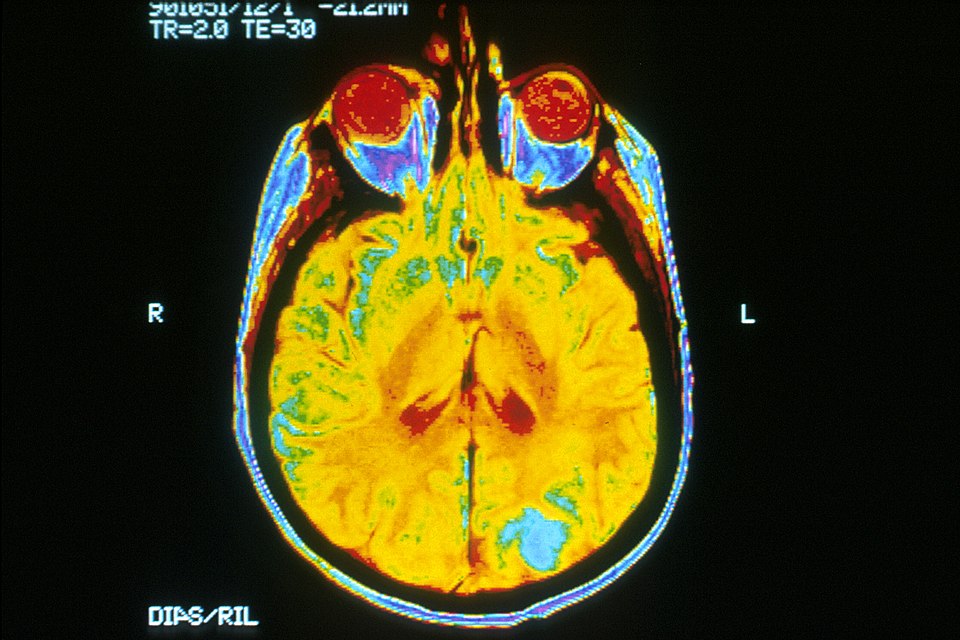
Intermittent fasting has become one of the most popular dietary interventions for weight loss, but its effects on the brain remain less well understood than its metabolic consequences. A study published in December 2023 in Frontiers in Cellular and Infection Microbiology and recently re-circulated in science news outlets tracked 25 obese adults through a 62-day intermittent energy restriction (IER) program, using functional MRI and gut microbiome sequencing to measure what changed inside their heads and intestines.
The findings are intriguing — the diet was associated with reduced activity in brain regions involved in appetite and cognitive control, and with shifts in gut bacteria composition — but the study’s design limitations mean the results should be read as suggestive, not conclusive.
What the study did
Led by Qiang Zeng, MD, of the PLA General Hospital’s Health Management Institute in Beijing and colleagues at Henan Provincial People’s Hospital, the researchers recruited 41 obese adults (BMI 28–45) and put them through a structured three-phase IER protocol:
- Baseline (4 days): Normal diet
- Phase II (32 days): High-controlled fasting — calories stepped down to one-quarter of baseline on alternating days, with meals provided by the research team
- Phase III (30 days): Low-controlled fasting — 500–600 kcal on alternating days, self-managed with food lists
At four timepoints — baseline, midpoint of Phase II, end of Phase II, and end of Phase III — participants underwent resting-state fMRI scanning to measure regional homogeneity (ReHo), a metric of local brain connectivity, and provided stool samples for metagenomic sequencing.
Of the 41 initial recruits, 35 completed the program and 25 successfully lost weight. The final analysed sample was these 25 individuals (average age ~27 years, mean weight loss 7.6 kg or 7.8% of body weight).
What changed in the brain
The fMRI analysis revealed reduced ReHo — interpreted as decreased local neural activity — in several brain regions over the course of the intervention:
- Left inferior frontal orbital gyrus (orbitofrontal cortex / sensory processing): decreased by the midpoint of Phase II (~2 weeks) — the earliest detected change
- Putamen (motor control, learning, emotion): decreased by the end of Phase II (~4 weeks)
- Right inferior frontal orbital gyrus: decreased by the end of Phase III (~8 weeks)
- Anterior cingulate cortex (cognitive control, conflict monitoring): decreased by the end of Phase III
- Left dorsolateral prefrontal cortex (executive function, “cool” decision-making): decreased by the end of Phase III
Notably, no significant changes were observed in the reward circuit (striatum, nucleus accumbens, ventral tegmental area). This is interesting because one might expect calorie restriction to reduce reward-driven eating behavior. Instead, the changes clustered in regions associated with sensory processing and cognitive control — suggesting the diet may be reducing the attentional pull of food cues rather than the hedonic drive to eat.
What changed in the gut microbiome
Alongside the brain activity shifts, the researchers observed changes in gut bacterial composition:
- Escherichia coli (a potentially pathogenic species) decreased and remained suppressed through the program
- Faecalibacterium prausnitzii, a butyrate-producing bacterium with anti-inflammatory properties, increased during Phase II but declined back toward baseline by the end of Phase III
- Parabacteroides distasonis, Bacteroides uniformis, and several other species showed similar transient increases
Gut microbial diversity (measured by the Shannon index) increased during Phase II but returned to baseline by the end of Phase III — suggesting that the most pronounced microbial shifts occurred during the strictly controlled feeding period and partially reversed when participants self-managed their diet.
The researchers then calculated Spearman rank correlations between bacterial abundances and brain activity measures, finding several statistically significant relationships — for example, E. coli abundance negatively correlated with activity in the orbital frontal gyrus at baseline and with putamen activity at the study endpoint.
The critical caveats
This is where the study’s limitations become important — and where many science news headlines have oversold the findings.
No control group. The study is a single-arm intervention. Every participant received the same treatment, and there is no comparison group to control for the passage of time, placebo effects, or the non-specific effects of participating in a structured program. Any of the observed changes could theoretically occur with any form of calorie restriction, or even with no intervention at all.
Small sample. Twenty-five participants who successfully lost weight is a very small sample for a study reporting multiple correlational analyses. Sixteen of the original 41 recruits dropped out or failed to lose weight, introducing potential selection bias — those who completed the program may differ systematically from those who did not.
No multiple comparison correction. The brain-gut correlation analysis involved many statistical tests across multiple timepoints and bacterial species, with a threshold of r ≥ 0.2 and p < 0.05. This is a recipe for false positives unless corrected for multiple comparisons, and the published paper does not report such corrections. No effect sizes (r² or Cohen's d) are provided, making it difficult to assess how much variance these correlations explain.
Correlation is not causation. The paper itself states this explicitly: “The results provided primary insights for potential BGM axis changed during weight loss, and did not establish causation.” That is the honest reading.
Short follow-up. The final measurement was at 30 days post-intervention. There are no data on whether the brain or microbiome changes persisted beyond the study period.
Conflict of interest note. Two of the co-authors were employed by commercial entities — BYHEALTH Co. Ltd. and Beijing Rexinchang Biotechnology Research Institute Co. Ltd. — during the conduct of the study.
The sober bottom line
What can we responsibly say? That in 25 obese adults who lost ~8% of body weight over 62 days on an intermittent energy restriction program, fMRI showed reduced resting-state activity in brain regions linked to food cue processing and cognitive control, and gut bacterial composition shifted in directions generally considered favourable. The two sets of changes correlated with each other at some timepoints.
This is plausible biology. The gut-brain axis is real: gut microbes produce neurotransmitters and metabolites that can influence brain function via the vagus nerve and circulation. What this study provides is a set of hypotheses — testable, mechanistically grounded hypotheses — about how dietary restriction might reconfigure that axis over weeks.
What it does not provide is proof that the microbiome caused the brain changes, or that intermittent fasting is uniquely effective at producing them, or that these effects persist beyond the intervention period. Larger, controlled, randomised trials with pre-registered analyses are needed before any of these patterns can be considered established.
The re-circulation of this 2023 study as “new news” in 2026 says more about the appetite for dietary neuroscience content than about the study’s weight as evidence. The science is interesting. But the headlines have run ahead of the data.
Source:
- Zhou J, Wu X, Xiang T et al. “Dynamical alterations of brain function and gut microbiome in weight loss.” Frontiers in Cellular and Infection Microbiology, Vol. 13, December 20, 2023, Article 1269548. DOI: 10.3389/fcimb.2023.1269548. PMID: 38173792.