

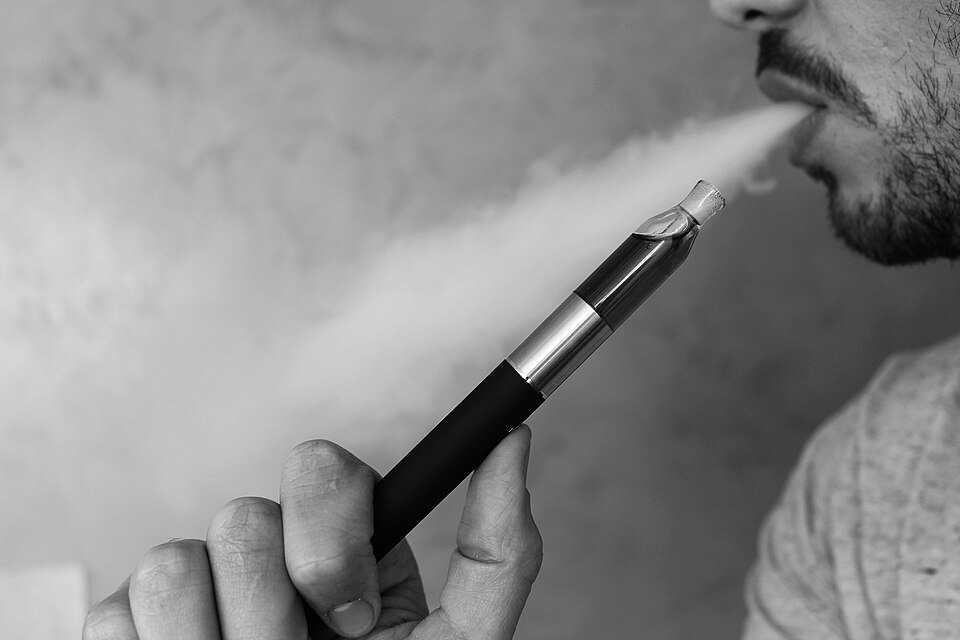
More than a decade after e-cigarettes entered the global market, a comprehensive review of over 100 studies has concluded that nicotine-based vaping products are likely to cause lung and oral cancer in humans.
The review, published in Carcinogenesis by a team of Australian researchers from UNSW Sydney, Flinders University, and the University of Queensland, represents one of the strongest scientific statements yet on vaping’s carcinogenic potential. It assessed the evidence using the IARC Key Characteristics of Carcinogens framework, the same system used by the World Health Organization’s cancer agency, and found that vaping products fulfilled all 10 key characteristics.
“The evidence is remarkably consistent across fields,” says Bernard Stewart, the study’s lead author and a cancer researcher at UNSW Sydney. “It dictates an unequivocal finding now.”
The team restricted their analysis to studies published between 2017 and 2025, noting that earlier reviews had repeatedly covered the same ground without reaching firm conclusions. The evidence came from three categories:
Human biomarkers: Studies found DNA damage correlated with vape-derived metabolites, nicotine-derived nitrosamines, volatile organic compounds (VOCs), flavoring agents, and metals, in the oral and respiratory tissues of users. Biomarkers of oxidative stress, epigenetic change, and inflammation were consistently elevated.
Animal studies: Rodent inhalation studies found that exposure to e-cigarette aerosol produced lung adenocarcinomas.
Mechanistic data: The evidence satisfied all 10 of the IARC Key Characteristics of Carcinogens, including genotoxicity, oxidative stress, chronic inflammation, immunosuppression, and epigenetic alterations.
The authors concluded: “Nicotine-based e-cigarettes are likely to be carcinogenic to humans who use them, causing an indeterminate burden of oral cancer and lung cancer.”
The phrase “likely to be carcinogenic” corresponds to the second-highest level of evidence in the IARC Monographs programme, just below “carcinogenic to humans.”
The dual-use problem
A separate commentary by two of the same authors, published in Cancer Epidemiology, highlights a compounding risk: US epidemiological data shows that dual users, people who both vape and smoke, face a lung cancer risk approximately four times higher than smoking alone. Since smoking alone carries roughly a 13-fold increased risk, dual use may push the total risk near 38-fold above non-users.
The commentary also found that only 3% of those using e-cigarettes for smoking cessation managed to replace tobacco entirely. The vast majority continued using both products.
Shifting consensus
The review documents a clear shift in the scientific consensus over time. In 2017, reviews tended to describe a “need for more evidence.” By 2025, the evidence base had grown sufficiently to justify a conclusive risk assessment.
“We should not have to wait 100 years to decide what to do,” the authors write, referencing the long latency period for cancer, which means direct epidemiological evidence of vaping-caused cancer in humans is only beginning to emerge.
What it means for public health
The review carries implications for regulation and public health messaging. Despite widespread marketing of e-cigarettes as a harm-reduction tool for smokers, the findings suggest that the cancer risk they pose is not negligible and that dual use, the most common pattern among vapers who also smoke, may be substantially more dangerous than smoking alone.
The study was funded by the National Health and Medical Research Council (NHMRC) of Australia. The authors declared no conflicts of interest.
The limits
The review is qualitative, it does not provide a numerical estimate of cancer risk or attributable burden. The long latency period for cancer means human epidemiological studies will take decades to provide direct evidence of causation in vapers. The assessment focused on nicotine-based e-cigarettes only, not THC or other substances.
Source
Stewart BW, Marshall H, Bonevski B, et al. “The carcinogenicity of e-cigarettes: a qualitative risk assessment.” Carcinogenesis, 47(1), 1,14 (2026). DOI: 10.1093/carcin/bgag015
Funding: National Health and Medical Research Council (NHMRC) grant APP2008119.