

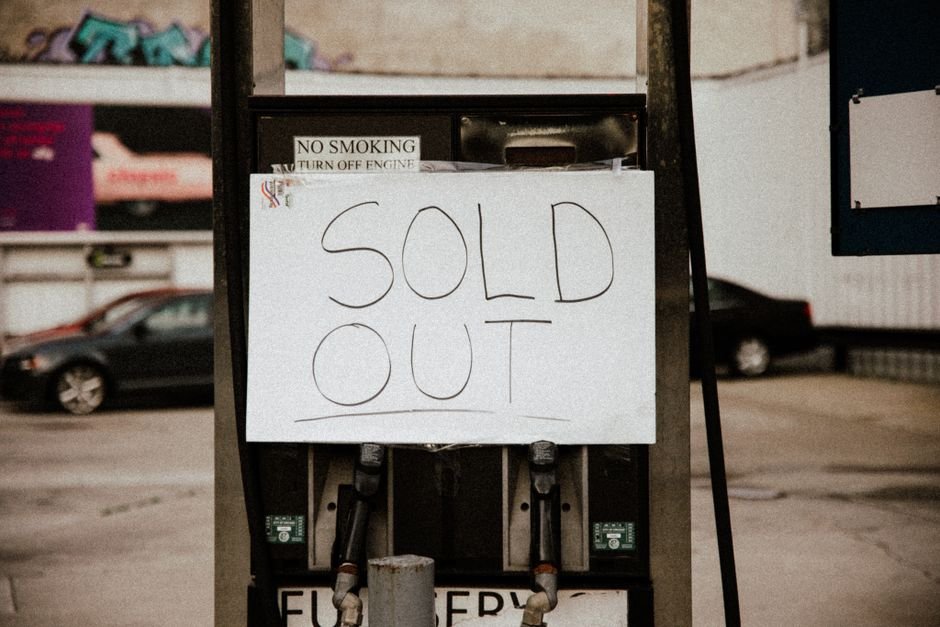
Oil passed $90 a barrel again this week. The US launched its 10th straight night of strikes on Iran. The Strait of Hormuz is effectively closed. The Houthis have declared a maritime blockade on Saudi Arabia. And the buffers that kept the global economy from collapse during the first half of 2026 are running out.
The question coming into focus is no longer whether oil prices will spike. It is whether they will ever come back down.
The false calm
During the first half of 2026, oil markets looked surprisingly stable. Brent crude drifted back toward pre-war levels during the June ceasefire. The White House declared victory over the energy crisis. Analysts predicted the market would flip to a surplus by 2027.
That stability was an illusion. As Ali Ahmadi of the Geneva Center for Security Policy writes in Foreign Policy, it “rested on an inherited stock of buffers accumulated over decades: brimming inventories, untapped strategic reserves, insurance capacity, spare production, and a deep well of consumer tolerance. These are reservoirs, not renewable flows, and many of them have now been drained to a significant degree.”
Every one of those buffers is now at or near its limit.
The buffers that are gone
Global oil inventories. The world started the war with 8.4 billion barrels in storage, an unusually high cushion. But J.P. Morgan estimates only about 800 million barrels of that was usable. By late April, a third was gone. The bank warned that inventories would hit critically low levels by September if the situation persisted. That deadline is now six weeks away.
The US Strategic Petroleum Reserve. The SPR stood at 414 million barrels before the war. By mid-July, it had fallen to 316 million barrels, the lowest since 1983. The distribution system was built in the 1970s with a 25-year design life. Government experts have expressed concern about the infrastructure cracking under sustained pressure.
Rerouting workarounds. When the Strait of Hormuz closed, Saudi Arabia rerouted 5 million barrels per day through its Red Sea terminal. The UAE boosted exports via Fujairah. Both are now at capacity. The Houthis have declared a blockade on Saudi ports, ships calling there are warned away. Tankers must go around Africa, doubling voyage lengths and straining the global fleet.
Demand destruction. Global demand fell by roughly 5 million barrels per day because energy was too expensive. Some of that was real adaptation. But much of it was forced rationing: factory shutdowns, fuel allocation, tens of thousands of canceled flights. Fuel protests erupted in several Asian and European countries. Governments relaxed measures during the June ceasefire to avoid public anger reaching 2022 levels. If the war continues, and it is continuing, those measures will have to return, and this time there is no political patience left.
Market psychology. Traders priced in the assumption that Trump would back down before a prolonged shortage. The Brent screen remained contained even as the IEA recorded physical crude changing hands near $150 a barrel in April. That assumption has now been destroyed. Trump has shown he is willing to endure high gasoline prices. If the market cannot count on the president to “chicken out,” the next spike will be faster and steeper.
The product market is worse
The crude oil numbers are bad. The finished product numbers are worse.
The crack spread, the difference between crude oil and refined products, widened to four-year highs. Even when Brent drifted back toward pre-war levels, gasoline, diesel, and jet fuel prices stayed high. That is a sign of severe tightness in finished fuels.
The reasons: Gulf export refineries suspended during the war have not restarted. Ukrainian drone strikes have cut into Russian refining output. Asian refineries are still running at reduced rates. Global refinery runs in June were down 6 million barrels per day year-on-year.
The timeline is measured in weeks
“Reserve depletion levels and escalating tensions imply that there are mere weeks before severe supply shortages arrive.”
That is not a headline from a panic-stricken blog. It is the conclusion of a considered analysis in Foreign Policy.
The IEA’s July Oil Market Report confirms the trajectory. Global supply rebounded by 4.1 million barrels per day in June as the ceasefire allowed a partial recovery in Gulf production. But world output was still 9.4 million barrels per day below pre-war levels. The IEA’s forecast for 2026, an average decline of 3.7 million barrels per day, depends on “a swift de-escalation of renewed hostilities.” The US and Iran are currently exchanging their 10th consecutive night of strikes.
What the numbers add up to
The EIA forecast from April, before the ceasefire collapsed, predicted Brent averaging $96 a barrel in 2026 and $76 in 2027. That forecast assumed the conflict would not persist past April. The conflict is still going in July. The actual number is already above $90 and climbing.
The IEA recorded physical crude at $150 in April. If the same physical-to-screen disconnect happens again, and this time without the assumption that Trump will fold, the screen price could go much higher.
At $120 oil, the global economy enters a recession. At $150, it becomes a crisis. Above that, the word depression starts appearing in serious economic forecasts.
The Strait of Hormuz carries 20% of the world’s oil. It has been effectively closed for most of the past five months. Alternate routes exist but take 3 to 10 years to build. Iran’s control of the strait is a “diminishing asset,” but it is not diminishing fast enough to prevent the economic damage that is coming.
The question the user asked, “Will Trump cause the biggest economic crisis of the 21st century?”, has a provisional answer. The 2008 financial crisis was a banking collapse. The Covid recession was a public-health shutdown. Both were followed by recoveries. The 2022 energy crisis sent inflation to 9%. This one combines all three: a financial system under strain, supply chains in tatters, and energy costs that are not coming down until the war ends.
And the war shows no sign of ending.