

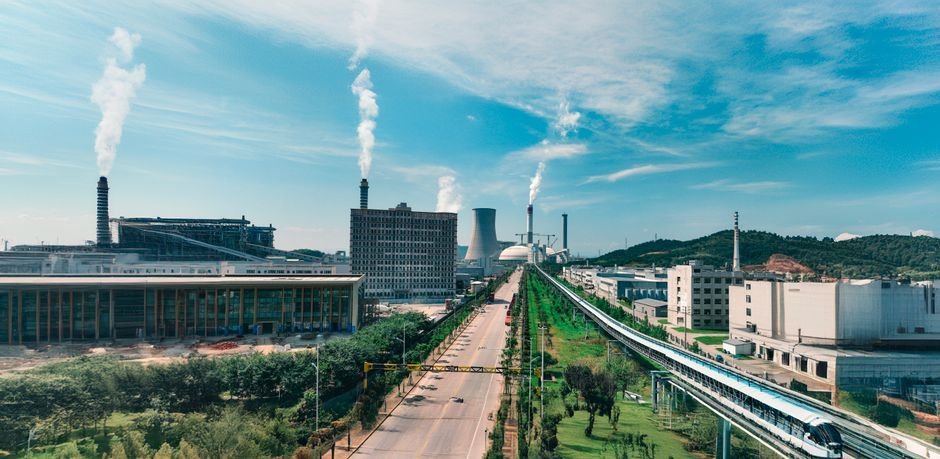
High-resolution satellite data reveals that China’s methane emissions are still rising, but the rate of increase has slowed, and for the first time, the emissions intensity of the country’s massive coal industry is declining, suggesting that targeted policy interventions can bend the curve on the world’s largest methane emitter.
The study, published as a preprint on arXiv by researchers from Johns Hopkins University, the University of Southern California, and partner institutions, uses TROPOMI satellite observations combined with a regional atmospheric inverse model to quantify daily methane emissions from China between 2019 and 2024.
“China emits the most methane of any country worldwide, but there are large uncertainties in recent emissions trends, sources, and the potential impacts of policy actions,” the authors note. The study focuses on a period when the Chinese government initiated ambitious methane control efforts, linking sectoral policies with atmospheric evidence.
The numbers
The results reveal an average increase of 0.3 teragrams per year squared (Tg yr⁻²) in Eastern and Central China, a milder trend than during the 2010s. While still rising, the deceleration is notable for a country that accounts for roughly 28% of global methane emissions.
More striking is the coal sector data. Despite rising coal production, China remains the world’s largest coal producer and consumer, methane emissions intensity from coal mines declined by 3.2% per year for the first time. This trend is likely associated with diverse policy instruments, including mandates and incentives targeting methane capture and utilization at mining operations.
Declining emissions intensity means that each ton of coal produced is releasing less methane than before, a sign that mitigation measures are having an effect even as the overall scale of coal use grows.
Two emerging challenges
The study also highlights new challenges. Urban gas leaks, from expanding natural gas infrastructure as China transitions away from coal, represent a growing and poorly quantified source of methane. The expanding urban gas network, while reducing coal consumption in cities, creates new opportunities for fugitive emissions from pipeline leaks and distribution losses.
Agricultural methane emissions are also rising, though the uncertainties in these estimates are substantial. Livestock and rice cultivation, both major sources, are harder to monitor from space than point-source industrial emissions, making it difficult to assess whether current policies are working.
Policy implications
The satellite-based approach offers something that ground-based inventories cannot: independent, systematic verification. China’s self-reported emissions data has been viewed with skepticism by some international observers, and the ability to cross-check with atmospheric measurements is critical for global climate accounting.
The finding that coal mine emissions intensity is declining, even without perfect enforcement, suggests that “targeted mandates and incentives” can drive real reductions, the authors argue. The same approach could be applied to other sectors.
The results come at a pivotal moment. Methane is a potent greenhouse gas, roughly 80 times more effective at trapping heat than carbon dioxide over a 20-year period, and reducing methane emissions is widely regarded as the fastest lever available for slowing near-term warming. China’s inclusion of methane in its nationally determined contribution under the Paris Agreement, announced at COP26 in 2021, made its mitigation trajectory a global priority.
The satellite record shows early signs that policy is beginning to work. Whether the trend can accelerate, and whether the emerging challenges of urban gas and agriculture can be addressed with the same tools, will determine whether China’s methane emissions have genuinely peaked.
Reference: Huang, Z., Chen, A., Feng, L., Daniels, W.S., Gaeta, D.C., Morgan, K.L., Murray, L.T., Yu, X., Hobbs, B.F., & Miller, S.M. (2026). “Satellite-based emissions estimate indicates progress toward China’s methane mitigation goals.” arXiv:2607.16931 [physics.ao-ph].