

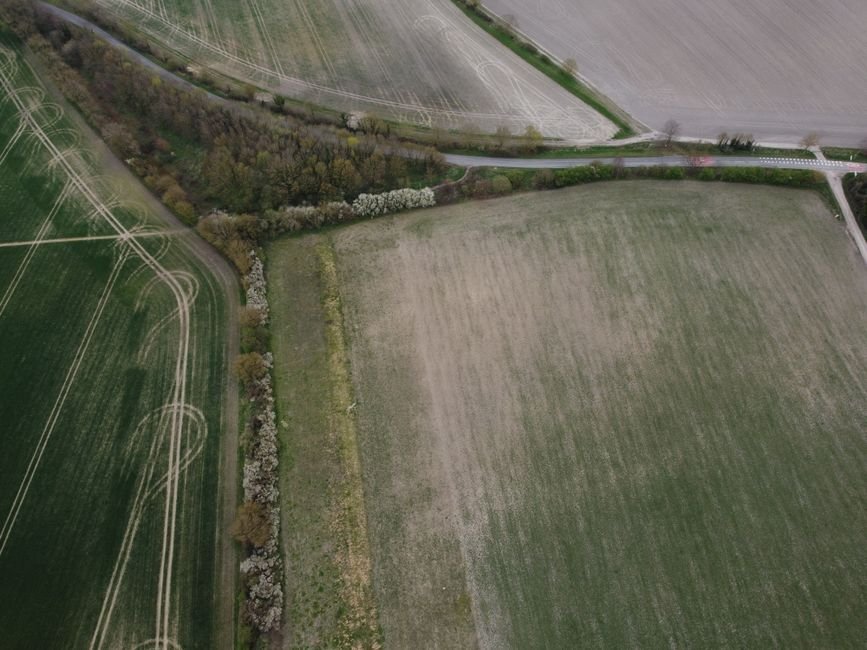
The UK is heading toward a second consecutive summer drought, with eastern England receiving just 26% of its expected summer rainfall and central England recording its longest dry spell in three decades. But behind the numbers is a pattern that scientists are only beginning to understand: droughts are not just becoming more frequent, they are arriving faster.
The term “flash drought” entered the climate lexicon relatively recently. Unlike conventional droughts that develop over months or years of accumulated precipitation deficits, flash droughts emerge in weeks. A period of near-normal conditions can transition into severe soil moisture deficit within 15 to 30 days, driven by a combination of low rainfall, high temperatures, and increased evaporation.
A May 2026 study in Science Advances documented that flash droughts have surged globally over the past decade. Using an explainable AI clustering framework applied to reanalysis data and Earth system models, the researchers found that the dominant drivers have shifted. Where precipitation deficits once drove flash drought onset, a compound effect of rising temperature, increased plant transpiration, and reduced rainfall now takes the lead.
The study identified that this transition, detectable beyond natural climate variability since 2017, has placed approximately 650 million people under threat and reduced global terrestrial gross primary productivity by roughly 0.15 petagrams of carbon per year.
The UK in context
The UK Centre for Ecology and Hydrology, which monitors drought conditions nationwide, warned earlier this month that flash droughts are “likely to happen more often, and be more intense” in the UK.
The current situation fits the pattern. Wisley in Surrey has recorded 33 consecutive dry days. Central England has not seen a run this long since 1995. The Environment Agency reports that 87% of catchments in England are at “below normal to exceptionally low levels.” Hosepipe bans are in force for millions of customers.
Wales has received just 5% of its expected July rainfall. Natural Resources Wales has moved the worst-affected regions into “prolonged dry weather status,” the first step of the Welsh drought plan.
The speed of the transition adds a dimension that conventional drought monitoring struggles to capture. Standardized drought indices, which measure precipitation deficits over rolling multi-month periods, can take weeks to register an event that is already having acute impacts on soil moisture, crop health, and water supply.
Climate signals
The UK summer of 2026 is not an isolated event. The summer of 2025 saw drought declared across much of England, Wales, and eastern Scotland. That declaration ended only four months ago. The summer of 2022 was similarly severe. In the space of four years, the UK has experienced three major drought events, a frequency that would have been extraordinary in the late 20th century.
Research from the UKCEH published in 2025 found that climate change is intensifying the hydrological cycle in ways that make both wet and dry extremes more severe. While annual precipitation trends remain uncertain, climate models generally predict wetter winters for the UK, the summer signal is clearer. Warming temperatures exacerbate summer drought by increasing evaporation and plant water demand, even when rainfall totals are unchanged.
The Met Office projects that by 2070, compared with 1990, UK summers could be up to 60% drier and 1 to 6°C warmer.
For farmers, the effects are immediate. Paul Tompkins, deputy president of the National Farmers’ Union, said growers are “working around the clock to harvest crops which have come early, keep fruit and vegetables watered, and care for their livestock,” warning of “another difficult and expensive harvest.”
The longer-range forecast offers little relief. High pressure is expected to dominate for at least the next five days. Rain-bearing fronts approaching from the northwest over the weekend are expected to dissipate before reaching the drought-stricken south and east. The challenge, as the UKCEH has emphasized, is not just managing water through individual dry summers, but building resilience to a climate in which droughts arrive faster, hit harder, and give less warning than they used to.