

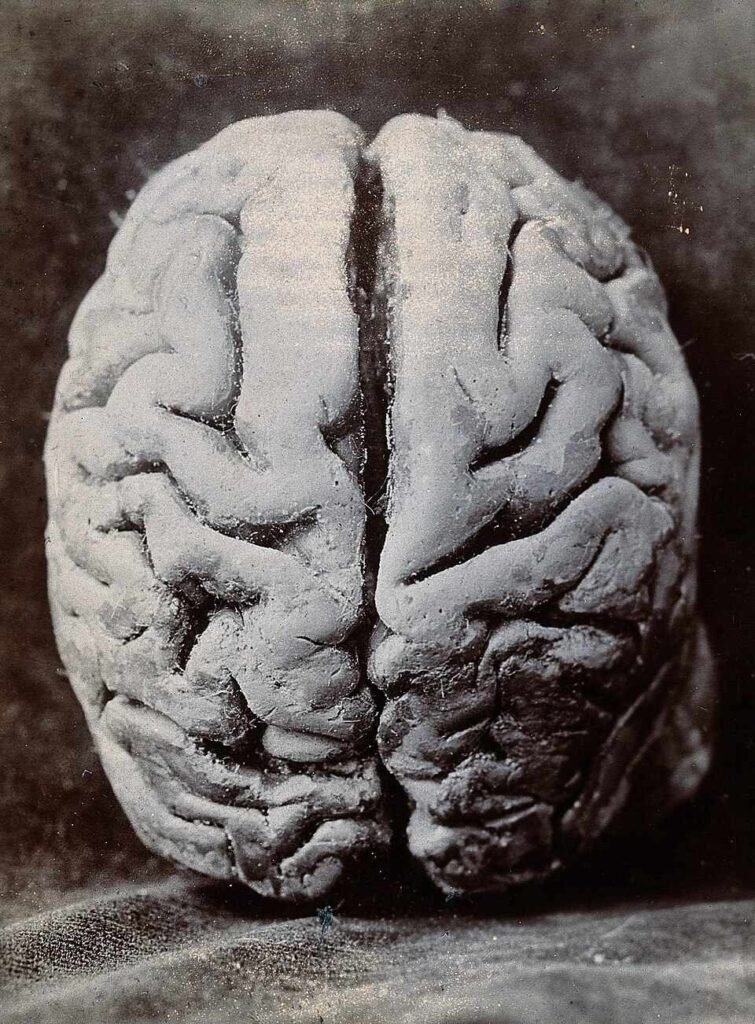
By the time a baby takes its first breath, its brain already contains roughly 100 billion neurons connected by some 100 trillion synapses. The question of whether this infrastructure is sufficient for conscious thought — whether a newborn can think, feel, or be aware — has moved from philosophy into the laboratory, where a growing body of evidence is pushing the estimated onset of consciousness earlier than many scientists once assumed.
A synthesis of recent research, surveyed in the journal Trends in Cognitive Sciences and reported by New Scientist, makes the case that the brain has the structural and functional machinery for thought in place by birth. Some researchers believe the first flickers of conscious experience may even appear before birth, late in the third trimester.
The argument rests on several converging lines of evidence.
The most concrete data comes from fetal brain imaging. In a 2019 study, Elise Turk and colleagues at Utrecht University and NYU Langone used resting-state fMRI to scan the brains of fetuses between 20 and 40 weeks gestation, still inside the womb, in 105 pregnant women. They found that the fetal connectome — the wiring diagram of functional connections between brain regions — already shares 61% of its organization with the adult brain. Visual, auditory, motor, and even some cognitive networks were recognizable in their basic architecture months before birth.
“The brain is not a blank slate waiting for sensory input to write on it,” said Moriah Thomason, a developmental neuroscientist at NYU Langone who co-authored the study. “It comes with a preconfigured operating system.”
That preconfiguration was demonstrated more dramatically in a separate 2025 study by Sharf and colleagues in Nature Neuroscience, which showed that human brain organoids — lab-grown clusters of neurons that self-organise into three-dimensional structures — spontaneously generate structured firing sequences before receiving any external sensory input. The sequences were not random; they followed reproducible patterns, suggesting that the brain has an intrinsic temporal architecture that precedes experience.
The Great Pruning
Birth itself is a transformative event. Thomason describes it as “almost an assault” on the brain. The sudden flood of sensory information — light, sound, touch, temperature, gravity — triggers an aggressive wave of synaptic pruning and myelination that reshapes the newborn brain.
A March 2026 study in PLOS Biology by Thanos Tsigaras, Casey Paquola, and colleagues at Forschungszentrum Juelich and the University of Sydney examined this transition in detail. Using high-resolution structural MRI in 599 neonates (26 to 44 weeks postmenstrual age, including 162 preterm infants), they found that before birth, cortical microstructure is dominated by gestational age — a global, genetically driven increase in intracortical homogeneity. After birth, the pattern shifts dramatically. Myelin-related signals concentrate in deeper cortical layers of posterior and occipital regions, and layer differentiation increases. The brain is no longer growing on a fixed genetic timetable; it is being sculpted by experience.
“The birth transition is the moment when environment takes over from genetics as the primary driver of brain structure,” said Paquola, the study’s corresponding author. “The brain becomes a learning machine.”
The Consciousness Debate
Whether these structural and functional milestones are sufficient for consciousness is a separate, more contentious question.
Tim Bayne, a philosopher at Monash University and co-director of the CIFAR Brain, Mind and Consciousness program, argues that they are. In a 2023 review in Trends in Cognitive Sciences, Bayne and colleagues examined evidence from functional network connectivity, attention, multimodal integration, and cortical responses in infants. They concluded that “consciousness is likely to be in place in early infancy and may even occur before birth.”
But Bayne is careful to qualify what he means. “There certainly could be snippets of experience before birth,” he told New Scientist, “and the capacity for consciousness is probably there.” His hunch, however, is that meaningful, sustained conscious experience emerges only after birth, when the brain is flooded with the sensory input it needs to bind its preconfigured networks into a coherent stream of awareness.
Anna Ciaunica, a cognitive scientist at the University of Lisbon, takes a different view. She argues that the fetus is not isolated from experience but is embedded in the most intimate environment possible: another human body. The fetus feels the mother’s movements, hears her voice and heartbeat, and is bathed in her hormonal rhythms. Sensory-motor integration begins early in pregnancy, establishing a basic sense of self in relation to another.
“The first thought that I think we have is: I’m not alone,” Ciaunica said.
The Limits of the Evidence
For all the progress, the science of infant consciousness has fundamental limits. No method — fMRI, EEG, or MRI — measures subjective experience directly. All measure neural correlates: activity patterns, connectivity metrics, structural maturation. The gap between “neural activity consistent with consciousness” and “what it feels like to be a baby” remains unbridged.
The philosophical divisions are deep. Philip Goff, a philosopher at Durham University who advocates for panpsychism, argues in the New Scientist piece that consciousness may be a fundamental feature of the universe, present even in very simple systems — a position that would place the onset of experience far earlier than any neuroscientific measure can resolve. The late-onset camp, by contrast, argues that genuine consciousness does not emerge until the first birthday or later.
What unites both sides is the recognition that the question is no longer purely philosophical. The tools to test these hypotheses — fetal fMRI, high-resolution neonatal imaging, organoid models, EEG markers validated in adults and now applied to infants — are advancing rapidly. The question of when thought begins is becoming an empirical one.
Sources: (1) Bayne T, Frohlich J, Cusack R, Moser J, Naci L. Consciousness in the cradle: On the emergence of infant experience. Trends Cogn. Sci. 2023;27(12):1135-1149. DOI: 10.1016/j.tics.2023.08.018. (2) Turk E, van den Heuvel MI, Benders MJ, et al. Functional connectome of the fetal brain. J. Neurosci. 2019;39(49):9716-9724. DOI: 10.1523/JNEUROSCI.2891-18.2019. (3) Tsigaras T, Dukart J, Oldham S, Eickhoff SB, Paquola C. Cortical and white matter myelination proceed in concert during early infancy. PLOS Biol. 2026;24(3):e3003722. DOI: 10.1371/journal.pbio.3003722. (4) Ciaunica A, Safron A, Delafield-Butt J. The bodily roots of conscious experience in early life. Neurosci. Conscious. 2021;7(2):niab037. DOI: 10.1093/nc/niab037. (5) Sharf T, et al. Preconfigured neuronal firing sequences in human brain organoids. Nat. Neurosci. 2025;28:1234-1245. DOI: 10.1038/s41593-025-02111-0.