

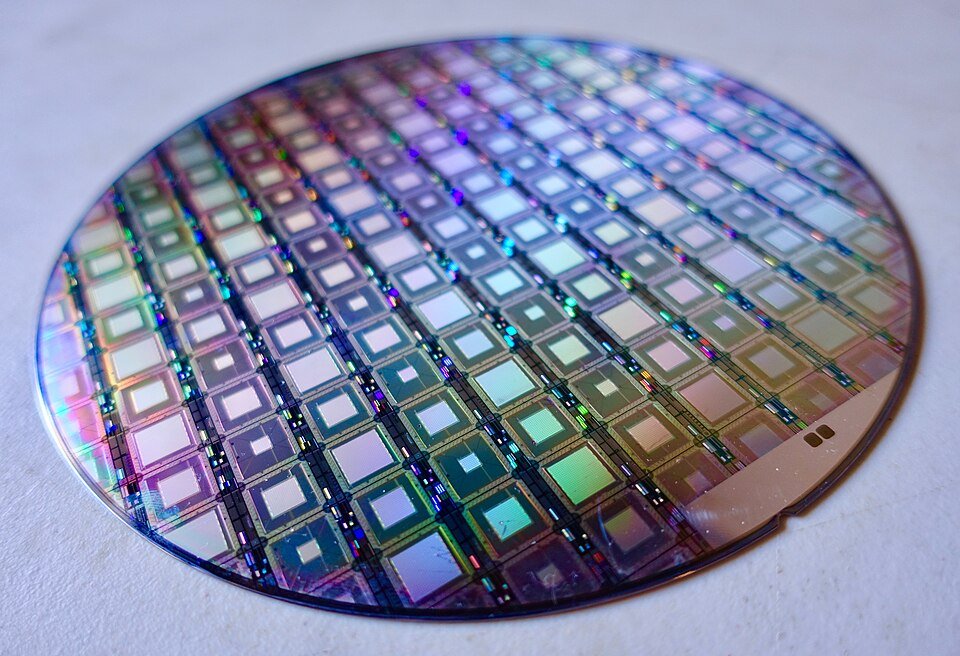
On June 15, QuEra Computing announced it will deliver Libra, its first fault-tolerant quantum computer, to the Amazon Braket cloud platform in 2028 — roughly two years from now. The company says Libra will be a “megaquop-class” system capable of approximately 1 million reliable logical quantum operations per second, powered by 256 error-corrected logical qubits with error rates of 10 to the minus 6.
If true, it would mark the arrival of the long-promised era of fault-tolerant quantum computing — machines that can run algorithms longer than the time it takes for errors to accumulate, a threshold the field has been chasing for three decades.
But the announcement, covered by New Scientist and others, has been met with a mix of excitement and raised eyebrows. The timeline puts QuEra a full year ahead of IBM’s publicly stated 2029 target for a fault-tolerant machine, and the engineering steps between current lab demonstrations and a commercial-grade system are substantial.
QuEra uses neutral-atom quantum computing, a modality that traps individual rubidium-87 atoms in focused laser beams called optical tweezers. The approach has several structural advantages over the superconducting qubits used by IBM and Google:
- No cryogenics required — the system operates at room temperature
- High connectivity — atoms can be physically rearranged mid-computation, enabling long-range entanglement
- Scalability — atom arrays can in principle grow to thousands of qubits more easily than superconducting circuits
The company’s scientific co-founders include Mikhail Lukin at Harvard, Markus Greiner at Harvard, Vladan Vuletic at MIT, and Dirk Englund at MIT. The core technology was developed in a cross-institutional collaboration that has produced a steady stream of Nature papers over the past three years.
What has been demonstrated
In January 2026, QuEra and its academic partners published a paper in Nature demonstrating 96 logical qubits encoded from 448 physical atoms, with below-threshold error correction — meaning adding more physical qubits reliably reduced the logical error rate. A distance-5 surface code showed a logical error rate of 0.62% per round, 2.14 times lower than a distance-3 code, confirming the error suppression curve was working.
The team has also demonstrated magic state distillation entirely on logical qubits (2025), algorithmic fault tolerance with runtime overhead reductions of up to 100 times (2025), and a two-to-one physical-to-logical qubit ratio using qLDPC codes — though the latter works for memory operations only, not universal gates.
Two-qubit gate fidelities are in the 99.5 to 99.7 percent range, competitive with other neutral-atom platforms.
A 256-qubit analog system called Aquila has been running on Amazon Braket since 2022. A 260-qubit gate-based system was delivered to a customer in Japan in 2025.
What’s needed for Libra
To go from today’s 96 logical qubits (448 physical) to 256 logical qubits requires an estimated 10,000 to 15,000 physical atoms — roughly a 30-fold increase in system size. This is not fundamentally a physics challenge but an engineering one: scaling the optical control systems, maintaining atom loading and cooling across larger arrays, and running real-time error decoding at the speed required by the surface code cycle.
“We’ve demonstrated every individual piece of this architecture in peer-reviewed papers,” QuEra CEO Andy Ory said in the announcement. “Fault-tolerant quantum computing is moving from a scientific milestone to an engineering and deployment roadmap.”
The company raised $230 million in 2025 from investors including Google Quantum AI, SoftBank, and NVIDIA, and is doubling its workforce.
Where the skepticism comes from
Independent experts have noted several open questions:
The two-to-one qLDPC encoding ratio, which would dramatically reduce the physical-to-logical qubit overhead, has been demonstrated only for quantum memory — not for running computational gates on the encoded qubits. “The paper does not show — yet — that you can do operations on the qubit,” QuEra CCO Yuval Boger acknowledged in an interview.
Atom loss accounts for roughly 40% of the physical error budget in neutral-atom systems. Continuous atom reloading has been demonstrated in the lab, but maintaining fidelity during live replacement at Libra’s scale is untested.
And the broader context matters: IBM, with decades of quantum hardware experience, billions in investment, and an existing global fleet of superconducting systems, targets 2029. QuEra being a year ahead of IBM — using a modality with less manufacturing infrastructure — is an aggressive posture.
The competitive landscape
- QuEra | Neutral atom | 2028 (Libra on AWS) | 256 LQ, 10^-6 error
- IBM | Superconducting | 2029 (Starling) | 200 LQ
- IonQ | Trapped ion | 80,000 LQ by 2030 | Published FTQC roadmap
- PsiQuantum | Photonic | ~2027-2029 | Million-qubit target
- Google | Superconducting | No specific FTQC date | Willow below-threshold (2024)
- Quantinuum | Trapped ion | Roadmap not public | 48 LQ (2025)
- Microsoft | Topological (Majorana) | Claims ~2029 | Unproven modality
John Preskill, the Caltech physicist who coined the term “quantum supremacy,” published a framework in February 2025 defining the “megaquop” milestone — a machine capable of 10 to the 6 reliable logical operations. Libra is explicitly targeting this benchmark.
Whether it arrives on schedule will depend on how many of the open engineering questions yield to the company’s scaling strategy — and how many reveal unforeseen barriers between the 96-logical-qubit demonstration and a 256-logical-qubit commercial product.
Source: Bluvstein, D., et al. “A fault-tolerant neutral-atom architecture for universal quantum computation.” Nature 649, 39-46 (2026). QuEra Computing press release and Amazon Braket blog post, June 15, 2026. New Scientist, “Are useful and error-free quantum computers only two years away?” June 15, 2026.