

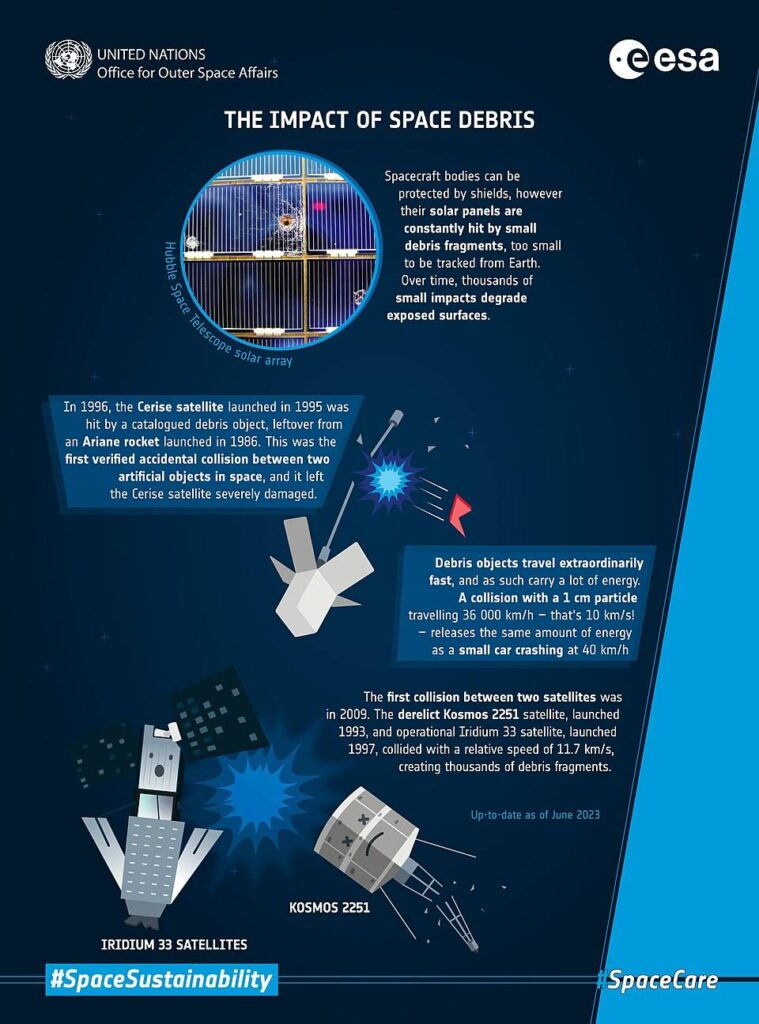
A Chinese rocket upper stage broke into approximately 100-150 trackable pieces of debris just minutes after deploying two communications satellites on June 9, with the resulting cloud orbiting in a heavily trafficked corridor shared by SpaceX’s Starlink constellation, the U.S. Space Force confirmed.
The debris was generated on June 9 at 08:47 UTC, roughly 24 minutes after the Zhuque-2E Y6 rocket lifted off from Jiuquan Satellite Launch Center in northwestern China. The rocket, built by Beijing-based private aerospace firm LandSpace, had just successfully deployed two experimental direct-to-cell satellites for SpaceSail and China Mobile before the upper stage broke apart during or shortly after its planned disposal burn.
U.S. Space Forces-Space (S4S) cataloged the debris and confirmed there is no immediate threat to human spaceflight, but tracking and analysis remain ongoing. “The tracked pieces are being incorporated into routine conjunction assessment to support spaceflight safety,” the command said in a statement.
The debris cloud orbits at an altitude of approximately 335-423 kilometers (208-263 miles) with a 54.5-degree inclination. That orbital corridor overlaps significantly with SpaceX’s Starlink constellation, which operates at inclinations of 53-55 degrees across altitudes of 340-550 kilometers (210-340 miles). The Chinese debris sits in nearly the same orbital lane, raising the risk of conjunction events with active Starlink satellites.
A pattern of fragmentation
This is not an isolated incident. The Long March 6A left more than 700 pieces of debris after an upper stage fragmentation in August 2024, drawing sharp criticism from NASA and international space safety advocates. A previous Zhuque-2E flight (Y5) in May 2026 also drew attention after dumping methalox propellant that created a visible sky show over the United States.
The Zhuque-2E is a methane-liquid oxygen medium-lift rocket standing 47 meters (154 feet) tall, capable of delivering 6 metric tons to low Earth orbit. This was its eighth flight overall and its first of 2026. LandSpace had one prior in-flight failure with the Zhuque-2E Y3 in August 2025 due to a flight termination system activation.
China declared the June 9 launch a success, and state media coverage did not mention the upper stage fragmentation. Jonathan McDowell, an astrophysicist at the Harvard-Smithsonian Center for Astrophysics, noted on social media that Space-Track data shows the disintegration occurred at 08:47 UTC, consistent with a disposal burn anomaly. The main debris object was cataloged as 69537.
Congestion concerns intensify
The incident comes as low Earth orbit grows increasingly crowded. SpaceX’s Starlink now numbers over 6,000 active satellites, while China is rapidly building its own megaconstellations including SpaceSail (Thousand Sails) and Guo Wang. The number of tracked objects in LEO has surpassed 45,000, and the International Space Station itself orbits at a similar inclination (51.6 degrees) and altitude (approximately 400 kilometers / 250 miles).
While the debris from this breakup will deorbit relatively quickly due to its lower altitude and atmospheric drag, the event underscores the growing need for responsible disposal practices by all launch providers. The U.S. Space Force continues to track the debris and will issue conjunction warnings to satellite operators as needed.