

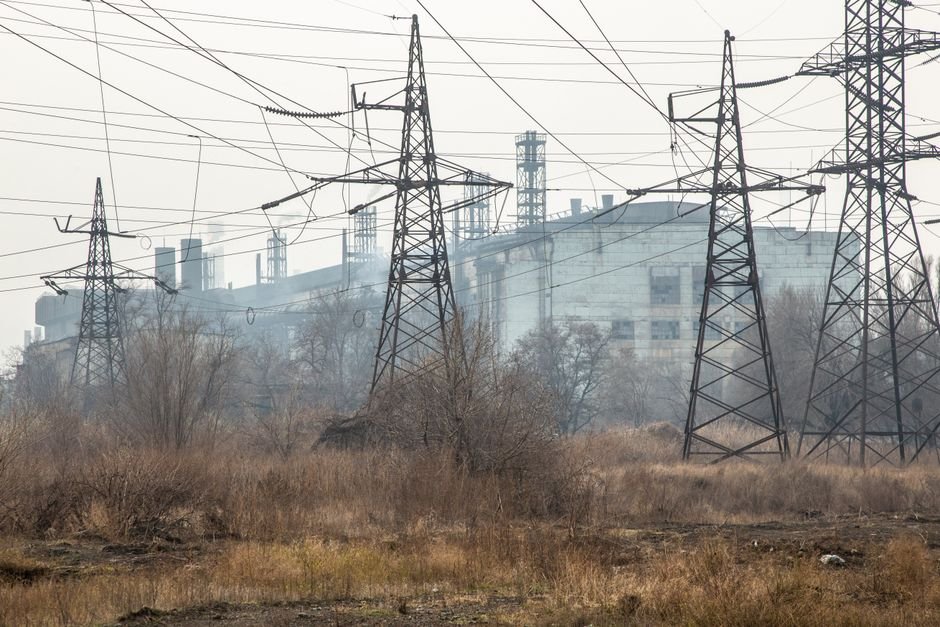
Four years of Western sanctions, a weakened ruble, and international isolation did not change Russia’s calculus on the war. Ukraine’s drone offensive against Russia’s oil industry just might.
“The picture has changed, and it changed this spring,” said Sergei Aleksashenko, former deputy chairman of the Russian Central Bank, now at the New Eurasian Strategies Centre. “This operation is a game-changer.”
The numbers bear him out. Russia’s oil refining capacity has fallen from roughly 5.2 million barrels per day before the war to 3.8 million bpd, a loss of 1.4 million bpd, or one-fifth of total capacity. According to the Oxford Institute for Energy Studies, that is Russia’s lowest refining capacity in 21 years.
Ukraine’s drones now reach more than 1,900 km (1,200 miles) into Russian territory. They hit the Omsk refinery in Siberia, Russia’s largest, in an attack that was “traumatic for locals and nearly as seismic inside the Kremlin,” Foreign Policy reports. They strike oil depots, export ports, fuel tanks, and the Black Sea tanker fleet. They specifically target hydrocrackers, the complex units that turn heavy gas oil into gasoline, diesel, and jet fuel, which take months or years to repair.
The domestic impact is real. Gasoline lines snake across Russian cities. Rationing has begun, with odd-even schemes in some regions. Diesel shortages threaten the grain harvest. Jet fuel shortages affect aviation. Russian state media is “not taking it well,” one analyst said.
Export figures are even starker. In June 2026, Russia’s seaborne oil product loading volumes hit the lowest level on record, according to the Centre for Research on Energy and Clean Air. Refined products are more profitable than crude, and Russia was already selling its Urals crude at a discount of more than $10 a barrel to India.
Ukraine’s threat is not going away. Domestic drone production now runs at 8 million units per year. The range, precision, and frequency of strikes keep increasing.
“A combination of greater geographical potential, multiple attacks and increasingly accurate targeting of more complex refining units, alongside the attacks on export infrastructure, is putting pressure on both the Russia domestic market and products export sales,” the Oxford Institute for Energy Studies found.
The war has reached Russian territory in a way that sanctions never could. The Kremlin can still escalate on the battlefield, but it can no longer pretend the economic cost of the war is being paid only by Ukraine.