

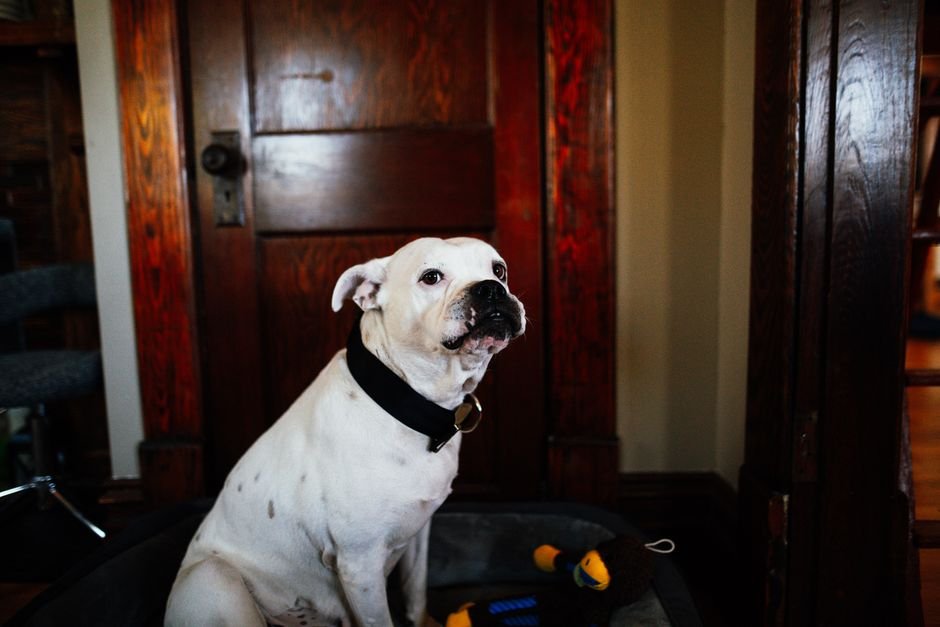
Starlink Goes to the Dogs: World’s First Satellite-Connected Collar Tracks Your Pup Anywhere on Earth
A lost dog in the backcountry can now call home. Fi, a pet technology company founded in 2017, launched the Fi Ultra on July 8, 2026: the world’s first consumer wearable powered by Starlink’s direct-to-cell satellite network. The collar tracks a dog’s location in real time even when there is no cellular coverage for hundreds of kilometers.
The Fi Ultra combines GPS positioning with LTE, Wi-Fi, Bluetooth, and Starlink satellite connectivity. When the dog wanders beyond the reach of a cell tower into forests, mountains, or remote rural areas, the collar automatically switches to the satellite link. Owners see the location on their smartphone app regardless of where the dog roams within the United States.
“The number one complaint from customers is either ‘I live in an area where the cellular network is not really good’ or ‘I get really worried about my dog when it’s away from the typical suburban area,'” said Jonathan Bensamoun, co-founder and CEO of Fi, who was inspired to start the company by his own dog Thor.
How It Works
The collar uses a battery-powered GPS receiver and modem that connects to T-Mobile’s terrestrial network as the primary link. When the cellular signal drops below usable levels, the device hands over to Starlink’s low Earth orbit (LEO) satellite constellation, which SpaceX operates at an altitude of roughly 550 kilometers (340 miles). The transition is automatic; the owner does not need to switch modes or manage a separate satellite subscription.
The Fi Ultra is compatible with existing Fi collars from the Series 3 and Series 3+ lines, snapping directly onto the same hardware mount. Battery life is rated at “multiple days” per charge, though satellite transmission draws more power than cellular, and real-world endurance will depend on how often the collar needs to reach orbit instead of a tower.
Beyond Tracking
The collar does more than report location. Owners can set a virtual geofence around the home; when the dog crosses the boundary, the app sends an alert. A recall feature lets the owner trigger short bursts of vibration or sound from the collar, which can be trained with food rewards.
“You can train your dog with those vibrations and reward it with food every time they receive the vibration,” Bensamoun said. “That way, they will start associating the vibration with their food being ready at home.”
To mark the launch, Fi partnered with AI-first creative studio Dolsten & Co. to produce a photorealistic commercial featuring dogs traversing American wilderness from the canyons of Utah to the glaciers of Alaska. The tagline: “Unleash the Wild.”
What It Means
The Fi Ultra represents the first consumer application of Starlink’s direct-to-cell capability, which SpaceX began rolling out in 2025 in partnership with T-Mobile. Until now, the technology has been tested primarily with text messaging and emergency alerts on standard smartphones. Fi is the first company to embed the satellite modem directly into a wearable device.
Animal tracking via satellite is not new. Wildlife biologists have collared moose, caribou, and wolves with GPS-satellite transmitters since the 1990s. But those collars cost thousands of dollars and weighed too much for domestic pets. The Fi Ultra brings the same principle to a consumer product roughly the size of a standard dog collar buckle.
Approximately 11 million dogs worldwide are currently tracked by some form of GPS collar. Fi’s integration of Starlink connectivity could expand that market significantly to owners in rural areas, hunters, hikers, and anyone who lives at the edge of cellular infrastructure.
“Fi Ultra has transformed what’s possible for dog owners,” Bensamoun said. “Our mission has always been to strengthen the human-animal connection via data, to give dogs more freedom while keeping them safe, and with the power of Starlink behind Fi Ultra, that mission now extends to every corner of the country and soon, every corner of the world.”