

This article is based on an interview with Anthony Scaramucci, former White House Communications Director under President Donald Trump, conducted by Anders Nielsen on the Logic of War channel.
The question came at the very end of a 44-minute conversation. Anders Nielsen, a European security analyst who runs the Logic of War channel, had walked Anthony Scaramucci through the state of American politics, the Iran war, the Putin relationship, the culture war, and the economic rot beneath it all, then he asked the question that keeps European defense planners awake at night.
“Will the United States be there for NATO if need be?”
Scaramucci paused. He looked down. Then he looked back up.
“I don’t know the answer, but I’m going to say no to that.”
He did not hedge. He did not qualify. A former member of the Trump White House, a man who worked on Trump’s 2016 campaign and served 11 days as Communications Director before being fired, looked at a European interviewer and told him: your alliance with America might not survive the man in the Oval Office.
“You’ve got a jackass as the president of the United States, and he’s tight with Vladimir Putin.”
Scaramucci’s argument rests on three legs, and none of them are about the treaty text.
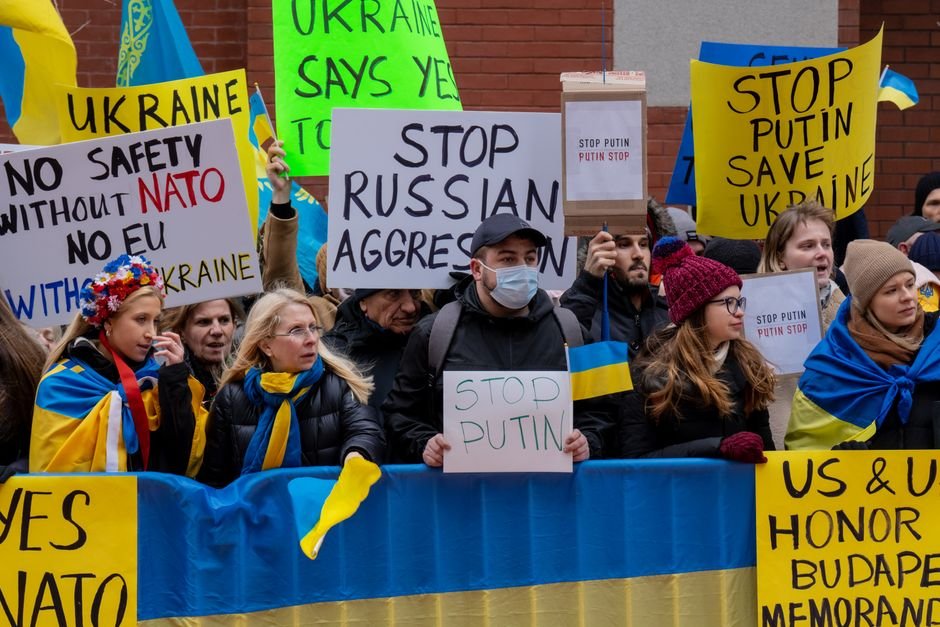
The first is kompromat. Scaramucci says Russia owns Trump with compromising material, something “way worse than a peepee tape,” and that Putin would release it the moment Trump honored Article 5 against Russian interests. He offers no proof. There is no video, no document, no leaked file. His evidence is behavioral: Trump disavows NATO, praises Putin, breaks the 1994 Budapest Memorandum that guaranteed Ukraine’s security in exchange for its nuclear weapons, and refuses to say a negative word about the Russian president while blasting every other leader on earth.
“When the window is open and you hear a clippity-clop outside, it is a horse,” Scaramucci said. “It’s not a zebra.”
The second leg is Trump himself. Trump has never hidden his contempt for NATO. In 2017, as president, he refused to publicly affirm Article 5 at a NATO summit, forcing his own national security adviser to issue a belated statement. In 2018, he privately discussed withdrawing from the alliance. In 2025, he told reporters there were “numerous definitions of Article 5” and that he was “committed to being their friend,” not to defending them. In March 2026, his Defense Secretary Pete Hegseth declined to reaffirm the US commitment to collective defense, saying that decision was “up to the president.” Just days before this interview, Trump called current US support for NATO “ridiculous.”
The third leg is the Republican Party. Scaramucci argues that even if a crisis came and Trump tried to block Article 5, the GOP in Congress would not stop him. They know he is wrong. They hate his guts, but they fear him more than they care about the alliance.
“These guys are afraid of him, and they would rather stay in power after he’s gone than deal with him.”
But there is a counter-case, and it is worth examining because the question is too important for one man’s certainty.
The first piece of evidence against Scaramucci’s “no” is the Ankara Declaration. When NATO leaders gather in Turkey this week for the July 7-8 summit, they are expected to sign a communique that includes an “ironclad commitment” to collective defense under Article 5. The text was approved by NATO ambassadors on Friday. Trump’s name is on it.
The second is the National Defense Authorization Act for fiscal year 2024, which explicitly bars any president from unilaterally withdrawing from NATO without the approval of two-thirds of the Senate or a separate act of Congress. The bill was sponsored by Senator Tim Kaine, a Democrat, and Senator Marco Rubio, a Republican, an explicitly bipartisan hedge against a future president who might try to leave the alliance.
The NDAA for fiscal year 2026 goes further. It requires the Pentagon to report to Congress if the administration intends to reduce US troop levels in Europe below 76,000 or relinquish the position of Supreme Allied Commander Europe. It mandates a 60-day review period. It creates a procedural obstacle course for any president who wants to pull back from Europe.
Senator Roger Wicker, the Republican chair of the Senate Armed Services Committee, has been among those pushing back against Trump’s Europe policy. The Atlanticist wing of the GOP is diminished, but not dead.
And there is the institutional reality of the American military. The Joint Chiefs, the intelligence community, and the permanent national security apparatus have ways of slowing down or resisting a presidential order that would abandon a treaty ally. They cannot stop a determined commander-in-chief, but they can make it very costly.
The real question is not whether the treaty allows a president to refuse Article 5. The treaty says each ally will take “such action as it deems necessary” to restore security. “Deems necessary” is doing nearly all the legal work. A president who decides that military action is not necessary is operating within the text.
The real question is whether the American political system can check a president who wants to abandon a treaty ally in a live crisis. Scaramucci’s answer is no. Because the check depends on a Congress that has already shown it will not confront Trump.
But the evidence cuts both ways. Congress has been quietly building legal tripwires for years. The FY2024 NDAA is a law. The FY2026 NDAA is a law. These are not recommendations, they are statutory prohibitions. A president who ignores them invites litigation, defunding, and possible impeachment. The question has never been tested in court because no president has ever tried to leave NATO. The constitutional question of whether a president can unilaterally terminate a treaty remains legally unsettled: the Supreme Court hinted in Goldwater v. Carter (1979) that the president has that power, but never ruled definitively.
Europe is not waiting for the answer.
The European Union has embarked on an €800 billion defense spending plan. Twenty-three of the EU’s 27 members are also NATO members. Germany, France, and the United Kingdom have launched multiple parallel tracks toward a European nuclear deterrent framework: the Northwood Declaration between London and Paris, the Franco-German nuclear dialogue, and a broader multinational forum that Poland, Denmark, Sweden, the Netherlands, Belgium, and Greece have already joined.
These are not theoretical exercises. Macron has proposed “advanced deterrence,” a French nuclear umbrella extended to European partners, something Paris has refused to do since the 1960s. The German National Security Council is actively assessing options for a “US-optional” nuclear deterrent. Berlin has commissioned legal analysis on whether Germany could co-finance French nuclear protection.
None of this happens if Europe trusts the American security guarantee.
Scaramucci’s closing advice to Europe was simple: get through the next two and a half years. Seek reform. Find responsible politicians. And hope the institutional safeguards Congress has built hold up when they are tested.
“The goal is to get through this guy to the other side,” he said. “We’ve got two and a half years to go with this guy. Let’s see if we can get through it together.”
Whether the alliance survives that test depends not on the text of Article 5, which has been invoked only once in 77 years, but on whether the American system, including Congress, the military, and the courts, can stop a commander-in-chief who might not want it to.
Source: Logic of War interview with Anthony Scaramucci