

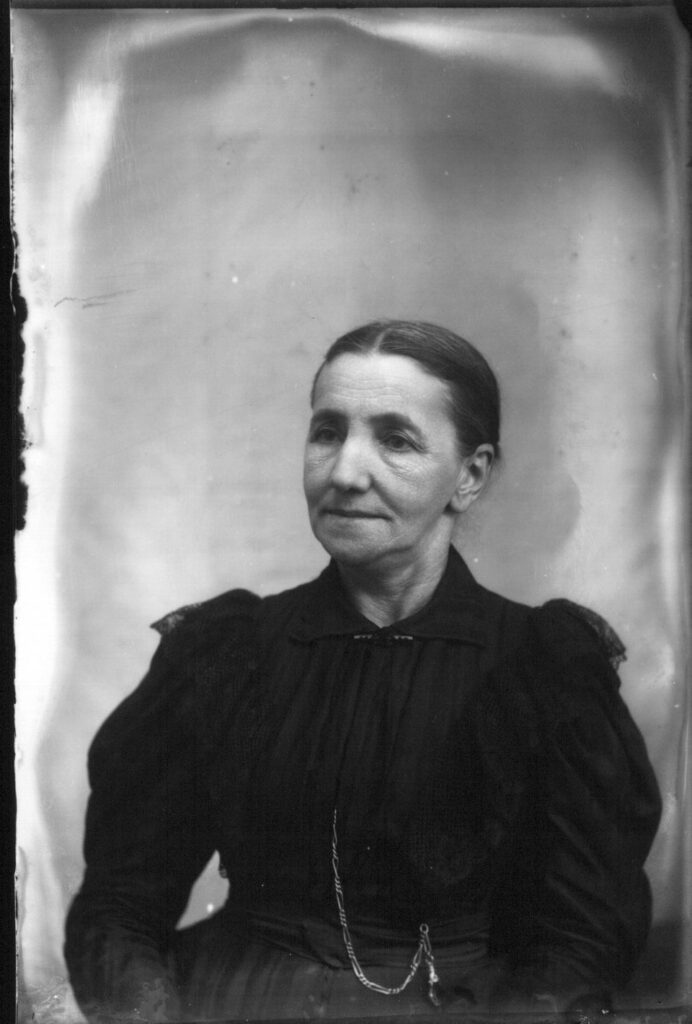
Maria Branyas Morera was born in San Francisco on March 4, 1907 — the same year Oklahoma became a state, the same year the first Ziegfeld Follies opened in New York. She lived through two world wars, the 1918 influenza pandemic, the Spanish Civil War, and at age 113 became the oldest known person to survive a COVID-19 infection. She died in her sleep on August 19, 2024, in Olot, Catalonia, at 117 years and 168 days — the eighth-oldest verified person in history.
She never developed cancer, dementia, or major cardiovascular disease.
A team led by researchers at the Josep Carreras Leukaemia Research Institute and the University of Barcelona wanted to understand why. Their study, “The multiomics blueprint of the individual with the most extreme lifespan,” published on September 24, 2025 in Cell Reports Medicine, is one of the most comprehensive molecular portraits ever assembled of a supercentenarian.
The multiomics approach
The researchers — led by Dr. Manel Esteller, head of the Cancer Epigenetics Group at Josep Carreras — collected blood, saliva, urine, and stool samples from Branyas Morera in 2022 and 2023, then subjected them to a full multiomics analysis: genome, epigenome, transcriptome, proteome, metabolome, and microbiome. First authors Eloy Santos-Pujol and Aleix Noguera-Castells led the integrative analysis.
The goal was not simply to catalog her molecular features, but to answer a deeper question: can the molecular signatures of extreme aging and extreme health coexist in the same body?
Signs of extreme aging — present
The study found that Branyas Morera carried many of the molecular hallmarks normally associated with aging and disease:
- Telomere erosion: Her telomeres — the protective caps at the ends of chromosomes — were among the shortest ever measured in a healthy individual. “Huge erosion,” the researchers noted, with a high proportion of ultra-short telomeres that in most people would signal cellular senescence and increased cancer risk.
- Clonal hematopoiesis: A single bone marrow stem cell had acquired a mutation and expanded to dominate her blood cell production — a condition that in most people increases the risk of leukemia and cardiovascular disease. She had neither.
- Aged immune profile: She carried an expanded population of age-associated B lymphocytes — more inflammatory, less effective at antibody production. The immune system looked its age.
These three features — short telomeres, clonal hematopoiesis, and an aged adaptive immune system — should, by the standard molecular logic of aging, predict imminent pathology. In Branyas Morera, they did not.
Signs of resilience — also present
Alongside these markers of biological wear-and-tear, the analysis revealed a parallel set of protective features:
- Epigenetic youth: Across multiple tissues and several independent epigenetic clock methods, her biological age was significantly younger than her chronological age. A ribosomal DNA methylation clock estimated she was approximately 23 years epigenetically younger than her 117 years.
- Exceptional lipid metabolism: Very low VLDL cholesterol and triglycerides; very high HDL (“good”) cholesterol. Her lipoprotein particle profile was consistent with excellent cardiovascular health.
- Low inflammation: Exceptionally low GlycA and GlycB — integrated markers of systemic inflammation that typically rise with age. This is unusual in the context of her short telomeres and clonal hematopoiesis, both of which normally drive pro-inflammatory signaling.
- Gut microbiome richness: Her microbiome was skewed toward younger features, with high levels of Bifidobacterium — an anti-inflammatory genus that typically declines with age. Branyas Morera ate approximately three yogurts per day for the last 20 years of her life.
- Favorable genetics: She carried rare genetic variants associated with immune fitness, brain health, cardiovascular protection, and mitochondrial function. She lacked the APOE ε4 allele — the strongest common genetic risk factor for late-onset Alzheimer’s disease.
- Mitochondrial function: Her blood cells showed strong mitochondrial function, where mitochondrial dysfunction typically increases with age.
The duality
The study’s central finding is what Esteller calls a “fascinating duality”: the molecular signatures of extreme aging and healthy longevity can coexist in the same person. Short telomeres did not cause cancer. Clonal hematopoiesis did not cause leukemia. An aged B-cell compartment did not cause dementia.
“This tells us that aging and disease are not intrinsically linked,” Esteller said. “They can be decoupled at the molecular level.”
The implication is that protective mechanisms — epigenetic maintenance, inflammation control, metabolic resilience, genetic luck — can buffer the damage of cellular aging. The study does not identify a single “longevity gene” or a simple intervention. Instead, it paints a picture of a biological system where multiple protective layers kept the engine running smoothly despite heavy wear on individual parts.
The caveats
This is a single-person case study by the nature of the subject. N = 1. The findings are hypothesis-generating, not generalizable. Branyas Morera’s genetic profile, microbiome, diet, and life history are unique. Which of these factors are causal, which are correlational, and which are irrelevant can only be determined by studying larger populations of supercentenarians — a group so rare that large-N studies are extremely difficult.
The study is also descriptive. It maps molecular features but does not experimentally test interventions. It cannot tell you, for example, whether eating three yogurts a day will extend your lifespan, or whether any of the identified genetic variants would confer benefit in a different genomic background.
Still, as a proof of concept, the Branyas Morera blueprint demonstrates something nontrivial: extreme longevity with extreme health is possible, and it leaves molecular traces that science is now learning to read.
Source: Santos-Pujol, E., Noguera-Castells, A. et al. “The multiomics blueprint of the individual with the most extreme lifespan.” Cell Reports Medicine (2025). DOI: 10.1016/j.xcrm.2025.102368
>
Lead institution: Josep Carreras Leukaemia Research Institute, Barcelona, Spain, in collaboration with the University of Barcelona.