

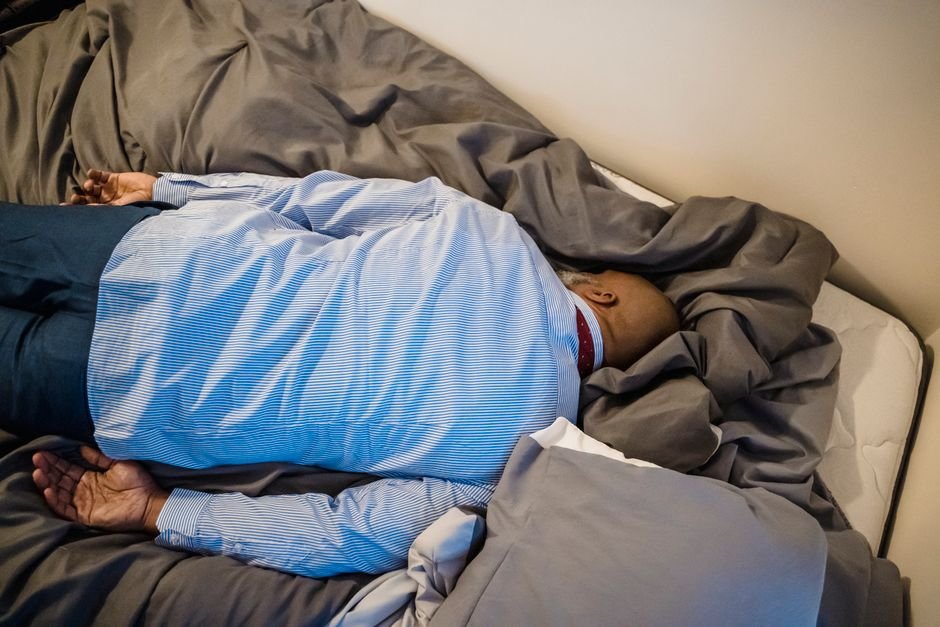
A small randomized crossover trial from researchers in Spain and the United States suggests that sleeping extra hours on the weekend does not fully undo the metabolic and cardiovascular consequences of a week of insufficient sleep. After five nights of restricted sleep followed by two days of unrestricted recovery, participants still showed elevated triglycerides and blood pressure compared with a week of adequate habitual sleep.
Roughly one-third of adults report sleeping fewer than the recommended seven hours per night on a regular basis. Many people attempt to compensate for this weekday sleep debt by sleeping longer on Saturday and Sunday, a practice often called weekend catch-up sleep. But whether this strategy actually reverses the physiological toll of sleep restriction has been unclear. Now, a pilot randomized crossover trial published in Clínica e Investigación en Arteriosclerosis provides preliminary experimental evidence that weekend recovery may be insufficient.
What They Found
Researchers led by Jose Vicente Sorli at the Universidad de Valencia, CIBEROBN, and Columbia University Irving Medical Center enrolled 10 healthy adults in a randomized crossover trial comparing two seven-day conditions. In the first condition, participants followed their habitual adequate sleep schedule for seven nights (HS). In the second condition (RS), they underwent five nights of partial sleep restriction, losing one hour and 30 minutes per night, followed by two nights of ad libitum recovery sleep intended to mimic a weekend.
Key results included:
- Weekday sleep loss. During the restriction period, participants averaged 102 minutes less sleep per night compared with the habitual sleep condition, a highly significant difference (p < 0.001).
- No weekend sleep compensation. Despite having unrestricted opportunity to sleep on the two recovery nights, participants did not sleep significantly longer on the weekend in the RS condition compared with the HS condition. The expected catch-up did not materialize.
- Worse sleep quality after recovery. After the weekend recovery period, sleep quality in the RS condition actually deteriorated. Participants experienced more wake after sleep onset and a higher number of nighttime awakenings, suggesting that the attempt to recover did not restore normal sleep architecture.
- Elevated triglycerides. Triglyceride levels were higher in the RS condition compared with the habitual sleep condition.
- Elevated blood pressure. Systolic and diastolic blood pressure readings were also higher following the restriction-and-recovery week.
Why It Matters
These findings challenge a widely held assumption: that a weekend of extended sleep can reset the body after a week of short sleep. The data suggest that sleeping in on Saturday and Sunday may not be a physiological reset button, at least not for cardiovascular and metabolic markers.
The two markers that worsened in this study, triglycerides and blood pressure, are established risk factors for cardiovascular disease. Even modest, sustained elevations in these measures are associated with increased long-term risk of heart attack, stroke, and metabolic syndrome. If weekend recovery sleep does not reverse the effects of weekday sleep restriction, then millions of people who rely on weekend catch-up as their primary sleep recovery strategy may be doing less for their health than they believe.
The study also highlights an unexpected finding: that weekend recovery sleep did not improve sleep quality. In fact, sleep quality was worse after the recovery period, with more fragmented sleep. This raises the possibility that the body’s sleep regulatory system does not simply bank and repay sleep debt hour for hour. The physiological processes disrupted by restriction may not be fully reversible by simply adding sleep time later.
Limits
This is a pilot study with a small sample of 10 healthy adults, and the results should be considered preliminary. The small sample size limits statistical power and the generalizability of the findings to broader populations, including people with existing metabolic or cardiovascular conditions, older adults, or shift workers. The study also used a controlled laboratory or closely monitored protocol, which may not fully reflect real-world conditions where sleep timing, diet, stress, and physical activity vary considerably. The authors note that the recovery period was limited to two days, and it remains unknown whether a longer recovery period would yield different results. Additionally, the study did not assess long-term outcomes.
Bottom Line
Weekend catch-up sleep after five days of moderate sleep restriction did not restore sleep quality, triglyceride levels, or blood pressure to normal in this pilot study. While the findings require replication in larger trials, they suggest that relying on the weekend to compensate for weekday sleep debt may not be an effective strategy for protecting cardiometabolic health. Consistent, adequate sleep throughout the week appears to remain the recommended approach.
Source
Sorli JV, et al. Pilot study of the impact of weekend sleep restriction and recovery sleep on metabolic and cardiovascular risk indicators: Results from a randomized crossover clinical trial. Clin Investig Arterioscler. 2026 Jul 18:500959. doi: 10.1016/j.arteri.2026.500959. PMID: 42471255.