

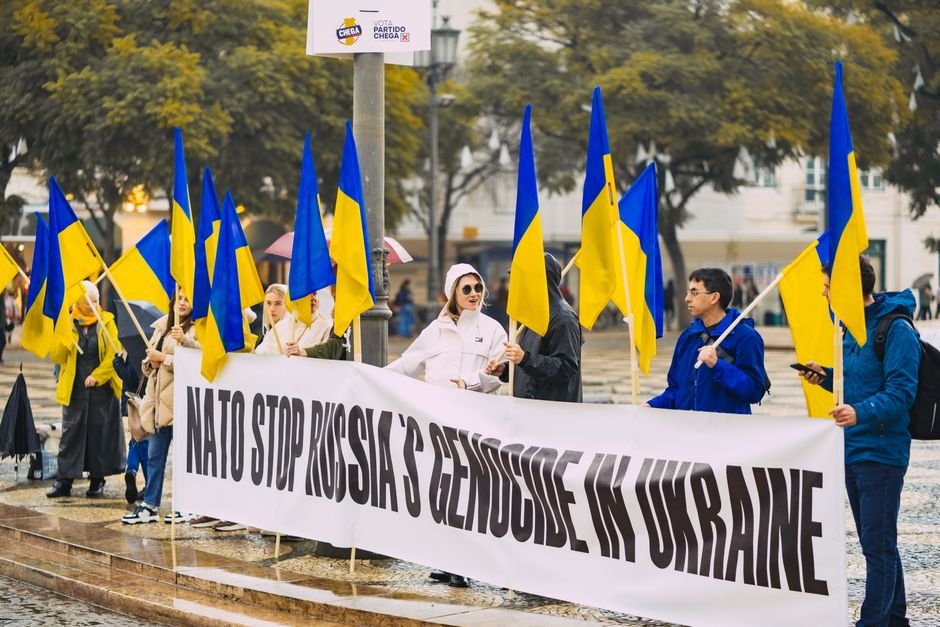
The argument against NATO enlargement is stuck in the 1990s. New members are not liabilities that need defending. They are bringing military capability, industrial capacity, and strategic thinking that the alliance desperately needs.
The debate over whether to let more countries into NATO has been dominated for years by a single question: does expansion provoke Russia? President Donald Trump answers yes, arguing enlargement caused the invasion of Ukraine and insisting Kyiv will not join “on his watch.” Even strong Ukraine supporters now concede its path to membership is effectively blocked.
But the question misses what has changed. NATO’s newest members, Sweden and Finland, are not asking to be rescued. They are helping redefine what a stronger alliance looks like.
What the New Members Bring
Sweden is expected to spend 2.8 percent of GDP on defense in 2026, Finland 2.5 percent. Both are on track to exceed 3 percent by the end of the decade. These front-line states live closest to the Russian threat and are investing most heavily in military capability.
They also bring cutting-edge defense industries. Sweden Ballistics, founded by a fintech entrepreneur, is building a weapons-grade TNT factory scheduled to begin production in 2028. It will double the number of major factories producing NATO-grade TNT in Europe. The only comparable plant, Nitro-Chem in Poland, is already struggling to meet demand, and much of its output is exported to the United States.
Nordic Air Defense, whose board includes former Swedish foreign minister Tobias Billstrom, is developing the Krueger interceptor, a low-cost autonomous drone designed to destroy Iranian Shahed drones at a fraction of the cost of conventional air defense systems like Patriots.
“When Iran began launching Shaheds at targets across the Middle East, we saw Gulf states burn through stockpiles of expensive Patriots to take down something that costs a fraction of the price,” Billstrom said. “This is not sustainable in a world where aggressors can send hundreds or thousands of these at once.”
The interceptor has been successfully demonstrated outside Stockholm and is already being tested in Ukraine.
A ‘Total Defense’ Culture
Nordic and Baltic states maintained a “total defense” culture throughout the post-Cold War period, military planning integrated with civilian society, trained reservists, conversion of civilian production lines, redirection of commercial tech companies to provide intelligence and cyber support.
This is not theory. It is the operating model of countries that never stopped preparing for a major European land war. They maintained it while Western European allies cut budgets and assumed peace was permanent. Now that model is shaping NATO’s future rather than merely joining it.
Keir Giles, a European security expert, put it plainly: “For the front-line states, the discussion is not theoretical but existential. The immediacy of the threat, and procurement systems that are more agile and fit for purpose, allow the Nordic and Baltic states to make faster progress than some of their hidebound counterparts west of Warsaw.”
Ukraine as the Wild Card
The argument for keeping Ukraine out of NATO rests on the idea that membership would trigger a direct conflict with Russia. But Ukraine has become the world’s leading laboratory for drone warfare, attracting defense firms and governments. Its battlefield experience, combined and integrated into NATO planning, would be the alliance’s single most valuable operational asset.
Every day Ukraine fights, it generates lessons the alliance cannot afford to ignore. Keeping Ukraine out because of Russian objections means letting Moscow veto the alliance’s most important source of combat innovation.
Trump’s most legitimate criticism of NATO, that too many European allies neglect defense, is undermined by the fact that the newest members are the most serious contributors. If the goal is a Europe that carries more of its own defense burden, enlargement is part of the solution, not the problem.
As Foreign Policy noted: “Enlargement is no longer simply about extending Article 5 to new territory. It has become one of the alliance’s most effective ways of renewing its military culture, industrial capacity, and strategic thinking.”
Source: Foreign Policy