

Published: June 04, 2026, 18:04 UTC
The vagus nerve has long been the body’s quiet workhorse. It snakes from the brainstem down through the neck and chest, branching into the abdomen where it monitors the heartbeat, the breathing rhythm, the churn of digestion. It is the body’s most direct communication line between the viscera and the brain — 80% of its fibers carry signals upward, not downward.
A new study published in Nature Communications reveals that this ancient nerve does something unexpected. When rats consume caloric food, the vagus nerve carries a signal to the brain that triggers acetylcholine release in the hippocampus, the seat of memory formation. The result is a sharper, more durable memory for where the meal was found.
The finding adds a concrete neural mechanism to a long-suspected link between eating and cognition: the idea that what we eat, and how we eat it, shapes how well we remember.
The Pathway
The research team, led by Scott Kanoski at the University of Southern California, traced the signal across four distinct stations.
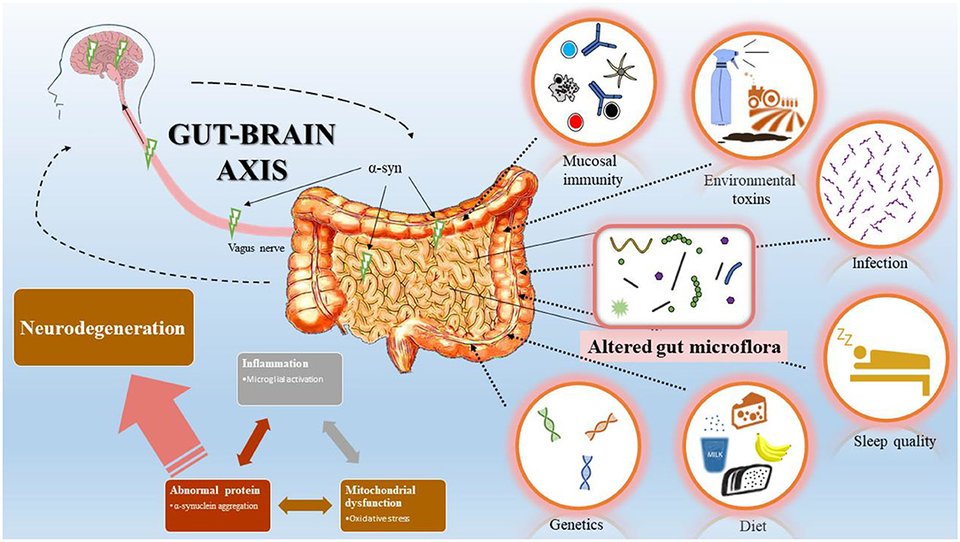
First, calories enter the gut. Nutrients like sucrose or corn oil activate vagal afferent neurons (VANs) in the gastrointestinal tract. Second, these signals travel up the subdiaphragmatic vagus nerve to the brainstem. Third, they recruit cholinergic neurons in the medial septum, a small structure deep in the forebrain. Fourth and finally, septal neurons release acetylcholine into the dorsal hippocampus.
The researchers used a genetically encoded fluorescent sensor called iAChSnFR to watch acetylcholine levels in real time as rats ate. The sensor lit up during nutrient consumption, and the signal was sustained. When the same rats consumed saccharin, a non-caloric sweetener, the signal stayed flat.
“It is nutrient specific,” the authors note. The brain does not care about sweetness or palatability alone; it cares about calories.
What the Memory Test Showed
Rats were tested on a spatial working memory task: they had to remember where a meal was located. Those with an intact vagus nerve performed well. Those whose vagus nerve had been surgically severed (subdiaphragmatic vagotomy) did not; their hippocampal acetylcholine signals were gone, and their memory for the meal location was impaired.
The same pattern appeared when the researchers selectively ablated cholinergic neurons in the medial septum using a targeted toxin called 192IgG-saporin. Without these septal neurons, the hippocampus never received the acetylcholine signal, and memory performance collapsed.
The team also tested a gut peptide called cholecystokinin (CCK), which is released during digestion. Peripheral CCK administration alone produced sustained hippocampal acetylcholine responses, confirming that the gut peptide system can engage the same pathway without actual food.
What a Western Diet Does
The most striking finding may be what happens when rats are raised on a Western diet or a cafeteria diet — high in fat and sugar, low in fiber. Early exposure to these diets blunted the post-meal acetylcholine elevation in the hippocampus. The pathway was still there, but it was quieter, less responsive to incoming nutrients.
This suggests a mechanism by which diet quality during development could permanently alter the gut-brain memory connection. The rats were not just forgetting where their food was; their brains were receiving a weaker signal from the gut, potentially compromising hippocampal function over time.
Caveats
Several limitations are worth noting:
- Male rats only. No female subjects were included, a significant gap given known sex differences in both vagal signaling and hippocampal function.
- Rodent model. The pathway exists in rats; its detailed anatomy in humans may differ. Direct extrapolation to human memory requires caution.
- Permanent interventions. Vagotomy and cell ablation are irreversible. The brain may compensate for the loss over time, making acute effects hard to isolate.
- Intermediate nodes unmapped. The signal travels from vagal afferents to the medial septum, but the exact relay stations in the brainstem were not identified.
- Limited nutrient range. Only sucrose, corn oil, and saccharin were tested. Protein, complex carbohydrates, and micronutrients remain unexplored.
- No reversal experiments. The study shows that a Western diet impairs the pathway but does not test whether switching back to a healthy diet can restore it.
What It Means
The gut-brain axis has become one of the most active frontiers in neuroscience, but specific, well-mapped pathways remain rare. This study provides one: nutrients activate the vagus, the vagus activates the septum, the septum releases acetylcholine in the hippocampus, and memory improves.
The practical implications are speculative but intriguing. If nutrient-induced vagal signals enhance hippocampal acetylcholine, then eating patterns could directly influence memory encoding. The vagus nerve is already being explored as a therapeutic target in depression and epilepsy through implanted stimulators. A clearer understanding of how it signals nutrient status to memory circuits could open new approaches to cognitive enhancement or the prevention of diet-related cognitive decline.
“This is a gut-brain connection that is simple, testable, and surprisingly direct,” the researchers said.
Reference
Lauer, L.T., Hayes, A.M.R., Suarez, A.N. et al. “The Vagus Nerve Promotes Memory in Rats Via Nutrient-Induced Septo-Hippocampal Acetylcholine Signaling.” Nature Communications (2026). DOI: 10.1038/s41467-026-73896-2