

Senate delivers bipartisan rebuke as Congress moves to reclaim war authority on Iran
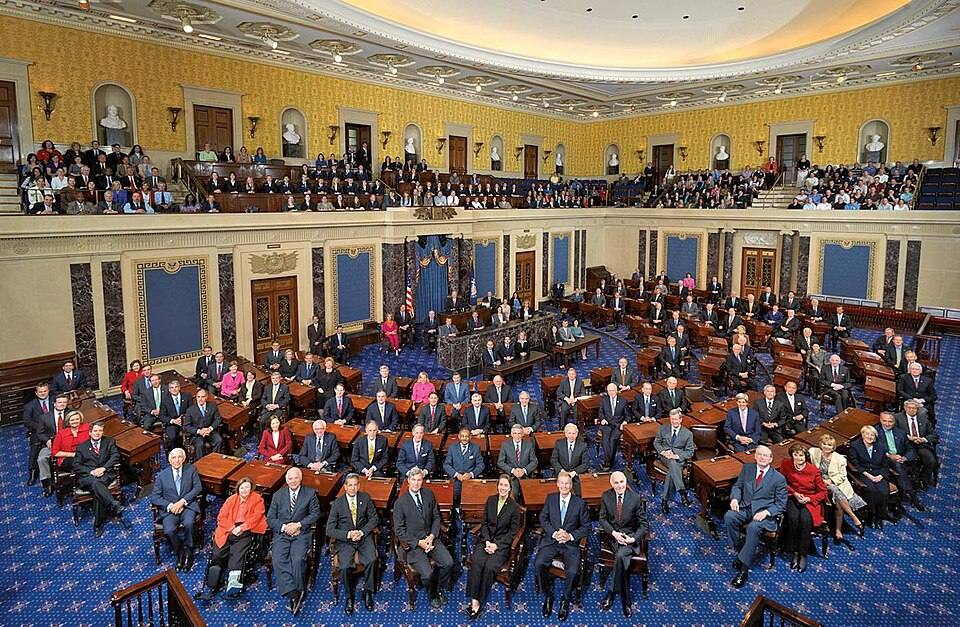
The U.S. Senate voted 50-48 on June 23 to pass an Iran war powers resolution that would require President Donald Trump to seek congressional authorization before using military force against Iran, delivering the most significant legislative challenge yet to the administration’s handling of the conflict. Four Republicans joined every Democrat except one to approve the measure, which already cleared the House of Representatives earlier this month. The resolution does not require the president’s signature, making it a privileged congressional directive that Trump cannot veto.
The vote marks the first time Congress has moved to formally constrain a president’s war-making authority since the 1973 War Powers Act was enacted over President Richard Nixon’s veto. That law, which requires the president to consult Congress before introducing armed forces into hostilities, has been a source of constitutional friction for decades. Trump and his Republican allies have openly questioned its legitimacy, arguing that the commander-in-chief clause of the Constitution grants the president unilateral authority to direct military operations. Legal scholars are divided on the question, but the administration has made clear it considers the resolution a symbolic overreach rather than a binding constraint.
The bipartisan coalition that delivered the resolution was unusual in its composition. The four Republicans who broke ranks were Susan Collins of Maine, Lisa Murkowski of Alaska, Bill Cassidy of Louisiana, and Rand Paul of Kentucky. Each represents a distinct political calculation. Collins and Murkowski have a history of cross-party votes on institutional questions. Cassidy, facing a difficult primary challenge in Louisiana, has been under mounting pressure from constituents weary of a conflict that has now claimed American lives with no clear endpoint. Paul, a libertarian consistent in his opposition to foreign intervention, needed little convincing.
The lone Democrat to vote against the measure was Senator John Fetterman of Pennsylvania. Fetterman, who has carved an unconventional path since his election, did not issue a detailed statement explaining his vote, though his office confirmed he remains broadly supportive of the military but believed the resolution was procedurally problematic. Two Republicans were absent: Senator Dave McCormick of Pennsylvania and Senate Minority Leader Mitch McConnell of Kentucky, who remains hospitalized.
For Senate Minority Leader Chuck Schumer, the vote was an opportunity to crystallize Democratic opposition to the Iran conflict ahead of the November midterm elections, where Republicans are defending a narrow majority in both chambers. Schumer’s floor statement was characteristically pointed.
“Trump’s historic blunder in Iran will go down in the history books as one of the worst foreign policy forays America has ever made, or any country has ever made,” Schumer said. “The American people have seen skyrocketing gas prices, soaring costs, and, tragically, the loss of 13 service members, and the wounding of hundreds more, and meanwhile, Iran took Trump to the cleaners.”
Representative Gregory Meeks of New York, the top Democrat on the House Foreign Affairs Committee, struck a similar chord after the House vote earlier this month. “Congress never authorized this failed war, and the president certainly has no authority to continue it indefinitely without our consent as the constitution demands,” Meeks said.
The political timing of the resolution is significant. With the November midterm elections approaching and Republicans defending slim majorities in both the House and Senate, the war in Iran has become a liability for the party. What began as a limited military campaign has evolved into an open-ended occupation that has strained military readiness, consumed billions in taxpayer dollars, and eroded public confidence in the administration’s strategy.
The human cost has been a driving factor in the erosion of support. Thirteen American service members have been killed in the conflict, with hundreds more wounded. The financial toll has been harder to calculate, but independent estimates place the cost in the tens of billions. Gas prices surged in the early months of the campaign and have remained elevated, a fact Democrats have seized on in campaign messaging across swing states.
A Reuters/Ipsos poll conducted in late June shows the depth of public discontent. Only 23 percent of Americans believe the United States is stronger as a result of the war in Iran. Nearly two-thirds of respondents said they doubt any truce with Tehran will hold, reflecting deep skepticism about the durability of the administration’s diplomatic track. The administration has pointed to negotiations in Switzerland as evidence of progress, but the polling suggests the public is not buying it.
Trump, for his part, has not backed down. He has dispatched Vice President JD Vance to Switzerland for nuclear talks with Iran, a move that the administration frames as a diplomatic breakthrough but that critics dismiss as a face-saving exercise after years of military escalation that produced no strategic victory. The president has accused congressional Democrats of undermining American credibility on the world stage and has signaled that he will disregard the resolution as an unconstitutional infringement on executive authority.
Republican leadership on Capitol Hill has largely remained loyal to the president, but the defection of four senators signals a crack in that unity. Behind closed doors, Republican strategists acknowledge that the war is a drag on the party’s midterm prospects. Independent voters, who swung heavily toward Republicans in 2024, have cooled significantly on the conflict. In districts with competitive races, the issue has become a wedge that Democrats are using to peel off moderate and suburban voters.
The resolution’s practical effect is limited. It carries the weight of a congressional directive but lacks the enforcement mechanisms of a binding statute. Trump can ignore it, and his legal team is preparing arguments to challenge the War Powers Act itself if Congress attempts to force compliance. But the political message is unmistakable. A majority of both chambers of Congress has now voted to declare that the president is waging an unauthorized war.
Symbolic or not, the resolution reveals something deeper about the political landscape. War fatigue has set in not just among the public but within the institutions of government. The bipartisan coalition that formed around this resolution was once unthinkable. That it now exists at all speaks to the scale of the discontent.
Going forward, the resolution sets the stage for a broader constitutional confrontation. If Trump continues military operations without congressional approval, Democrats could seek to test the War Powers Act in federal court, though legal experts caution that the judiciary has historically been reluctant to intervene in questions of war and foreign policy. In the meantime, the administration’s negotiating team in Switzerland has been handed an implicit deadline: show progress toward a diplomatic resolution, or watch congressional dissent continue to grow.
For a president who has built his political identity around strength and decisiveness, the resolution is a reminder that even the most powerful executive can lose the room. Whether it changes anything on the ground in Iran is another question entirely.