

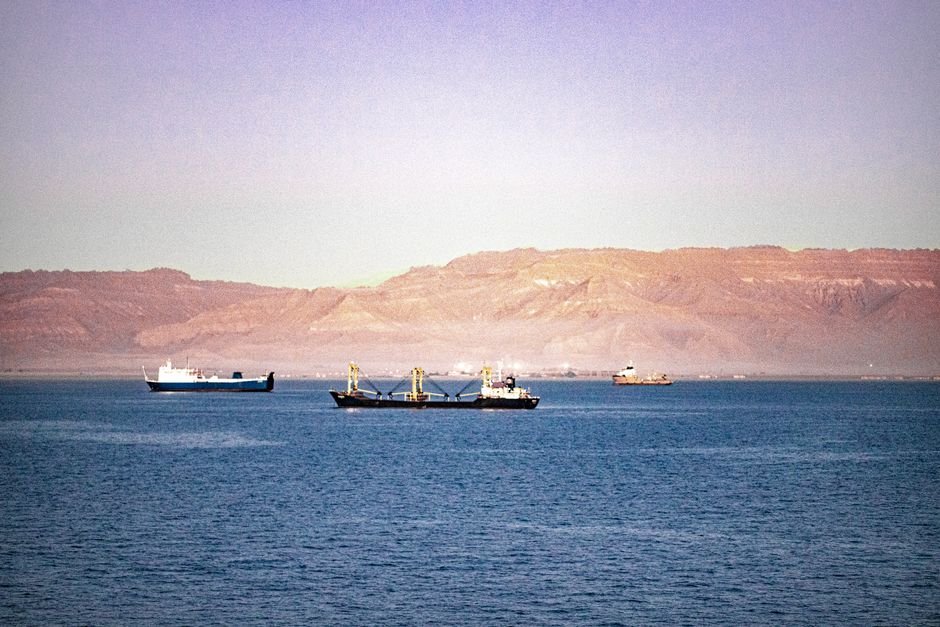
Over three days at the start of August, the public record on the Iran talks contradicted itself in plain sight. Tehran said it was not negotiating with Washington. President Trump said the two sides were talking, or about to talk, and that shipping through the strait could resume within a day. American officials then said an agreement on the strait was close, with Treasury Secretary Scott Bessent floating a deal within a day or two.
Read in order, the reports do not cancel each other out. They describe one negotiation from three different rooms. Here is the sequence, day by day.
Monday, August 3: the denial and the deadline
The Iranian Foreign Ministry set the tone. Spokesman Esmaeil Baghaei insisted there were no talks with the United States, only technical talks with Oman about reopening the strait, the narrow passage through which about one-fifth of global oil and gas flowed before the war began in February.
Trump answered from the White House, mid-signature on an executive order. A reporter asked where the negotiations would be held; Trump said the world would know within a day or two, that events would move fast, one way or another, and that shipping through the strait could resume by the next day. His plan ran in two stages: reopen the waterway first, then deal with denuclearization.
On Truth Social he accused Iran’s leaders of duplicity, describing leaders who ask for meetings, watch talks begin, and then announce proudly that nothing is happening. To reporters he said Tehran faced one last chance to sign an acceptable text before what he called decapitation, repeating his demand for a deal or total surrender, and made clear the naval blockade would hold until then. He also ruled out Iranian tolls on the strait.
The Guardian, which logged the day hour by hour, spotted the pattern: Trump said he had again shelved planned massive strikes because Gulf allies pressed for diplomacy, a count it put at twelve since the war began, each time pulling back from threatened force.
Behind the sparring, the machinery moved slowly. Pakistani government sources said the intermediaries had not fixed a date or a place for resuming the stalled negotiations.
Monday night, August 3: Pakistan moves
Late Monday, Pakistan’s Foreign Minister Ishaq Dar telephoned Iran’s foreign minister, Abbas Araghchi, and asked him to come to Islamabad as soon as convenient. The speaker of Pakistan’s National Assembly, Ayaz Sadiq, separately invited Iran’s chief negotiator, Mohammad Bagher Ghalibaf.
Pakistan has walked this road before. It hosted the first US-Iranian meeting in decades in April, and in June the Islamabad Memorandum of Understanding was signed by Prime Minister Shehbaz Sharif, President Masoud Pezeshkian and Trump. The record since is not encouraging: a ceasefire agreed in April fell apart within days, and after the memorandum held for barely a month, the American blockade of Iran’s southern ports went back on. Baghaei reaffirmed that Pakistan remains the mediator, with Qatar ready to help when needed. Pezeshkian has called the memorandum the anchor of Iran’s future foreign policy.
Tuesday, August 4: the experts’ caution
Al Jazeera’s analysis, published Tuesday midday, found the diplomats committed and the analysts doubtful. Asif Durrani, a former Pakistani ambassador to Iran, called the memorandum a foundation stone rather than a dead letter. Grace Wermenbol, who served in US national security roles, said the repeated collapses had drained the trust a durable ceasefire requires. Mehran Kamrava of Georgetown University in Qatar blamed Washington rather than Islamabad: the United States, he argued, has no exit strategy and keeps moving the goalposts, while Iran wants to keep its grip on the strait but can only do so with Oman and the quiet consent of the other Gulf states.
Tuesday night, August 4, and Wednesday morning: the deal takes shape, the latest word
The most recent updates came Tuesday night and Wednesday morning, and they were the most hopeful. Marco Rubio, the secretary of state, said the Iran-Oman talks had made progress but had not reached finality, and that the strait remains open to traffic. Bessent told CNBC a deal could land within a day or two and move the conflict toward something closer to normal. In Tehran, diplomatic sources raised the possibility of an agreement by the close of Wednesday.
Reporting Wednesday morning, the Associated Press sketched the shape of what is emerging: ships would sail into the Persian Gulf on an Iranian-controlled lane and leave on a lane run by Oman, according to two regional officials. Everything, AP noted, hinges on Washington lifting its naval blockade of Iranian ports, and the administration has previously refused any arrangement that hands Iran command of the strait.
Baghaei described the talks with Oman as positive and continuing, aimed at secure lanes for traffic in both directions. Iranian officials said what remains unresolved includes the mechanism for reopening the waterway, the fees and the security arrangements.
Qatar’s emir spoke with Trump by phone on Tuesday; his office said the call covered ways to narrow the gap between the two governments toward a durable settlement, and Doha has urged both sides to stick to the memorandum agreed in mid-June.
Security has not softened meanwhile. A cargo ship told British maritime authorities it had been struck by something unidentified in the strait near Omani waters. An Indian-flagged freighter went down off Yemen after an explosive-laden boat rammed it; Yemen’s coast guard pulled the crew to safety. The Houthis claimed a drone strike on a sensitive target at Saudi Arabia’s Najran airport, and Saudi Arabia suspended operations there.
What to watch
As of Wednesday morning, no agreement had been announced. The apparent contradiction is structural: Iran negotiates with Oman and says it is not negotiating with the United States; Washington says it is in the room. Both statements can be true, because the current subject is narrow, a shipping mechanism, not a settlement of the war.
The record of the past five months argues for caution. Ceasefires and memoranda have collapsed within weeks, and the trust needed for a lasting deal has been eroded. A deal may come within days. Or the pattern may repeat: words of progress, then another round of strikes.
Source
- Al Jazeera: US says deal on reopening Hormuz close as Iran, Oman hold ‘positive’ talks
- The Guardian: Trump claims strait of Hormuz could open ‘by tomorrow’ as Iran denies any talks taking place
- Al Jazeera: Can Pakistan keep US-Iran diplomacy alive as mistrust deepens?
- AP: Iran and Oman are working on a plan to reopen the Strait of Hormuz