

A Friday signing ceremony in Switzerland will formally seal the US-Iran ceasefire deal, but the agreement is already under assault from three directions at once: Israeli Prime Minister Benjamin Netanyahu’s military provocations, a furious Iranian hardliner revolt in Tehran, and President Trump’s own impulsive public outbursts against his ostensible allies. The question facing diplomats as they prepare to gather in Geneva is whether the deal can survive the forces arrayed against it before the ink even dries.
Trump announced the breakthrough Sunday on Truth Social, declaring “The Deal with the Islamic Republic of Iran is now complete.” The agreement, mediated by Pakistani Prime Minister Shehbaz Sharif after months of back-channel diplomacy, will end the US naval blockade of Iran and reopen the Strait of Hormuz to commercial shipping, triggering a surge in global markets and a sharp drop in oil prices. Brent crude fell more than $4 a barrel on the news. Shipping stocks reversed weeks of war-risk premiums. For the first time in months, the prospect of a broader Middle Eastern war appeared to recede.
But the deal’s foundations are cracking faster than the diplomatic communiques can be drafted. What follows is a portrait of a ceasefire under simultaneous fire from every party that might have reason to want it dead.
The Netanyahu Problem
In a remarkable on-the-record interview with Axios, Trump leveled an unrestrained and vulgar attack on Netanyahu, accusing the Israeli prime minister of deliberately sabotaging the negotiations. Trump told Axios that Netanyahu has “no fucking judgment,” faulting Israel’s recent missile strike on Beirut as unjustified and recklessly timed.
The public rebuke of a longtime American ally was extraordinary in both its crudeness and its strategic implications. Trump, who has long presented himself as Israel’s staunchest defender in the Oval Office, effectively accused Netanyahu of attempting to torch a landmark diplomatic achievement for narrow domestic political reasons. The Beirut strike, which killed at least a dozen civilians and destroyed a residential building, came as US and Iranian negotiating teams were finalizing text in Switzerland. Trump made clear he saw the timing as no coincidence and the provocation as deliberate.
“The guy has no fucking judgment,” Trump said, according to Axios’ transcript. “He’s trying to blow this up.”
White House officials scrambled to contain the fallout, though notably none disputed Trump’s characterization or attempted to walk it back. The episode laid bare the transactional nature of Trump’s approach to foreign policy: allies are useful only insofar as they serve his objectives, and Netanyahu had miscalculated badly if he believed the ceasefire was something Trump would allow him to undermine from the sidelines.
Despite the blowup, Trump insisted the deal remained on track for Friday. “It’s happening,” he said. “Nobody’s stopping it.”
But the question of what comes next for US-Israel relations is now wide open. Netanyahu’s governing coalition depends on hard-right parties that have already condemned any US-Iran rapprochement as a betrayal of Israeli security. Trump’s public humiliation of the Israeli leader may paradoxically strengthen Netanyahu’s incentive to continue spoiling: if the deal collapses, Netanyahu can claim vindication; if it holds, he has been branded a saboteur by his own patron. Neither path offers a stable foundation for the alliance.
Israeli defense officials, speaking anonymously to Israeli media, expressed alarm at Trump’s language. Some warned that the breach could embolden Iran’s hardliners and Hezbollah, who now see a split between Washington and Jerusalem that they can exploit. Others noted that Trump’s anger tends to be hot but short-lived and predicted the relationship would reset after the signing ceremony.
The Hardliner Revolt
On the other side of the Persian Gulf, Iran’s own internal dynamics are moving in the opposite direction from the moderate Foreign Minister Araghchi and his negotiating team. Hardline factions in Tehran have mobilized aggressively against the agreement, accusing Araghchi of capitulation and compromise with the “Great Satan.”
Protest rallies have erupted in Tehran and Mashhad, with demonstrators chanting against the deal and burning American flags. Hardline clerics have taken to the pulpits to denounce any agreement that does not include a complete end to US sanctions and a full withdrawal of American naval assets from the region. In their telling, even the limited concessions Trump has offered represent a form of humiliation and a betrayal of the revolution’s founding principles.
The political battle inside Iran is existential. The hardliners control the Guardian Council, which has the power to vet legislation and candidates, and the judiciary, which has in the past been used to prosecute and silence moderates. They have threatened non-ratification even if Araghchi signs the document in Switzerland on Friday. Under Iran’s constitutional structure, the agreement must pass through multiple layers of approval: the Supreme National Security Council, the parliament, and ultimately the Guardian Council. The hardliners have made clear they will use every procedural weapon available to block it at each stage.
“Those who think they can sell the revolution for a temporary lifting of sanctions are traitors to the blood of our martyrs,” one prominent hardline parliamentarian told a rally in Tehran this week, drawing cheers from a crowd estimated in the thousands.
The supreme leader, Ali Khamenei, has remained publicly silent on the deal, a posture that itself signals deep ambivalence. In the past, Khamenei has used silence to signal disapproval without having to explicitly reject an agreement that might serve Iran’s interests in reducing economic pressure on a battered population. But this time, with the hardliners in full throat and the protesters in the streets, his silence may be read as a green light for opposition.
There is also an economic dimension to the hardliner resistance. Elements of the Islamic Revolutionary Guard Corps profit substantially from sanctions-busting networks, alternative shipping routes, and the gray-market economy that has flourished under the blockade. A reopening of the Strait of Hormuz and a normalization of trade could undermine the IRGC’s economic power base, giving its commanders a financial as well as ideological stake in the deal’s failure.
The Fragile Architecture of Peace
Taken together, the three pressures converging on the deal paint a picture of a diplomatic structure built on fault lines running in every direction.
The deal itself is relatively narrow in scope: a cessation of hostilities, the reopening of the Strait of Hormuz, and the lifting of the US naval blockade. It does not address Iran’s nuclear program, its ballistic missile capabilities, its support for proxy forces across the Middle East, or the status of US sanctions related to terrorism designations. It is, in essence, a pause, not a settlement. And pauses are fragile things when every party has motive to break them.
From the Israeli perspective, even a narrow ceasefire is an existential threat. Netanyahu has long argued that only sustained military and economic pressure can prevent Iran from becoming a nuclear threshold state. A deal that relieves that pressure, even temporarily, undermines the entire foundation of Israeli strategy. The Beirut strike may have been reckless from Trump’s perspective, but it was also entirely predictable as a response to any US-Iran accommodation. Israeli military planners have war-gamed scenarios in which a US-brokered deal leaves Israel isolated, and the Beirut strike may have been a preemptive signal that Israel will not be bound by any agreement it did not sign.
From the Iranian hardliner perspective, the deal is a betrayal of revolutionary principles and a concession to American pressure that will only encourage further demands. They fear, with some justification, that a narrow ceasefire will become a permanent arrangement that locks in American regional dominance while offering Iran only marginal relief. The supreme leader’s silence may be tactical: if the deal works, he can claim credit for having the wisdom to let it proceed; if it fails, he was never in favor and the hardliners were proved correct.
And from Trump’s perspective, the deal is a transactional achievement to be announced and celebrated, but his attention span for sustained diplomatic follow-through has never been demonstrated. His public dressing-down of Netanyahu, while satisfying to his base and to deal proponents in Washington, has already complicated the coalition needed to maintain pressure on Iran’s hardliners while restraining Israel’s military impulses. If Trump loses interest, or if his anger at Netanyahu curdles into disengagement, the deal could wither from lack of American enforcement.
What Friday Will and Will Not Settle
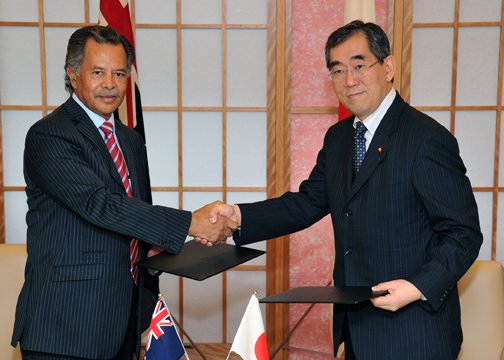
The signing ceremony in Switzerland will be choreographed for maximum diplomatic effect. Cameras will capture handshakes and signatures. Markets will continue to react. Oil tankers will begin planning their passages through the Strait of Hormuz. Shehbaz Sharif, who invested significant political capital in the mediation, will receive international accolades.
But Friday will not resolve the fundamental tensions that the deal merely postpones. Will Israel launch further strikes, calculating that a disrupted deal is better than a deal that constrains its freedom of action? Will Iran’s hardliners succeed in blocking ratification at the Guardian Council, turning a signed agreement into a dead letter? Will Trump, having signed his deal, move on to the next headline, leaving implementation to subordinates who lack his authority to enforce compliance on either side?
The most likely answer is that all of these things will happen simultaneously, in an ongoing cycle of sabotage, protest, and brinksmanship that has come to define the modern Middle East. The deal may hold in form while collapsing in substance. Or it may hold just long enough to create a new normal, one in which the Strait of Hormuz stays open not because of trust between Washington and Tehran but because every party calculates, grudgingly and temporarily, that the alternative is worse.
For now, the diplomats have their calendars set. The speeches are being written. The ink is ready. The only question that matters is whether the deal’s enemies will let it survive the night.