

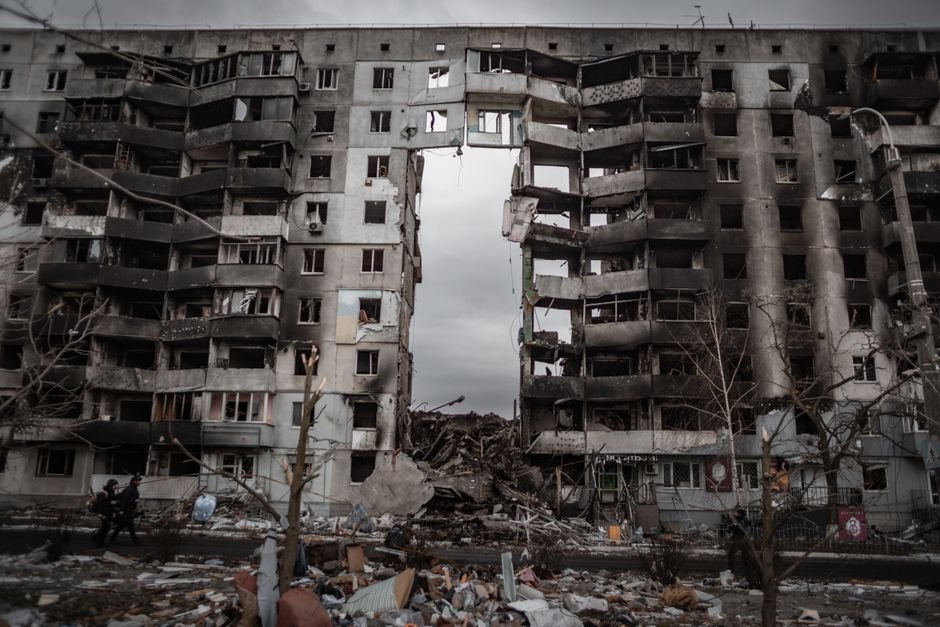
The Palladin Institute of Biochemistry in Kyiv, the first dedicated biochemistry research institute in the former Soviet Union, founded in 1925 by Oleksandr Palladin, has suffered catastrophic damage in the overnight Russian strikes on Kyiv on July 1-2, 2026.
Two of the institute’s four buildings were ruined in two attack waves around midnight and 5:30 a.m., with laboratories gutted by fire and floodwater from firefighting. The roof was torn off, windows shattered, and electricity cut in the water-damaged buildings, leaving freezers full of irreplaceable biological samples and antibody-producing cell lines without power.
The institute’s animal facility was spared; staff evacuated the animals safely, and no staff casualties were reported. One researcher survived because he had gone home early from what became his workstation’s direct blast zone.
What was lost
The Palladin Institute is Ukraine’s leading center for biochemical and biomedical research. Its 10 scientific departments cover cell signaling, molecular immunology, neurochemistry, lipid biochemistry, protein structure and function, enzyme chemistry, and molecular biology. Several research programs directly relevant to the war effort are now jeopardized:
- Antibleeding agents for soldiers: hemorrhage is a leading cause of combat death, and the institute was developing hemostatic compounds
- PTSD research in animal models: critical for treating war-related trauma in Ukraine’s military and civilian population
- Monoclonal and single-chain antibody production: unique hybridoma cell lines producing therapeutic antibodies, now at risk of dying without refrigeration
- Costly reagents and advanced equipment: destroyed in the laboratory fires
“Everything burned down,” one institute staff member told Science. Maksym Strikha, first vice president of the Academy of Sciences of Higher Education of Ukraine, called it “a real disaster for biological science in Ukraine.”
The attack in context
The July 1-2 assault on Kyiv was one of the largest of 2026, with Russia launching 74 missiles and 496 drones. At least 22 people were killed across the city; approximately 130 buildings were damaged across six districts. The day after the strike, Mayor Vitali Klitschko declared a day of mourning.
The Palladin Institute’s director, 82-year-old Academician Serhiy Komisarenko, had left the building just before midnight to pack for a trip to the Netherlands. “The explosion hit near his usual workstation,” the Science report noted.
A century of science
The institute had celebrated its 100th anniversary just seven months ago, in December 2025. Over its century of operation, it had produced treatments including VIKASOL (a hemostatic agent), BK-8 (a protein-based blood substitute), MEBIFON (an antitumor drug), MEDIKHRONAL (an anti-alcoholism drug), and VIDEIN (a water-soluble vitamin D3 formulation for infants). Its Ukrainian Biochemical Journal, founded by Palladin himself in 1926, is one of the oldest continuously published scientific journals in Eastern Europe.
The institute employed 278 people, including 156 scientists: 3 academicians, 2 corresponding members, 23 doctors of sciences, and 72 candidates of sciences.
What comes next
The loss of research infrastructure and biological materials is, for practical purposes, irreplaceable. Decades of accumulated samples, unique cell lines, and specialized equipment cannot be quickly rebuilt in a country at war, where the capital faces repeated massive aerial assaults.
International scientific organizations have not yet issued a specific response to the Palladin strike, though UNESCO has condemned previous Russian attacks on Ukrainian cultural and scientific sites. The broader context is that Ukraine’s research system, already operating under wartime conditions since 2022, has now lost a flagship institution in the heart of its capital.
As one Ukrainian biologist told Reuters: “This is a catastrophe for medical and biological science in Ukraine.”
Source
Stone, R. “Major Ukraine research center damaged in Russian strikes.” Science (2 July 2026). https://www.science.org/content/article/major-ukraine-research-center-damaged-russian-strikes