

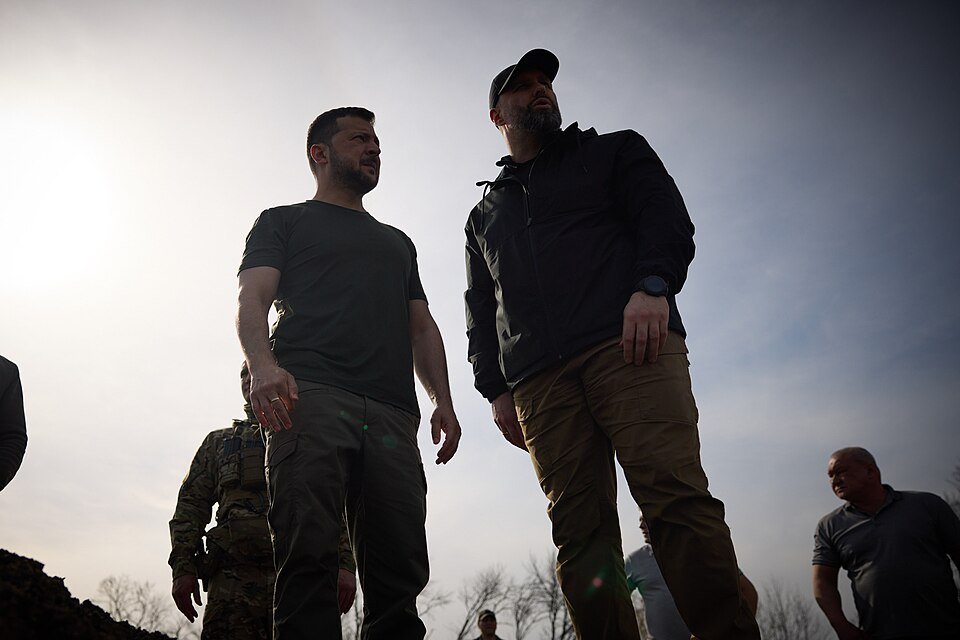
Ukraine bolsters northern defenses as fears grow that Belarus is being pulled into the war
KYIV. Ukraine is rushing to reinforce its northern border with Belarus, laying down anti-tank barriers, concertina wire, and additional surveillance systems amid mounting evidence that Minsk is being drawn ever deeper into Russia’s war machine. Since the beginning of 2026, Ukrainian military officials have recorded an approximately 20 percent increase in Russian reconnaissance drone flights launched from Belarusian airspace, alongside the emergence of new Russian drone bases near the shared frontier.
The activity has sharpened fears in Kyiv that President Alexander Lukashenko, after years of publicly insisting Belarus would not commit combat troops, may be preparing the ground for a far more active role in the conflict.
“The infrastructure being built on Belarusian soil is increasingly compatible with Russian operational needs,” a Ukrainian military source told The Guardian. “We have to treat this as preparation for escalation, not merely routine cooperation.”
Ukrainian engineers and combat engineers have been working through the spring and early summer to strengthen defensive lines along the northern axis. Anti-tank ditches, concrete dragon’s teeth barriers, and reinforced forward observation posts now stretch across hundreds of kilometers of farmland and forest. Electronic warfare units have been repositioned to the region to jam drone signals and disrupt Russian reconnaissance.
Analysts caution, however, that there are currently no indications a Belarusian strike force is assembling for a repeat of the February 2022 invasion, when Belarus allowed Russian troops to stream across its border toward Kyiv. The Carnegie Endowment for International Peace, in a detailed assessment published in May 2026, concluded that Belarus’s military remains structurally unprepared for offensive operations and that Lukashenko has shown no appetite for committing his own forces to direct combat.
Yet that may not be the point.
“The main threat to Kyiv lies not so much in the direct entry of the Belarusian army into combat operations as in the transformation of Belarus into a stable springboard for Russian operations,” the Carnegie analysis noted. In other words, Belarus does not need to fight. It only needs to be reliably available.
And by that measure, the situation has already deteriorated. Russian forces have been rotating equipment through Belarusian rail networks more frequently. Fuel depots, munitions storage sites, and forward airfields on Belarusian territory have been quietly expanded. New drone bases near the border would allow Russian long-range reconnaissance and strike drones to reach deeper into Ukrainian territory while staying well behind their own forward lines.
Ukrainian President Volodymyr Zelenskyy and former Foreign Minister Dmytro Kuleba have each expressed suspicion that Lukashenko may be preparing for deeper involvement. Kuleba, in recent remarks, suggested the Belarusian leader may have calculated that he can no longer remain on the sidelines without risking a rupture with Moscow, and that the price of further integration into Russia’s military architecture may now appear lower to him than the cost of refusal.
The timing of the latest concerns is not incidental. Ukraine has carried out a series of long-range drone strikes deep inside Russian territory in recent weeks, including hitting the Moscow Oil Refinery twice in a single week. The Kremlin has denounced the strikes as acts of escalation. Western officials and Ukrainian intelligence alike believe Russia may seek to retaliate by pressuring Belarus into allowing a more aggressive operational posture, potentially including the staging of cross-border attacks from Belarusian soil.
Some analysts also point to a broader strategic logic. With Ukraine’s southern defenses hardened by nearly two years of grinding attritional warfare and its eastern front locked in stalemate, a northern push from Belarus could force Kyiv to divert precious reserves away from the Donbas and Zaporizhzhia axes. Even if no ground offensive materializes, the mere possibility of one ties down Ukrainian brigades that could otherwise be deployed elsewhere.
For now, the Ukrainian General Staff says the situation on the northern border is under control but also dynamic. Additional territorial defense units have been rotated into the Chernihiv, Sumy, and Kyiv oblasts. Air defense coverage has been extended. The message from the presidential office in Kyiv is one of readiness, not panic.
“The threat from Belarus is not immediate, but it is real,” a spokesperson told reporters. “We would be irresponsible not to prepare for the worst.”