

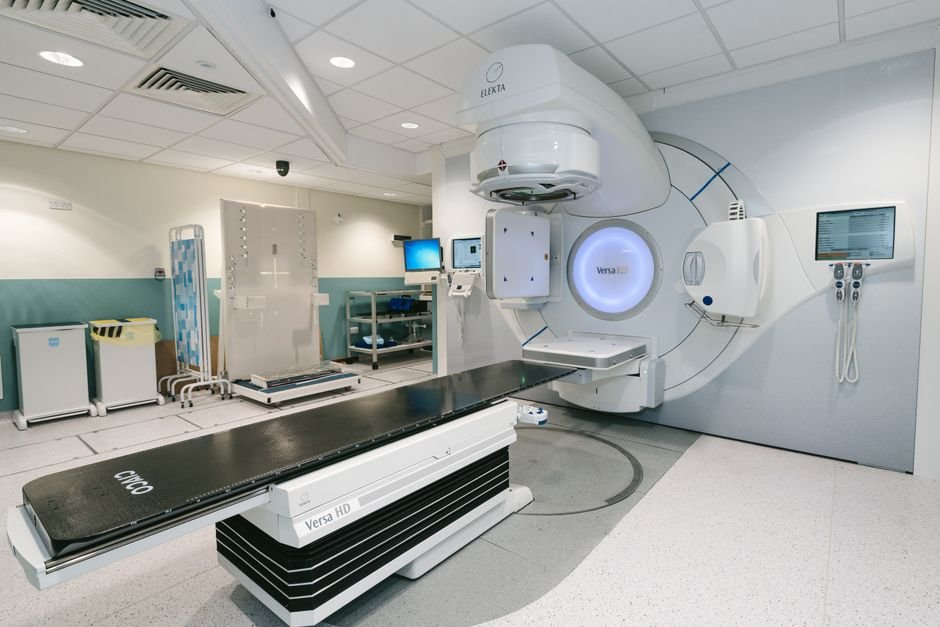
The ISIS Neutron and Muon Source, buried in the Oxfordshire countryside near Didcot, is one of the most powerful microscopes on Earth. Its particle accelerator fires protons at a tungsten target, producing neutron beams that can peer inside jet turbine blades, probe the magnetic structure of exotic materials, and reveal the atomic architecture of proteins. It was built for science — curiosity-driven, fundamental, the kind of inquiry that asks how the universe works without demanding a spreadsheet in return.
That era is ending.
Across the United Kingdom, the network of national physics facilities run by the Science and Technology Facilities Council (STFC) faces an existential reckoning. After years of flat core budgets and rising costs, the government has delivered a blunt message: learn to generate revenue from commercial activity, or watch your lights go out. The facilities have been given transition time — and a one-off injection of 135 million pounds ($173 million) from UK Research and Innovation (UKRI) — but the trajectory is clear. By 2030, the STFC must find savings of 162 million pounds. The facilities that cannot prove their economic worth will shrink, and some may close.
It is a story playing out across the developed world, but nowhere more starkly than in the UK. The tension between curiosity-driven science and the demand for measurable economic impact has reached a breaking point. What is lost when a neutron source has to justify its existence by the revenue it generates testing airplane parts is not just beam time — it is a philosophy of knowledge.
The Numbers Behind the Ultimatum
STFC operates a constellation of world-class facilities: Diamond Light Source, a synchrotron that generates X-rays 10 billion times brighter than the sun; the ISIS neutron source; the Central Laser Facility (CLF), home to some of the most intense lasers on the planet; Daresbury Laboratory in Cheshire; RAL Space, which designs and builds instruments for satellites and space missions; and the Boulby Underground Laboratory, a dark matter detector buried more than a kilometer (0.6 miles) deep in a working potash mine in North Yorkshire.
Together, these facilities face an annual shortfall of 42 million pounds. The government’s settlement, announced as part of the Spending Review, calls for a 15 percent cut — roughly 28 million pounds per year by 2030 — to the budgets of Diamond, ISIS, and the CLF. National laboratories face an 8 percent reduction, totaling 14 million pounds annually. Boulby, the smallest and most remote of the major facilities, is hit hardest of all: a 40 percent cut.
The STFC will reduce its headcount by hundreds of positions. At ISIS, neutron beam time available to researchers will fall from 80 percent to 66 percent of the facility’s capacity. The 15 percent cut to STFC’s grants portfolio has already resulted in an estimated 220 to 260 job losses across the university research groups that depend on that funding.
The Institute of Physics has warned that a quarter of all university physics departments in the UK are now at risk of closure.
The Revenue Imperative
The core of the challenge is simple: STFC generates about 29 million pounds annually from commercial activity — roughly 3.5 percent of its budget. The government wants that figure to rise.
By comparison, peer facilities elsewhere in Europe already generate a larger share of their income from industry. The Institut Laue-Langevin (ILL) in Grenoble, France, a leading neutron source, earns around 5 percent of its budget from commercial users. The Paul Scherrer Institute (PSI) in Switzerland, which operates a synchrotron and a neutron source, earns about 7 percent.
Ian Chapman, chief executive of UKRI, described the gap in blunt terms, saying STFC staff were relatively inexperienced at revenue generation compared to their continental counterparts. The implication is clear: the UK’s facilities were designed and staffed as scientific instruments, not businesses, and the organizational culture has been slow to adapt.
The facilities are now racing to change that. Diamond Light Source has long been the most commercially active of the STFC facilities, with industrial users accounting for a significant portion of its beam time for applications ranging from pharmaceuticals to battery research. ISIS has begun expanding its work with aerospace companies, using neutron scattering to test stress cracks in turbine blades. The Central Laser Facility has partnered with manufacturers on precision machining.
But the sums involved remain small relative to the operating costs. Industrial users pay for beam time, but they cannot — and, some argue, should not be expected to — cover the full cost of maintaining national scientific infrastructure.
What Gets Lost
The question that hangs over the transition is not whether the facilities can generate more revenue, but what science will be abandoned in the process. When a neutron source must prioritize industrial testing contracts over academic beam time, the character of the research changes.
ISIS has long been a powerhouse of fundamental condensed matter physics, materials science, and structural biology. Its neutron beams have mapped the magnetic structures of high-temperature superconductors, revealed the behavior of quantum spin liquids, and helped design more efficient catalysts for hydrogen production. These are not projects with an obvious commercial endpoint — they are the kind of undirected exploration that, historically, has produced the deepest discoveries.
Boulby Underground Laboratory is an even starker case. Its depth and low background radiation make it one of the best places on Earth to search for dark matter particles. It hosts the DRIFT and CYGNUS experiments, which attempt to detect the faintest traces of weakly interacting massive particles. There is no plausible path to commercial revenue from dark matter detection. A 40 percent cut to Boulby’s budget raises the question of whether the laboratory can continue operating at all.
The same tension applies, less dramatically, across the STFC portfolio. When beam time at ISIS drops from 80 percent to 66 percent, the projects that get cut are likely to be the ones with the longest time horizons and the least immediate applicability — the very projects that, a generation ago, would have been the facility’s reason for existing.
The Political Landscape
The ultimatum comes against a backdrop of shifting political priorities in Westminster. The STFC’s core budget from the science ringfence has remained essentially flat in real terms for years, while the costs of energy, staffing, and infrastructure have risen steadily. New government priorities — artificial intelligence, business growth, Net Zero technologies — have consumed the majority of new research funding.
The appointment of Chris McDonald as science minister on July 24, replacing Patrick Vallance, signals the direction of travel. McDonald is a chemical engineer with a background in industry, not academia. His mandate prioritizes translating research into economic growth, a theme that runs through the government’s industrial strategy.
For the physics community, the timing could hardly be more precarious. The IOP’s warning that a quarter of UK physics departments face closure suggests the pipeline of trained researchers and future facility users is already under threat. If the facilities shrink while the university base that feeds them also contracts, the UK risks a cascading loss of capability that would take decades to reverse.
A Global Reckoning
The UK is not alone in grappling with this tension. Across Europe, national facilities that were built in the postwar era of generous public funding for fundamental science are being asked to demonstrate their economic return. The difference is one of degree: the UK’s facilities face deeper cuts, with less time to adapt, and from a lower base of commercial experience.
The 135 million pound UKRI injection buys time, but not indefinitely. By 2030, the STFC must have transformed its operations — or accepted a permanently smaller footprint. The facilities that survive will be those that can convince the Treasury they are not just scientific assets but economic ones. Whether Boulby’s dark matter detector or ISIS’s neutron spectrometers can meet that test is an open question. What is certain is that the answer will define British physics for a generation.
The neutron source at Didcot will keep running. But the questions it is asked — and the answers it is expected to provide — are changing, whether the scientists who built it are ready or not.