

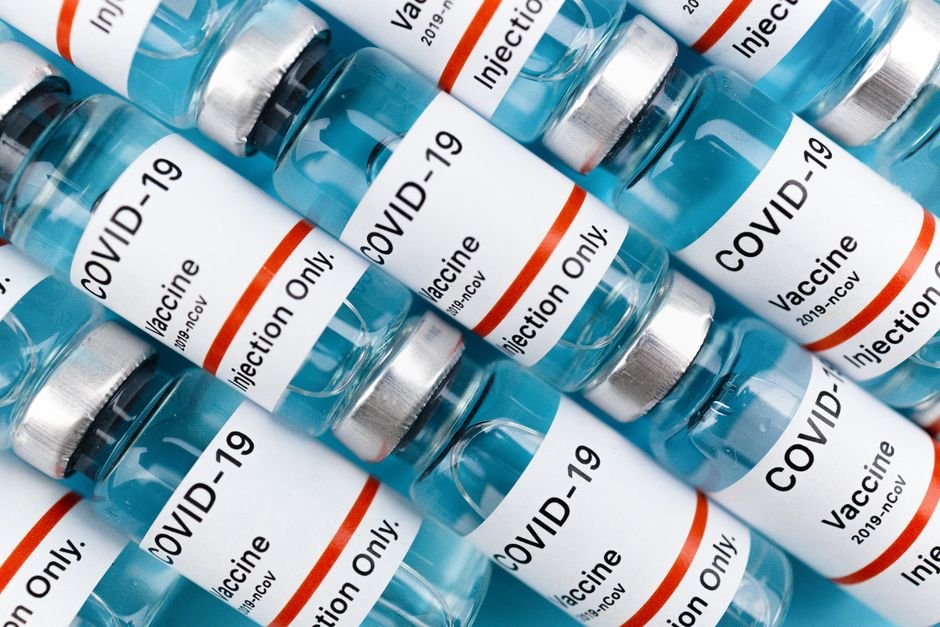
In January 2025, President Donald Trump signed an executive order promising reinstatement and full back pay for every service member discharged for refusing the COVID-19 vaccine. The language was unequivocal. The pledge was one of the most sweeping reversals of pandemic-era public health policy ever attempted by a sitting president.
Eighteen months later, of the nearly 8,000 troops who were involuntarily separated between August 2021 and January 2023, roughly 200 have been reinstated. A little more than 800 have even expressed interest in returning. The rest are still waiting — or have stopped waiting altogether.
The gap between policy promise and administrative reality is not simply a story of broken political pledges. It reveals something deeper about the physics of government: the machinery built to enforce a public health mandate was optimized for speed in one direction only. Reversing it, it turns out, is an entirely different engineering problem.
A Mandate Designed for Speed
When Defense Secretary Lloyd Austin ordered the COVID-19 vaccine for all service members on August 24, 2021, the rationale was straightforward. The military is not a typical workplace. Units operate in close quarters. A single outbreak can ground an aircraft carrier or empty a barracks. Force health protection — the principle that a commander must ensure troops are medically fit for duty — demanded rapid, universal compliance.
The mandate was enforced with remarkable efficiency. Service members who refused were given limited windows to comply. Exemptions for medical or religious reasons existed on paper but were routinely denied. By the time Congress rescinded the mandate in the National Defense Authorization Act for Fiscal Year 2023, the Pentagon had processed roughly 8,000 involuntary separations, most within months. Over 4,000 of those discharges were less than honorable — a designation that follows a service member for life.
From a pure implementation standpoint, the system worked exactly as designed. The order was clear. The consequences were swift. The pipeline for discharge moved in a single direction, and it moved fast.
The Reverse Gear Does Not Exist
Trump’s Executive Order 14184, signed on January 27, 2025, demanded the opposite. Every discharged service member who left solely because of the vaccine mandate was to be offered reinstatement at their former rank with full back pay, benefits, bonus payments, and compensation. The order gave the Pentagon 60 days to produce guidance.
What followed was a case study in the asymmetry of administrative systems. Reinstating a single service member requires, at minimum: a determination of eligibility (was the person discharged solely for the vaccine refusal, or were there other factors?); a review of discharge characterization; calculation of back pay spanning several years, often across multiple duty stations and pay grades; restoration of medical and security clearances, many of which have expired; re-enrollment in the military healthcare system; and refresher training to meet current readiness standards.
Each of these steps falls under the authority of a different office, often in a different branch. The Army, Navy, Air Force, Marine Corps, and Space Force each run their own review boards, each with their own timelines, each interpreting the executive order’s language through their own procedural lens. The Coast Guard falls under the Department of Homeland Security, outside the Pentagon’s chain of command entirely.
In March 2026, Defense Secretary Pete Hegseth extended the application deadline to April 2027 and reduced the active service obligation for returning troops from four years to two. In May 2026, he established the Department of War COVID-19 Reinstatement and Reconciliation Task Force to centralize the effort. The task force reported that roughly 170 service members had returned by April 2026 — less than 2 percent of those discharged.
The Public Health Paradox
The COVID-19 vaccine mandate was a public health intervention of wartime scale. At its peak, it applied to approximately 1.3 million active-duty troops, plus reserves and National Guard. The Pentagon’s own studies, released in March 2026, confirmed what epidemiologists had argued all along: vaccinated service members had a lower overall risk of severe health outcomes than their unvaccinated peers. The mandate, from a population health perspective, worked.
But the very urgency that made the mandate effective — the rapid denial of exemptions, the swift processing of discharges, the uncompromising tone — created a population of former service members whose relationship with the institution that trained them is now defined by distrust and bureaucratic exhaustion.
Some of those discharged have built civilian careers and do not want to return. Others have tried. A former Air Force intelligence officer who was involuntarily separated in 2022 was offered reinstatement after 10 months but declined when the terms would have placed her four years behind her peers in career progression. A master sergeant in the Air National Guard applied less than a week after Trump’s executive order and received an offer of reinstatement from the Board of Correction for Military Records, but no contract. A former Coast Guardsman received what he considered an inadequate reinstatement offer and is still waiting for a revised one after five months.
The Arithmetic of Back Pay
The executive order promised full back pay. The reality is more complicated. Back pay calculations are subject to offsets: civilian income earned after discharge is deducted, as are any Department of Veterans Affairs payments received during the separation period. For many, the net amount is far smaller than expected. Some reinstated troops have received zero back pay after offsets were applied.
A further complication: reinstated troops have been excluded from the tax-free “warrior dividend” of $1,776 that was paid to roughly 1.5 million service members in 2025, even though the executive order’s language promised “full back pay, benefits, bonus payments, or compensation.” The Pentagon has not publicly explained the discrepancy.
The military back pay firm handling class-action lawsuits on behalf of discharged members put it bluntly in a May 2026 statement: “Reinstatement gets you a uniform again. It does not, by itself, get you compensated for what was taken.”
A Systems Problem, Not a Personnel Problem
What the COVID-19 reinstatement saga reveals is a structural asymmetry in how government implements policy. The system for discharging a service member was built for speed: a single order, a clear violation, a documented process that funneled cases through a standardized pipeline. The system for bringing that same service member back requires personalized adjudication across multiple independent bureaucracies, each with different records, different staffing levels, and different interpretations of the rules.
This is not a bug. It is a feature of how administrative systems evolve. Mechanisms designed to enforce uniform compliance are necessarily streamlined and centralized. Mechanisms designed to reverse those decisions must account for individual circumstances, legal liabilities, and the accumulated complexity of years of separation.
The public health community watching this unfold sees a cautionary tale. Emergency mandates, whether for vaccines, masking, or quarantine, impose costs that are borne by individuals long after the public health emergency ends. Those costs are easy to impose quickly and hard to undo slowly. The machinery does not easily forgive.
What Comes Next
The application window for reinstatement remains open until April 2027. Hegseth has directed each military department to recontact every discharged service member who has not yet rejoined and inform them of the reduced service obligation and extended deadline. The Pentagon has also commissioned a review of how the vaccine mandate was planned and executed from January 2020 to January 2023, with a directive to declassify that review by February 2027.
But for the roughly 8,000 service members who were discharged — the ones who left the military they had served for years, who lost pensions and promotions and the sense of purpose that comes with uniformed service — the question is less about policy and more about trust. As one former Coast Guardsman waiting for reinstatement told investigators: “If there’s nothing that says this won’t happen again, how do I know upon reinstatement that they won’t ruin my career again?”
The pandemic-era public health mandates were built for a crisis. The machinery to reverse them was not. That gap — between the speed of imposition and the slowness of repair — may be the most enduring policy lesson of the COVID-19 era.