

Published: June 03, 2026, 00:30 UTC
President Donald Trump signed an executive order on Tuesday that asks AI companies to voluntarily submit powerful models for government review 30 days before public release — but explicitly prohibits creating any mandatory licensing or preclearance system. The order is a dramatically scaled-back version of the one Trump was poised to sign in late May before industry pushback derailed it.
What the order actually does. The executive order, titled “Promoting Advanced Artificial Intelligence Innovation and Security,” has two parts. The first directs the Pentagon to secure its networks within 30 days and expands the U.S. Tech Force, the government’s AI engineering corps. The second creates a voluntary framework for developers of “covered frontier models” — AI systems that meet a threshold of advanced cyber capability — to submit them to NIST, CISA, and the NSA for evaluation at least 30 days ahead of release.
The White House also ordered the Treasury Department to set up an “AI cybersecurity clearinghouse” in collaboration with industry and critical-infrastructure operators, intended to coordinate vulnerability scanning and patching across sectors including rural hospitals, community banks, and local utilities ([TechCrunch](https://techcrunch.com/2026/06/02/trump-signs-narrower-executive-order-on-ai-oversight-after-industry-objections/); [Politico](https://www.politico.com/news/2026/06/02/trump-signs-downsized-ai-order-00946389)).
What got cut. The original draft, leaked by Politico in late May, called for a mandatory 90-day pre-release review window. The final version replaced “mandatory” with “voluntary” and slashed the window to 30 days. A clause that could have let the government mandate licensing was replaced with its opposite: “Nothing in this section shall be construed to authorize the creation of a mandatory governmental licensing, preclearance, or permitting requirement for the development, publication, release, or distribution of new AI models, including frontier models.”
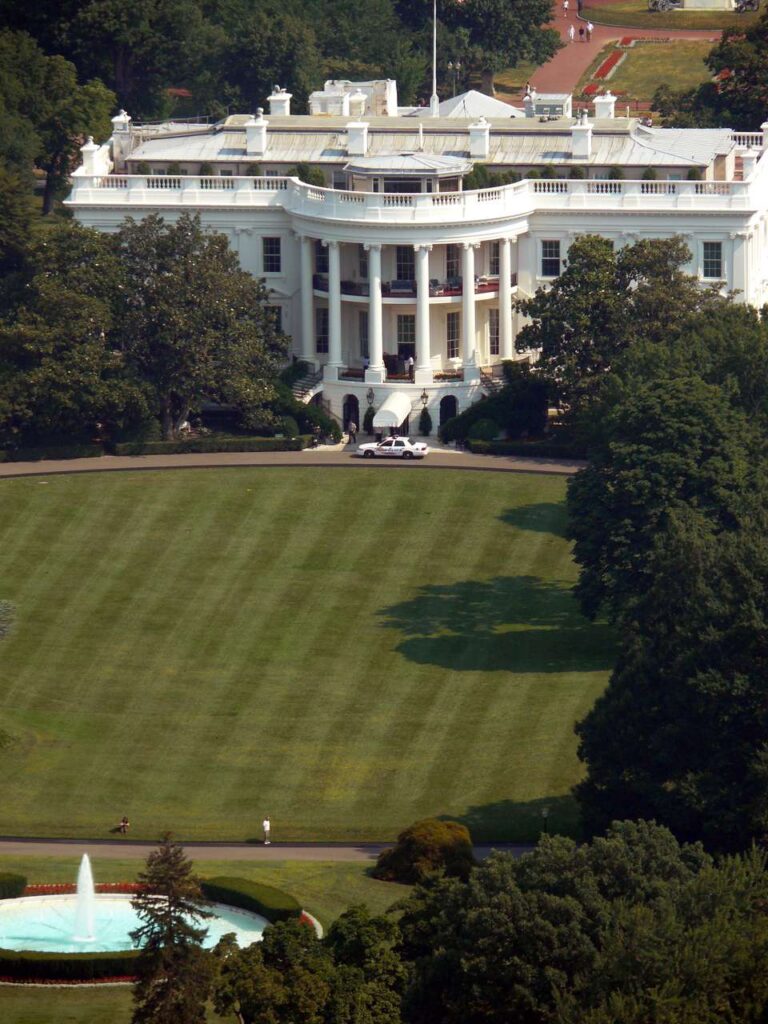
Trump had planned to sign the tougher version at a White House event with top Silicon Valley CEOs in attendance. Instead, he postponed abruptly on May 21 — hours before the scheduled signing — telling reporters he “didn’t like certain aspects” and didn’t want to “get in the way” of U.S. AI leadership. He signed the final version without ceremony or press coverage on June 2 ([TechCrunch](https://techcrunch.com/2026/06/02/trump-signs-narrower-executive-order-on-ai-oversight-after-industry-objections/)).
Who drove the reversal. Multiple outlets reported that Elon Musk (xAI), Mark Zuckerberg (Meta), and former White House AI czar David Sacks lobbied Trump directly, warning that pre-release review would slow U.S. innovation and cede advantage to China. Axios characterized the core reason more simply: Trump “just hates regulation.”
The Claude Mythos catalyst. The order’s cybersecurity focus was no accident. In early 2026, Anthropic released a restricted model called Claude Mythos through Project Glasswing, giving 12 major tech companies — including AWS, Apple, Cisco, Google, JPMorgan Chase, and Microsoft — access to an AI that found thousands of zero-day vulnerabilities across every major operating system. On the same day as the executive order, Anthropic expanded Glasswing to 150 organisations across 15 countries, targeting critical infrastructure in power and water ([TechCrunch](https://techcrunch.com/2026/06/02/anthropic-scales-claude-mythos-to-critical-infrastructure-in-15-countries/)).
The model’s demonstrated ability to discover systemic vulnerabilities — some undetected for decades — alarmed national security officials and created the political space for the narrower order.
What it means. For the AI industry, the outcome is largely a win. The explicit prohibition on mandatory licensing gives companies the certainty they wanted: the U.S. will not replicate Europe’s AI Act model of tiered mandatory oversight. Safety advocates, however, describe the order as insufficient for the task — a voluntary submission framework with no enforcement mechanism. Companies can simply decline to submit their models.
The order lands at a moment of unusual tension in Trump’s AI policy. After revoking Biden’s 2023 AI executive order in January 2025 and releasing an anti-regulatory AI Action Plan in July 2025, the administration spent weeks flip-flopping on this narrower cyber-focused approach. The final text suggests the White House has concluded that the cybersecurity risks of frontier models — especially after the Claude Mythos demonstration — demanded some response, but not one that would alienate the tech executives whose support Trump values.
The next test will come when the first company tests that “voluntary” label by declining to submit. So far, no one has said what happens then.
Sources: [TechCrunch — Trump signs narrower AI executive order](https://techcrunch.com/2026/06/02/trump-signs-narrower-executive-order-on-ai-oversight-after-industry-objections/) (June 2, 2026); [Politico — Trump signs downsized AI order after weeks of reversals](https://www.politico.com/news/2026/06/02/trump-signs-downsized-ai-order-00946389) (June 2, 2026); [TechCrunch — Anthropic scales Claude Mythos to critical infrastructure](https://techcrunch.com/2026/06/02/anthropic-scales-claude-mythos-to-critical-infrastructure-in-15-countries/) (June 2, 2026)