

The US military has killed 221 people in 66 strikes on boats in the Caribbean and Pacific. International lawyers say it is a crime. The question nobody in Washington wants to ask: are we the baddies?
In a 2006 comedy sketch, two Nazi officers in a foxhole gradually realize that the skulls on their caps might mean they are the villains, not the heroes. “Are we the baddies?” one asks, with the slow dawning of a truth that had been visible to everyone but them.
The sketch has become a meme. It has been applied to the Post Office Horizon scandal, to corporate cover-ups, to Graham Platner’s political campaign. But it has rarely felt more appropriate than when applied to the Trump administration’s “Operation Southern Spear”, a campaign of targeted killings on the high seas that the United States calls counter-narcotics and that international lawyers call murder.
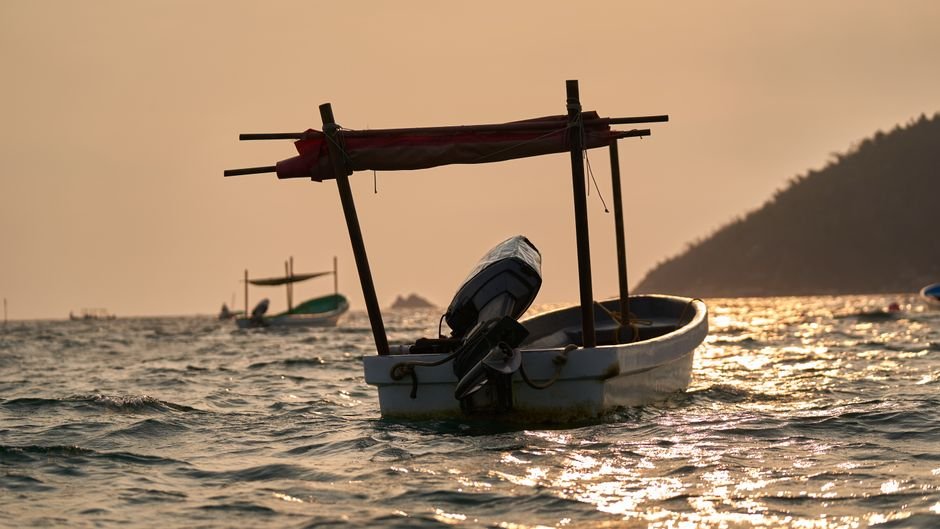
Since late 2025, the US military has conducted 66 strikes in the Caribbean and Pacific Ocean against suspected drug traffickers, killing at least 221 people. MQ-9 Reaper drones and Hellfire missiles, the tools of modern warfare, are being used to sink small boats carrying people suspected of belonging to South American cartels. Defense Secretary Pete Hegseth accurately forecast the approach: “When it comes to killing narco-terrorists, we have only just begun.”
Charlie Trumbull, a former attorney-advisor at the US State Department’s Office of the Legal Adviser and now a law professor at the University of South Carolina, has examined these strikes against the Rome Statute. His conclusion is direct: they are crimes against humanity.
The legal argument is straightforward. Under the Rome Statute, crimes against humanity require offenses such as murder, torture and forced disappearances, committed as part of a “widespread or systematic attack directed against any civilian population” carried out “in furtherance of a State or organizational policy.” The boat strikes satisfy every element. Lethal force is only lawful in war against combatants or in self-defense against an imminent threat. Drug suspects are not lawful military targets. “Summarily executing a drug dealer in New York’s Times Square would plainly be murder,” Trumbull writes. “Doing so on the high seas is legally no different.”
The strikes are not an isolated policy. They are the consequence of a theory: that the United States is in a non-international armed conflict with drug cartels, making the occupants of those boats unlawful combatants who can be killed on sight. The problem with this theory, beyond its convenience, is that it has no basis in law. The laws of war require “intense” violence between a state and an organized armed group. Cartels are not engaged in combat against the United States, and they are not organized militarily to conduct military operations. An armed conflict cannot be created by unilateral proclamation.
The dangerous precedent is obvious. If the president can declare an armed conflict with drug cartels and authorize targeted killings at sea, what stops him from declaring an armed conflict with any group he dislikes? “Violent left-wing extremists”? “Radically pro-transgender” groups? “It would mean that the president could deprive individuals of their inherent human rights through unilateral decree,” Trumbull warns.
This is precisely where the “baddies” question becomes unavoidable. The United States prosecuted foreign leaders for exactly this kind of policy. It supported the ICC investigation that led to charges against Rodrigo Duterte, whose “war on drugs” killed thousands of suspected users and dealers. On April 23, 2026, the ICC confirmed crimes against humanity charges against Duterte. His trial begins November 30.
Trump’s 2017 phone call to Duterte, in which he congratulated the Philippine president for doing “an unbelievable job on the drug problem,” now reads differently. The policy Trump admired, extrajudicial killings of suspected drug offenders, has been declared a crime against humanity by the world’s highest criminal court. The United States is now running a version of the same policy, with better technology and fewer witnesses.
There are avenues for accountability. The ICC could assert jurisdiction over crimes committed in the territory of states that ratified the Rome Statute, which includes every South American country. European countries have shown willingness to prosecute such crimes under universal jurisdiction.
History suggests two things: the wheels of international justice turn slowly, but they turn. And the people who ask “are we the baddies?” usually already know the answer.