

Published: June 03, 2026, 16:23 UTC
Where to Watch the Total Solar Eclipse 2026 from Spain — 10 Best Spots
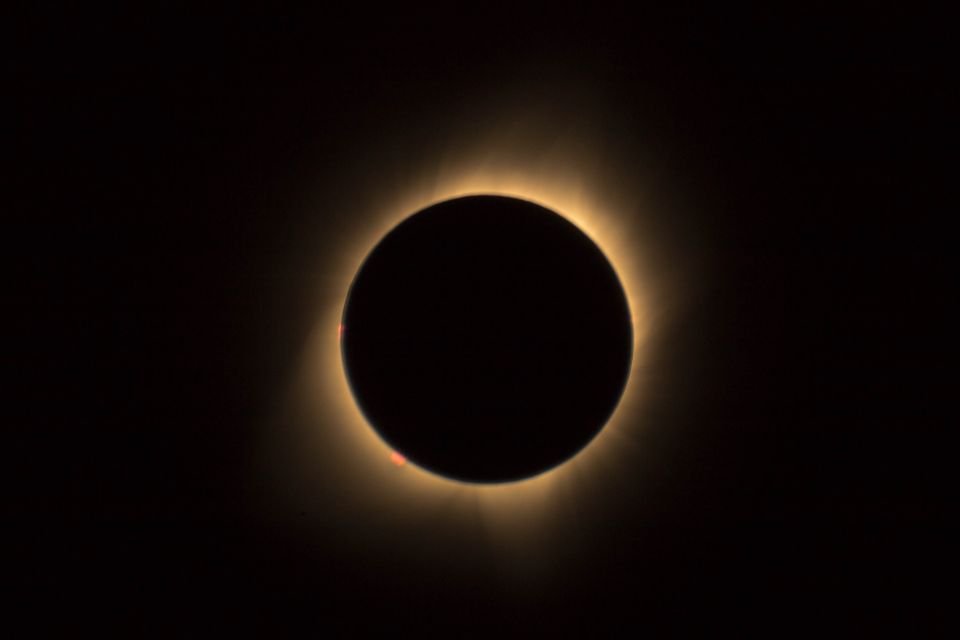
On Wednesday, August 12, 2026, a total solar eclipse will sweep across the Arctic, Greenland, Iceland, and the Atlantic before making landfall in northern Spain. The path of totality hits Spain’s east coast between Vilanova i la Geltrú (just southwest of Barcelona) and Cullera (south of Valencia), offering spectators roughly 2 minutes and 18 seconds of complete darkness — the moon’s shadow racing across the Mediterranean coastline at sunset. Here is everything you need to know to catch it.
Totality or Bust
First, a hard rule of eclipse chasing: 99% partial is worthless. Barcelona proper sits just outside the path of totality and will experience a 99% partial eclipse. You’ll notice the sky dim slightly, but you will not see the corona, the 360-degree sunset, or the sudden temperature drop. You will not experience totality. Do not settle for Barcelona.
The eclipsed sun will be just 4° above the west-northwest horizon along Spain’s east coast — roughly four finger-widths from the horizon. This means a clear, unobstructed view of the northwestern sky is non-negotiable. Most Mediterranean beach resorts face the water to the east — the sun will be behind you, hidden by hotels, hills, and coastal developments. Scout your location the night before.
The 10 Best Viewing Locations
Jamie Carter, writing for Space.com, compiled ten of the best spots in Spain for the 2026 eclipse. Here they are, from most accessible to most dramatic:
1. Playa de Palma, Mallorca – The widest beach on Mallorca with a west-facing aspect. Totality barely reaches 2° above the horizon here — it’s a sunset eclipse. Bring binoculars. Incredible if the sky is clear.
2. Playa de la Malvarrosa, Valencia – A classic city beach in Valencia with a northwesterly view. Easy access, plenty of amenities, and a solid position inside the path of totality.
3. La Muntanyeta dels Sants, Valencia – A hilltop viewpoint near the city. Gets you above the horizon clutter. Ideal for photographers who need to see the eclipsed sun above the haze layer.
4. Platja de Llevant, Salou – Long, wide beach in the PortAventura resort area. Faces northwest — perfect orientation. Crowded, but worth it for the vibe. Arrive early.
5. Circuit Ricardo Tormo, Valencia – The racetrack is hosting an eclipse-watching event. Grandstands offer unobstructed sightlines to the northwest. A unique setting for a once-in-a-lifetime event.
6. Vinaròs, Costa del Azahar – A quieter beach town north of Castellón. Good northwest-facing beach. Less crowded than Salou or Valencia. Solid choice for families.
7. Altafulla, Catalonia – A small coastal town with a Roman villa and a northwest-facing cove. Combines history with astronomy. Check sightlines from the beach — the promenade may have obstacles.
8. Far d’Artrutx, Menorca – A lighthouse on Menorca’s southwest coast. Totality here is also a sunset event — sun barely above the sea. Remote, beautiful, and genuinely dark skies.
9. Llacuna de l’Encanyissada, Ebro Delta – A vast wetland nature reserve south of Barcelona. Flat, open, and facing northwest. Spectacular for the sunset eclipse over water and reeds. Bring bug spray.
10. Montsià Hills, Catalonia – Overlook the Ebro Delta from elevation. Solves the low-horizon problem by getting you higher. Sunset totality over the delta. Requires some hiking.
Timing and What to Expect
Greatest eclipse occurs at 17:47 UTC (19:47 local time in Spain). The moon’s shadow will race across the coastline at more than 2,000 km/h. Duration of totality along the Spanish coast is approximately 1 minute 40 seconds to 2 minutes depending on your exact position — slightly less than the maximum 2 minutes 18 seconds available further north in the Atlantic.
Because the eclipse happens at sunset, you will see the moon gradually cover the sun as it descends toward the horizon. During totality, the sky will darken to twilight levels, the horizon will glow orange in all directions, and — if the air is clear — the solar corona will bloom around the black disc of the moon. Venus and Jupiter may be visible nearby.
Critical Logistics
- Eclipse glasses are mandatory for the partial phases. Bring ISO 12312-2 certified glasses. Do not look at the sun without them until the moon completely covers it.
- Check the weather. Spain in August is typically sunny, but coastal fog or haze can ruin a sunset eclipse. Have a backup plan — you can drive north or south along the coast to find clear skies.
- Use Xavier Jubier’s Interactive Google Map for precise timings and sightlines. Also check the Eclipse Horizon Checker app and Peak Finder to verify your exact viewing spot.
- Balearic Islands warning: Totality on Mallorca and Menorca is barely 2° above the horizon. You need a razor-sharp western horizon — no islands, no boats, no haze. A beach with a clear view to the open sea is essential.
What About Iceland?
Spain is the most accessible destination, but Iceland offers the longest totality — over 2 minutes in the west of the country — with the sun higher in the sky. The downside: August in Iceland means unpredictable weather. If you can afford flexibility and want a more dramatic landscape backdrop (glaciers, volcanoes, lava fields under a black sun), Iceland is a strong alternative. However, for guaranteed warmth, easy flights, and beachfront viewing, Spain wins.
Plan Now — This Is the Last One for a While
The 2026 eclipse is the last total solar eclipse visible from mainland Europe until 2027 (Gibraltar and North Africa) and the last in Spain until 2028 (Gibraltar). Accommodation along the path of totality in Spain is already booking up for the first week of August 2026. If you want Playa de Malvarrosa or a hilltop in Valencia, book now.