

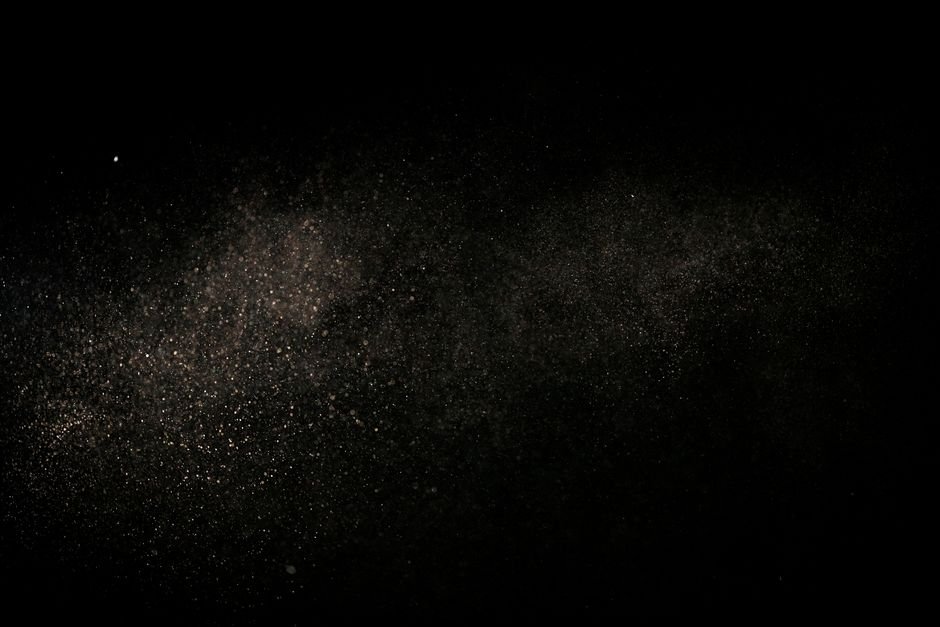
A Tiny Universe in a Bottle: Lab-Made Cosmic Dust Reveals Clues to Life’s Origins
Some of the most important chemistry in the universe happens in places no human will ever visit: the outer envelopes of dying stars, the shockwaves of supernovae, and the cold, dense clouds of gas and dust where new stars are born. In those extreme environments, simple atoms assemble into complex molecules, including the carbon, hydrogen, oxygen, and nitrogen compounds that eventually became the building blocks of life on Earth.
Now, a PhD candidate at the University of Sydney has found a way to bring that cosmic chemistry into the laboratory. Linda Losurdo, working under the supervision of Professor David McKenzie in the School of Physics, has recreated the formation of cosmic dust from scratch inside glass tubes no larger than a bottle, producing material that shares its infrared signature with real dust from space.
“It is like we have recreated a little bit of the universe in a bottle in our lab,” Losurdo said.
The research, published in The Astrophysical Journal, offers a new way to answer one of the oldest questions in science: where did the organic molecules that made life possible actually come from?
How to Build a Star’s Exhaust in a Tube
The experiment is deceptively simple. Losurdo and McKenzie evacuated the air from glass tubes using a vacuum pump, simulating the near-perfect emptiness of space. They then filled the tubes with nitrogen, carbon dioxide, and acetylene, gases known to be abundant in stellar and interstellar environments. Applying roughly 10,000 volts for about an hour created a glow discharge plasma, a luminous state of matter in which the gas molecules were torn apart and allowed to recombine into larger, more complex structures.
The resulting dust deposited onto silicon chips as a thin coating. Some samples, Losurdo said, looked like sparkling cosmic fragments.
When the team analyzed the material using infrared spectroscopy, they found that the laboratory dust emitted the same distinctive infrared fingerprints observed by telescopes pointed at star-forming regions and dying stars. The match confirms that the experiment closely mimics the physical and chemical processes that produce cosmic dust in space.
CHON: The Elements of Life
The lab-made dust contained carbon, hydrogen, oxygen, and nitrogen, collectively known as CHON elements. These four elements form the backbone of amino acids, nucleic acids, and other organic compounds considered essential for life as we know it.
Exactly how those elements assembled into the first organic molecules is one of the central mysteries of origin-of-life research. One leading hypothesis holds that a significant fraction of Earth’s organic material arrived via meteorites, micrometeorites, and interplanetary dust during the period from roughly 4.56 billion to 3.5 billion years ago, when Earth was being bombarded by debris from the formation of the solar system.
“Covalently bonded carbon and hydrogen in comet and asteroid material are believed to have formed in the outer envelopes of stars, in high-energy events like supernovae, and in interstellar environments,” Losurdo explained. “What we are trying to understand are the specific chemical pathways and conditions that incorporate all of the CHON elements into the complex organic structures we see in cosmic dust and meteorites.”
A Fingerprint Library for Astronomers
Beyond the immediate findings, the research opens a practical door for observational astronomy. Losurdo and McKenzie plan to build a database of infrared fingerprints from different types of laboratory-made cosmic dust, produced under controlled conditions that mimic specific astrophysical environments. Astronomers can then compare their telescope observations against this library to identify what kind of dust they are seeing and where it was produced.
“By making cosmic dust in the lab, we can explore the intensity of ion impacts and temperatures involved when dust forms in space,” McKenzie said. “That is important if you want to understand the environments inside cosmic dust clouds, where life-relevant chemistry is thought to be happening.”
The approach also offers a way to read the history recorded inside meteorites and asteroid fragments. “Its chemical signature holds a record of its journey, and experiments like this help us learn how to read that record,” McKenzie added.
Losurdo received the best presentation award for this research at the international Annual Meeting of the Meteoritical Society in late 2025. The work was funded by the Australian Research Council and supported by the University of Sydney node of Microscopy Australia.
“We no longer have to wait for an asteroid or comet to come to Earth to understand their histories,” Losurdo said. “You can build analogue environments in the laboratory and reverse-engineer their structure using the infrared fingerprints.”
Sources
[1] University of Sydney. “A tiny universe in a bottle reveals clues to the origins of life.” ScienceDaily, 19 July 2026. https://www.sciencedaily.com/releases/2026/07/260718010156.htm
[2] Losurdo, L., McKenzie, D. R., et al. “Laboratory synthesis of cosmic dust analogues and their infrared spectroscopic characterization.” The Astrophysical Journal, 2026; 997(2): 335. DOI: 10.3847/1538-4357/ae2bfe