

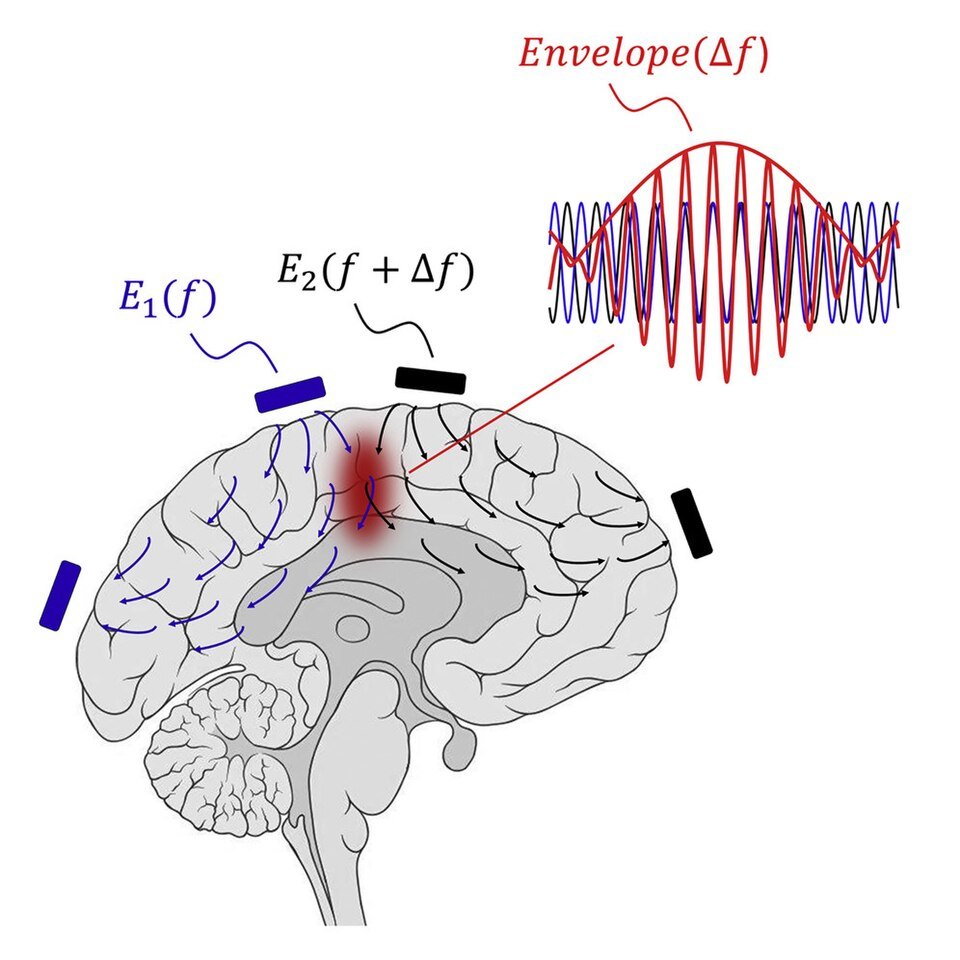
A 2-week randomized controlled trial has shown that transcranial direct current stimulation (tDCS) enhances the brain’s fluid clearance dynamics in patients with insomnia disorder and comorbid anxiety, providing a mechanistic explanation for tDCS’s therapeutic effects beyond symptom relief.
Published in BMC Psychiatry by researchers at Jilin University’s First Hospital in Changchun, China, the study measured global blood oxygen level-dependent (gBOLD) to cerebrospinal fluid (CSF) coupling using resting-state functional MRI, a noninvasive proxy for glymphatic function, the brain’s waste clearance system most active during sleep.
What they found
The trial enrolled 60 patients with insomnia disorder and comorbid anxiety alongside 30 age- and sex-matched healthy controls. Patients received either active or sham tDCS across 14 consecutive daily 20-minute sessions at 1.1 mA, targeting the left forehead and right dorsolateral prefrontal cortex.
At baseline, patients showed significantly lower gBOLD-CSF coupling than controls (P < 0.001, P FDR = 0.002). Coupling strength was negatively correlated with insomnia severity (ISI), subjective sleep quality (PSQI), anxiety scores (HAMA-14), and arousal index, while positively correlated with NREM stage 3 (N3) deep sleep duration. Multivariate regression identified N3 sleep duration as an independent predictor of coupling strength (β = 0.328, P = 0.005).
After the 2-week intervention, the active tDCS group showed a significantly greater increase in gBOLD-CSF coupling than the sham group (effect size 0.035, 95% CI 0.011 to 0.058; P interaction = 0.005). Adverse events were mild and comparable between groups.
Why it matters
Insomnia with comorbid anxiety is a common but difficult-to-treat presentation. While tDCS has been explored as a noninvasive neuromodulation strategy for various psychiatric conditions, its mechanism in insomnia has remained unclear. This study provides evidence that tDCS may work partly by enhancing glymphatic-related neurovascular-CSF fluid dynamics, essentially helping the brain clear metabolites more efficiently during wakefulness.
The findings also suggest that N3 sleep duration independently predicts baseline coupling strength, reinforcing the importance of deep sleep for glymphatic function and offering a potential biomarker for identifying patients most likely to benefit from tDCS.
Limits
The study’s modest sample size (60 patients) and single-center design limit generalizability. The gBOLD-CSF coupling metric, while increasingly used as a glymphatic proxy, requires further validation against direct CSF clearance measures. The 2-week follow-up does not address durability of the effect beyond the intervention period. Additionally, the sham-controlled design cannot rule out expectancy effects on subjective sleep measures, though the primary outcome was an objective neuroimaging metric.
Bottom line
Two weeks of daily tDCS targeting prefrontal cortex regions improved a neuroimaging marker of glymphatic function in patients with insomnia and comorbid anxiety. The effect size was modest but statistically significant, and the therapy was well tolerated. If replicated in larger, longer-term trials, tDCS could become a non-pharmacological option for addressing both sleep disruption and impaired brain clearance in this population.
Source
Yanan Zhang et al. Transcranial direct current stimulation improves reduced global BOLD-CSF coupling in patients with insomnia disorder and comorbid anxiety: a resting-state functional MRI study. BMC Psychiatry (2026). DOI: 10.1186/s12888-026-08304-6. PMID: 42310658. ClinicalTrials.gov ID: NCT07340268.