

For the first time in 17 years, a UN secretary-general stood in Damascus and heard Syria’s new foreign minister demand the withdrawal of foreign troops from its soil.
The moment itself was the news. Antonio Guterres traveled to the Syrian capital at a time when the country is still reorganizing itself after the fall of the Assad regime in December 2024. His joint press conference with Foreign Minister Asaad al-Shaibani on Saturday was a test of whether the post-Assad government can command international attention, and whether it can use that attention to press its territorial claims.
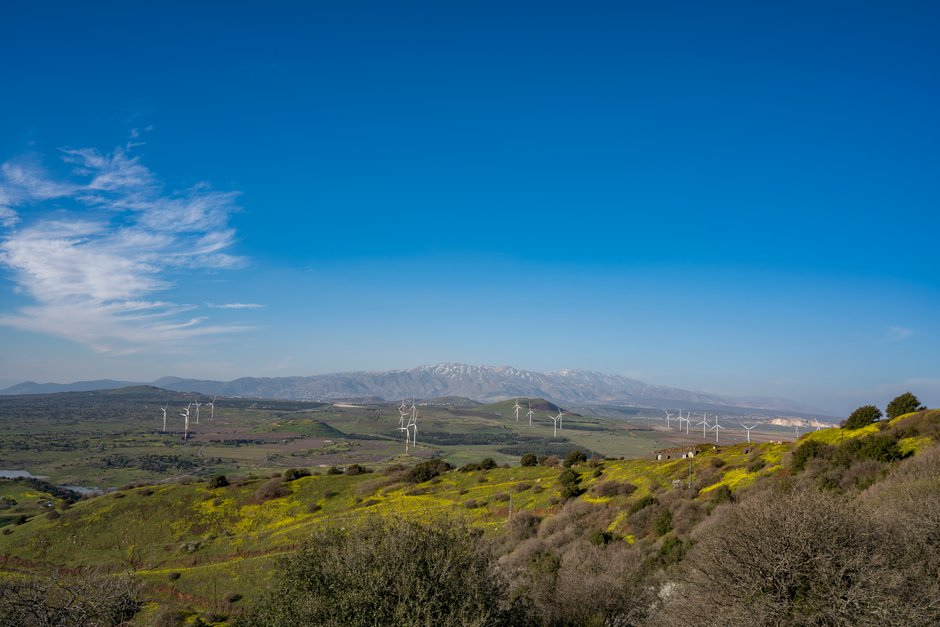
Al-Shaibani did not waste the platform. He called for an “immediate and unconditional” Israeli withdrawal from the UN-patrolled buffer zone on the Golan Heights, where Israeli forces deployed in the chaos that followed Assad’s ouster. Israel seized the Golan from Syria in 1967 and formally annexed it in 1981, a move the UN has never recognized. But the incursion into the buffer zone, established after the 1973 war and monitored by UN peacekeepers ever since, was a new escalation, one that the post-Assad government in Damascus was never going to accept as permanent.
Guterres backed him, if only in principle. “What is happening in the region around the Golan Heights is totally unacceptable,” he said, standing beside al-Shaibani. The phrase was carefully calibrated, critical of Israel without naming it, supportive of Syrian sovereignty without endorsing every demand of the new government.
The visit itself carried symbolic weight beyond the Golan. Guterres is the first UN chief to set foot in Damascus since Ban Ki-moon in 2009, back when Bashar al-Assad still governed a country that was not yet a battlefield for proxy wars. His presence signals that the international community is beginning to treat post-Assad Syria as a normal state with which diplomacy is possible, a shift that al-Shaibani immediately used to raise the territorial question.
The Israeli deployment into the buffer zone after Assad’s fall was widely criticized but never reversed. Israel called it a temporary security measure to prevent weapons from falling into extremist hands. Syria’s new government calls it an occupation. The UN, through Guterres, has now called it unacceptable, but has not backed that language with any mechanism for withdrawal.
The press conference in Damascus did not produce a timeline or a negotiation framework. It did something more basic: it put the United Nations secretary-general on record, in Syria, saying that Israel’s presence beyond the recognized boundary of the Golan is a problem. For a government still finding its footing on the world stage, that may be as much as one press conference can deliver. The work of turning “unacceptable” into a withdrawal order lies ahead.