

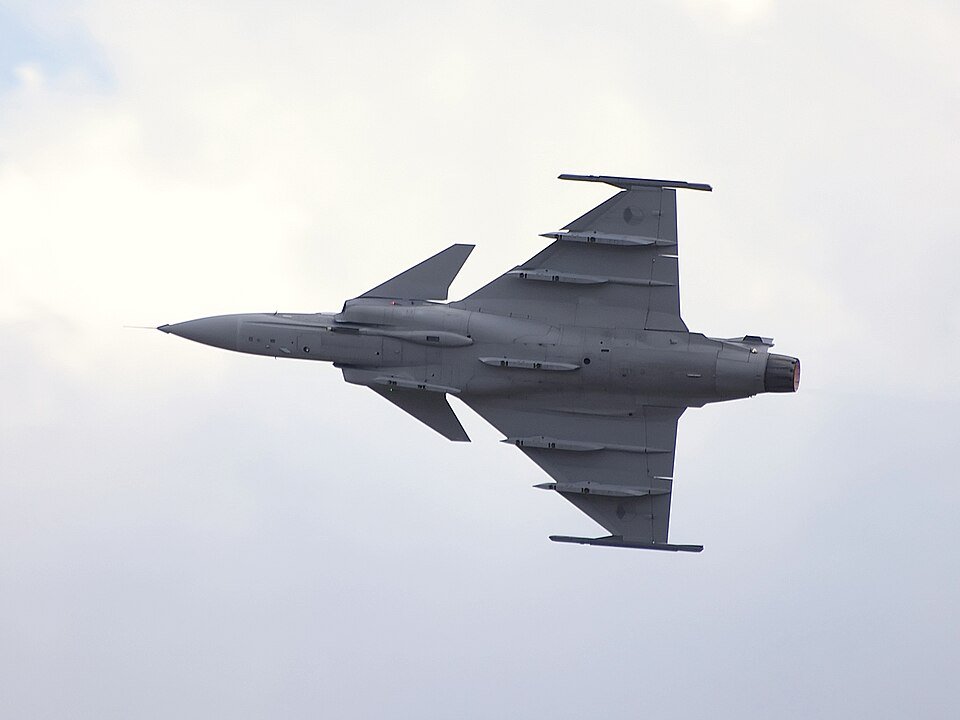
Sweden Scrambles Gripens to Intercept Russian Jets Over Baltic
Sweden scrambled JAS 39 Gripen fighter jets on Friday to intercept two Russian military aircraft approaching its airspace over the Baltic Sea, the kind of incident that makes headlines in Stockholm and is met with shrugs in the cockpits.
Two separate incidents occurred on June 12, involving Russian Su-24 and Su-34 combat aircraft flying in international airspace near Swedish territory. In both cases, Swedish Gripens launched, intercepted the Russian planes, and monitored them until they turned away. The Russian aircraft never entered Swedish airspace. No shots were fired. No warnings were issued. It was, by the standards of the Baltic Sea, a routine Tuesday, or Friday, as it were.
Vice Admiral Ewa Skoog Haslum, chief of the Swedish Armed Forces operations command, called the intercepts a response to “Russia’s actions” that “threaten both our territorial integrity and security.” That is the public line, and it is not wrong. But the private reality, understood by every pilot who has flown these missions on both sides, is more mundane.
Russian aircraft operating near NATO airspace without filing flight plans or communicating with air traffic control is a pattern as old as the post-Cold War order. NATO intercepts Russian planes over the Baltic Sea dozens of times per year. The US and Canada scrambled fighters in March for the same reason, two Russian military aircraft near Alaska. French Rafales deployed from Lithuania joined Swedish, Finnish, Polish, Danish, and Romanian jets in April to monitor a Russian bomber formation. This is not escalation. It is routine.
The pilots on both sides know the game. The Russian crews fly to the edge of recognized airspace, sometimes close enough to trigger a response, but rarely close enough to constitute a violation. The NATO and national air force crews scramble, intercept, identify, and escort. The whole encounter follows an unwritten choreography that has been refined over decades. There is radio silence, no aggressive maneuvering, and a mutual understanding of where the line is. The line is not crossed. That is the point.
The real purpose of these flights is not military. It is political. Moscow sends its jets to the Baltic to remind Sweden, Finland, and the other NATO members on Russia’s northwestern flank that the war in Ukraine has not changed the geography. Russia is still there. It can still fly. It can still make the phone ring in the operations center. The message is aimed at public opinion, not at the pilots.
Sweden, which joined NATO in 2024, has become a particular focus of these operations. On the same day as the intercepts, the Swedish government released a defense report warning that it “sees a risk that the confrontation between Russia and Europe will deepen further.” Drones have entered Swedish airspace unauthorized. Russian submarines have been detected near Swedish maritime borders. Each incident is reported, analyzed, and filed.
None of this means the encounters are harmless. A miscalculation at 800 kilometers per hour, in poor weather, with two armed aircraft passing within visual range, the margin for error is thin. But the margin is there, and both sides have spent decades respecting it. The professionalism of the pilots, on both sides, is the reason these incidents do not escalate.
The politicians will continue to call them provocations. The generals will call them threats. The pilots will call them another day’s work. And the Baltic airspace will remain the most regularly patrolled piece of sky in Europe, not because war is imminent, but because the show must go on.