

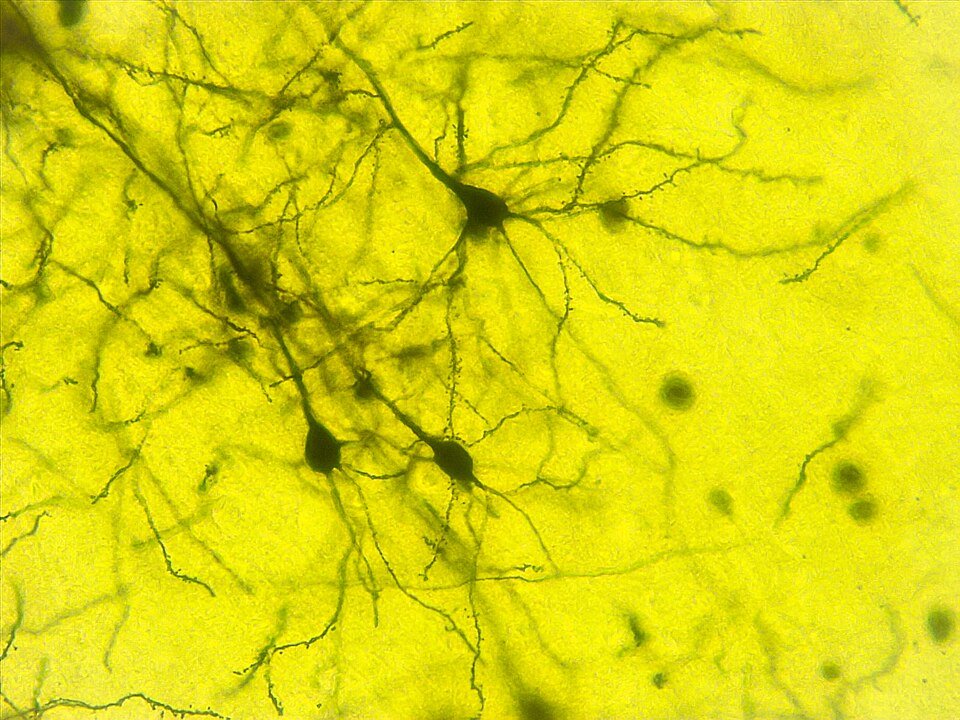
The brain is a ceaseless storm of electrical activity. Understanding how that storm is organized, how neurons in far-flung regions fire in concert to produce coherent thought, sensation, and action, is one of neuroscience’s deepest puzzles. A new study published June 18 in Science reveals a mechanism that may be central to solving it: spiral waves of neural activity that rotate across the brain’s surface, physically built into its anatomy.
The work, led by Zhiwen Ye and Nicholas Steinmetz at the University of Washington, identifies rotating traveling waves centered on the somatosensory cortex, the region processing touch, body position, and posture, that sweep in organized spirals across sensory and motor areas, coordinating activity between hemispheres and deep subcortical structures.
The team used two complementary techniques in awake mice: wide-field calcium imaging (using the fluorescent sensor GCaMP) to capture neural activity across the entire dorsal cortical surface at high speed, and Neuropixels 2.0 probes, ultrathin silicon electrodes with 960 recording sites, to measure single-neuron spiking in deeper structures simultaneously.
What they saw were waves of neural activity rotating in a circular, vortex-like pattern. When a puff of air was delivered to a mouse’s left whiskers, clockwise rotating waves appeared in the right sensory cortex, with corresponding mirrored waves in the motor cortex. In a visual-motor task where mice used paws and eyes to coordinate for a reward, the rotating wave patterns shifted with arousal state and whether the animal successfully completed the task.
Crucially, the spiral motion was not an accident of network dynamics. Using 3D axon reconstructions via iDISCO tissue clearing and lightsheet microscopy, the team traced the physical wiring underlying the waves. Neurons in the somatosensory cortex have axons arranged in a circular “merry-go-round” pattern, the physical architecture itself drives the spiral motion.
“When we made microsurgical cuts to sever these circular local circuits in the sensory cortex, the rotating waves in the motor cortex diminished,” Steinmetz said. This causal test, showing that disrupting the anatomical circuit disrupts the traveling waves, is the study’s strongest evidence that the spiral motion is functionally important, not merely a byproduct.
The anatomy of coordination
The waves sweep sequentially across somatotopic maps, the orderly representations of the mouse’s body surface (whisker, forelimb, hindlimb) in the cortex. Simultaneous Neuropixels recordings showed that moment-to-moment spiking in the thalamus, striatum, and midbrain tracked the phase of the cortical wave, suggesting that these rotating patterns serve as a timing signal that coordinates activity across levels of the brain.
Earl Miller, a neuroscientist at MIT who was not involved in the study, noted that his own team has independently observed rotating waves in the prefrontal cortex of primates. The convergence suggests something fundamental may be at work.
What this means
The team proposes that rotating waves function as a kind of “space-and-time clock” for the brain, a mechanism that encodes both where a signal comes from and when it should arrive, sequentially organizing sensation and action across brain regions.
If this idea holds, it has implications for understanding a range of brain functions and disorders. Attention, working memory, and motor coordination all depend on precise temporal coordination between cortical regions. Disruption of wave propagation could be a factor in neurological conditions where this coordination breaks down, though this remains speculative.
Caveats
Several important limitations apply. The study was conducted exclusively in mice, whether rotating traveling waves coordinate activity in human brains to the same extent is unknown, though prior work has reported spiral patterns in human fMRI data during cognition and in sleep spindles. The mice were awake but head-fixed, not freely moving in natural environments. The circular axonal wiring was found in the somatosensory cortex; whether other cortical regions possess similar circular arrangements remains to be determined. And while the team proposes that the waves serve as a coordination clock, this remains a hypothesis rather than a proven function.
What’s next
Ye has moved to the Shenzhen Medical Academy of Research and Translation in China, where he is establishing his own laboratory. The Steinmetz lab at UW continues to investigate whether similar rotating wave dynamics operate across other sensory modalities and in other species. With the anatomical circuits now identified, researchers can begin testing whether specific neurological conditions, from motor disorders to attention deficits, involve disruptions to this wave-based coordination system.
Source: Ye et al. (2026) “Brain-wide topographic coordination of rotating waves.” Science 392(6804). DOI: 10.1126/science.adx1369. Preprint: bioRxiv DOI: 10.1101/2023.12.07.570517 (updated March 2025).