

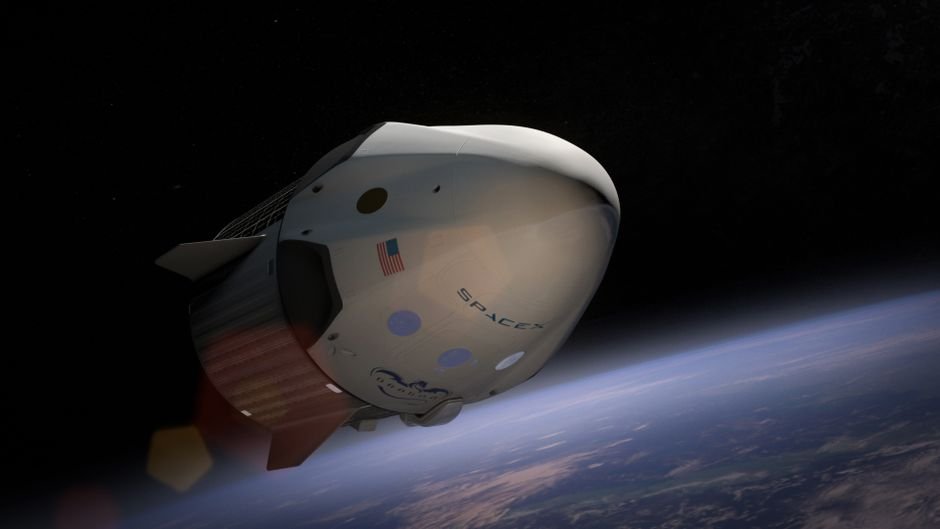
A discarded SpaceX rocket stage crashed into the Moon on August 5 after 18 months in an unstable orbit, leaving a fresh crater on the lunar surface and a dust plume that telescopes on Earth watched. The impact was never part of the mission plan, and it is only the second time on record that an abandoned rocket has hit the Moon on its own.
The Falcon 9 upper stage came from a January 2025 launch that carried two commercial lunar landers, including Firefly Aerospace’s Blue Ghost, which later claimed the title of first commercial vehicle to touch down on the Moon. The reusable booster returned to Earth as designed; the upper stage, its fuel spent, lacked the energy to steer itself back or escape into deep space. It lingered in a chaotic Earth-Moon orbit until solar and lunar gravity, solar wind, and other forces set it on a collision course.
The crash happened on the Moon’s near side, near Einstein Crater, at roughly 8,700 kilometers per hour, about seven times faster than sound travels on Earth. The stage, roughly 12 meters long and weighing about 4,500 kilograms, was expected to excavate a crater between 20 and 30 meters across; Benjamin Fernando, a planetary scientist at Los Alamos National Laboratory, put the figure at about 27 meters wide and five meters deep. The impact lasted under a second, but ejected material stayed visible to ground telescopes for tens of minutes, and NASA said it could take days for orbiter imagery to arrive.
To astronomers, the mishap doubles as an experiment. The Moon takes a steady hail of natural meteoroids, usually with no warning and little known about the projectile. Here, scientists knew the object’s dimensions, weight, and approximate impact point in advance, letting them compare observations against computer simulations of crater formation and lunar dust behavior with unusual confidence. Two spacecraft, NASA’s Lunar Reconnaissance Orbiter and South Korea’s Danuri orbiter, were tasked with photographing the site before and after the strike.
NASA played down the crash as unremarkable. The agency noted that the Moon is constantly bombarded and has no air or weather to soften the blows, and that parking spent upper stages on the surface is an accepted disposal practice, in some cases the only realistic end-of-life choice for low lunar orbit spacecraft, and one many operators pick deliberately because it gives them a predictable, trackable outcome.
In 2022, a discarded Chinese rocket segment crashed into the lunar far side, leaving a pair of craters, and it could not be observed from Earth. That makes this week’s impact the second confirmed accidental rocket-on-Moon collision and the first astronomers could watch directly. During the Apollo era, rocket stages were deliberately crashed into the Moon to generate seismic readings.
The accident also underscores how little coordination exists for a place about to get crowded. More than 50 years after Apollo, the astronauts’ footprints remain visible and could last millennia because nothing erases them. A new crater is a permanent addition to that landscape. The 1967 Outer Space Treaty forbids national sovereignty on the Moon and requires it to be used for the good of everyone, but it provides broad principles with almost no practical machinery: the UN Office for Outer Space Affairs runs on roughly 40 staff, and the committee that handles space law meets only a few weeks a year.
With the United States and China both planning astronaut returns and companies competing to build lunar landers and bases, researchers are proposing the lunar equivalent of the shipping world’s Notices to Mariners: advance warnings covering touchdown zones, rover paths, and activities that kick up dust before missions launch, plus a voluntary registry of planned lunar infrastructure and calls for a fourth United Nations conference devoted to outer space. Jonathan McDowell, a retired astrophysicist, said the strike itself is harmless, but once long-term bases exist such collisions would matter, and nobody should leave stages wandering in unstable orbits like this one.
Sources: An Abandoned SpaceX Rocket Crashed Into the Moon. Here’s What Happened (CNET, Aug 5, 2026); Why is SpaceX’s abandoned rocket crashing into the Moon? Scientists are watching closely (Firstpost, Aug 1, 2026); An abandoned SpaceX rocket is about to crash into the Moon. The real problem comes next (The Conversation, Jul 27, 2026); Piece of SpaceX rocket crashes into the Moon (Al Jazeera, Aug 5, 2026); Telescope detects debris plume after SpaceX rocket stage crashes into Moon (ABC News, Aug 6, 2026)