

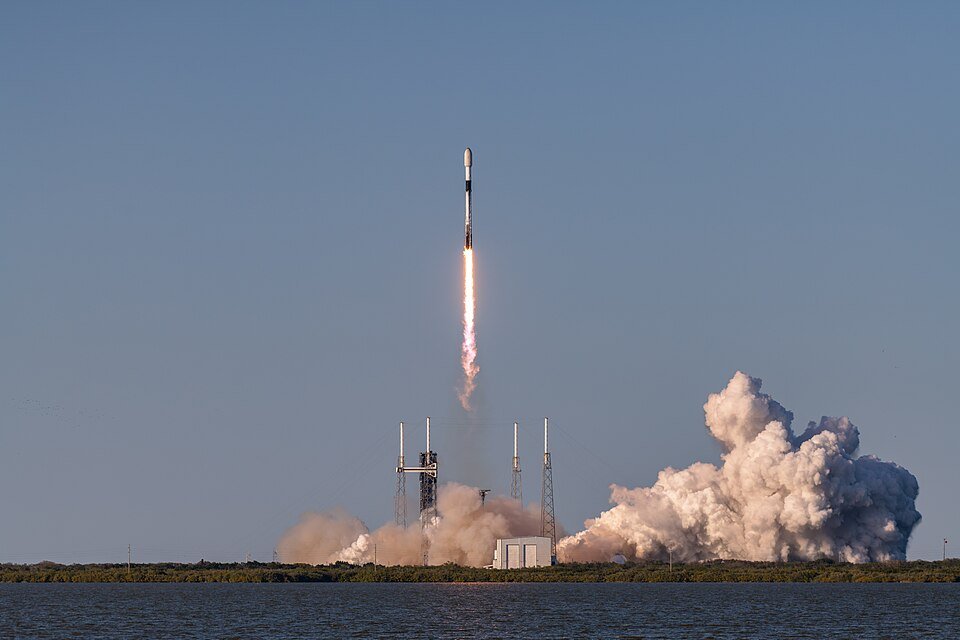
SpaceX has achieved a milestone that underscores just how thoroughly the company has reshaped the space industry: as of June 12, 2026, it has launched more satellites than every other organization on Earth combined since the dawn of the Space Age in 1957.
The tally, compiled by investor and former space-industry executive Christian Keil, puts SpaceX’s total at 15,262 satellites launched. The combined total for all other companies, agencies, and nations over the past 69 years stands at 15,138. Keil posted the comparison on X, and the numbers have since ricocheted across the industry as a stark illustration of how one company has come to dominate orbital access.
Starlink: The Engine of Dominance
The driving force behind SpaceX’s satellite launch total is Starlink, the company’s broadband megaconstellation in low Earth orbit. Nearly 75 percent of all SpaceX missions are dedicated to building out the network, and as of June 18, 2026, astrophysicist Jonathan McDowell calculated that SpaceX has sent 12,318 Starlink satellites to orbit since the first test batch flew in May 2019.
The scale of the Starlink constellation is itself a record: with roughly 10,600 active satellites, it makes up about 59 percent of every operational satellite in orbit today across all operators worldwide. No other network in history comes close. OneWeb, the next-largest constellation, has around 630 satellites. Amazon’s Project Kuiper has launched about 300.
SpaceX has Federal Communications Commission approval for 12,000 first-generation Starlink satellites and has filed for permission to eventually deploy up to 42,000. At the current launch cadence, with Falcon 9 delivering 20 to 23 satellites every few days, the constellation continues to grow at a rate unmatched by any previous space project.
The Workhorse Behind the Numbers
The vehicle enabling this pace is the Falcon 9, which debuted in 2010 and has become by far the most active rocket in operation. In 2025 alone, Falcon 9 flew 165 missions, roughly one launch every 2.2 days. The 650th flight of the Falcon 9 occurred in June 2026, and the rocket’s reusable first stage has pushed the cost of access to orbit below $1,000 per kilogram for many missions, down from roughly $10,000 per kilogram a decade and a half ago.
Reusability is the backbone of the entire operation. Falcon 9 boosters have flown as many as 35 times each, landing vertically on drone ships or ground pads after delivery. The 623rd booster landing in SpaceX’s history occurred in June 2026, a number that exceeds the total orbital launches of most spacefaring nations.
What Comes Next
SpaceX’s lead over the rest of the world is virtually certain to widen. The company is testing Starship, a fully reusable super-heavy-lift vehicle designed to carry over 100 metric tons to orbit. Elon Musk has outlined plans for thousands of Starship flights per year, a cadence that would make current Falcon 9 operations look modest by comparison.
The company is also moving into new markets. During its first week as a publicly traded company on the Nasdaq (ticker: SPCX, with a valuation of $1.77 trillion) in June 2026, SpaceX continued launching Starlink missions at its normal pace. Musk has publicly discussed ambitions to deploy up to one million AI-optimized satellites in space, a concept that would require Starship launching multiple times daily to fulfill.
For context: before SpaceX flew its first Falcon 1 in 2006, the entire history of spaceflight from Sputnik forward had produced roughly 4,000 satellites total. The company has now quadrupled that number on its own, in two decades.
The milestone is not just a statistic. It reflects a fundamental shift in what is possible when launch costs fall far enough for a single company to build and sustain a global telecommunications network in orbit. Where other operators plan constellations of hundreds, SpaceX has already deployed tens of thousands and is planning for more.
As Keil’s comparison makes clear: one company now accounts for more than half of everything humanity has ever sent to space.